
Affiliate disclosure: Some of the links on this page are affiliate links. If you click through and make a booking, we may earn a small commission at no extra cost to you. This helps keep this website completely free and independent. Thank you for your support.
Where to Stay in London as a Tourist: Best Hotels & Neighbourhood Guide
London will charge you a great deal of money for a hotel room and offer you a bewildering number of options for spending it. The question of where to stay is not just about price or proximity to the sights — it is about understanding which neighbourhoods actually suit the kind of trip you are planning, and which ones sound appealing in a brochure but will quietly make your visit harder than it needs to be.
There is a category of London hotel that does enormous business with first-time visitors: cheap, perfectly located on a map, and situated in a building that has not been meaningfully refurbished since the 1980s. The rooms are small — London hotel rooms are almost always small by American or Australian standards — the corridors smell faintly of something you cannot identify, and the "continental breakfast" is a bread roll and a carton of orange juice. These hotels are not disasters. They are simply not the experience most people had in mind when they booked a trip to London.
Know what you are buying. This page will help you do that.
The Price Reality
London is one of the most expensive hotel markets in the world. In 2025, the average nightly rate for a hotel room in central London sat at around £200. That is the average — which means a substantial number of rooms cost considerably more, and the ones that cost considerably less are worth scrutinising carefully before you book. Budget accommodation in London tends to reflect its price point more honestly than in most cities.
Several things push rates up beyond the already high baseline: location in Zone 1, proximity to major attractions, the day of the week (London hotels are almost always cheaper Sunday to Thursday than Friday and Saturday), and the time of year. Summer rates, particularly July and August, are at their peak. The Christmas and New Year period in the West End is aggressively priced. If you have flexibility, travel in autumn or late spring and book Monday to Thursday nights wherever possible.
The further in advance you are able to book, the better your options. "Budget" hotels do exist and are especially booked up months in advance.
A useful rule of thumb: if a hotel in a prime central London location is significantly cheaper than everything around it, find out why before you book rather than after you arrive.
London Hotel Booking Tips for Tourists
- Book at least 3–4 months ahead for Summer travel.
- Hotels near Tube stations are worth paying extra for.
- Rooms listed as "compact" can be extremely small.
- Check whether air conditioning is included.
The Zone Question
London's transport network is divided into concentric zones, Zone 1 being the centre. Most tourists spend the vast majority of their time in Zone 1 because that is where the vast majority of the popular attractions are. The debate about whether to stay in Zone 1 or save money by staying in Zone 2 or 3 is one worth settling early, because the answer has a significant effect on both budget, time and daily experience.
Staying in Zone 2 can save meaningful money on accommodation. It will cost you time and Tube fares every day, and — more importantly — it will cost you energy. Coming back to a hotel in Zone 2 after a full day's sightseeing, only to change and head back into Zone 1 for dinner or a West End show, adds up over a week in a way that the accommodation saving does not always justify. If you are spending four or more days in London and plan to be out early and back late, Zone 1 is worth the premium. If you are staying for two nights and the budget is genuinely tight, Zone 2 is a reasonable compromise provided the neighbourhood is right.
Zone 3 and beyond: unless you have a specific reason — visiting friends, attending an event — staying this far out as a tourist visiting the central sights makes little sense. The savings rarely compensate for the commute, especially if you only have a few days in London. Do the maths: for example, you're staying for 4 days but spending 2 hours a day on the Tube; you're spending 8 hours on a train instead of sightseeing.
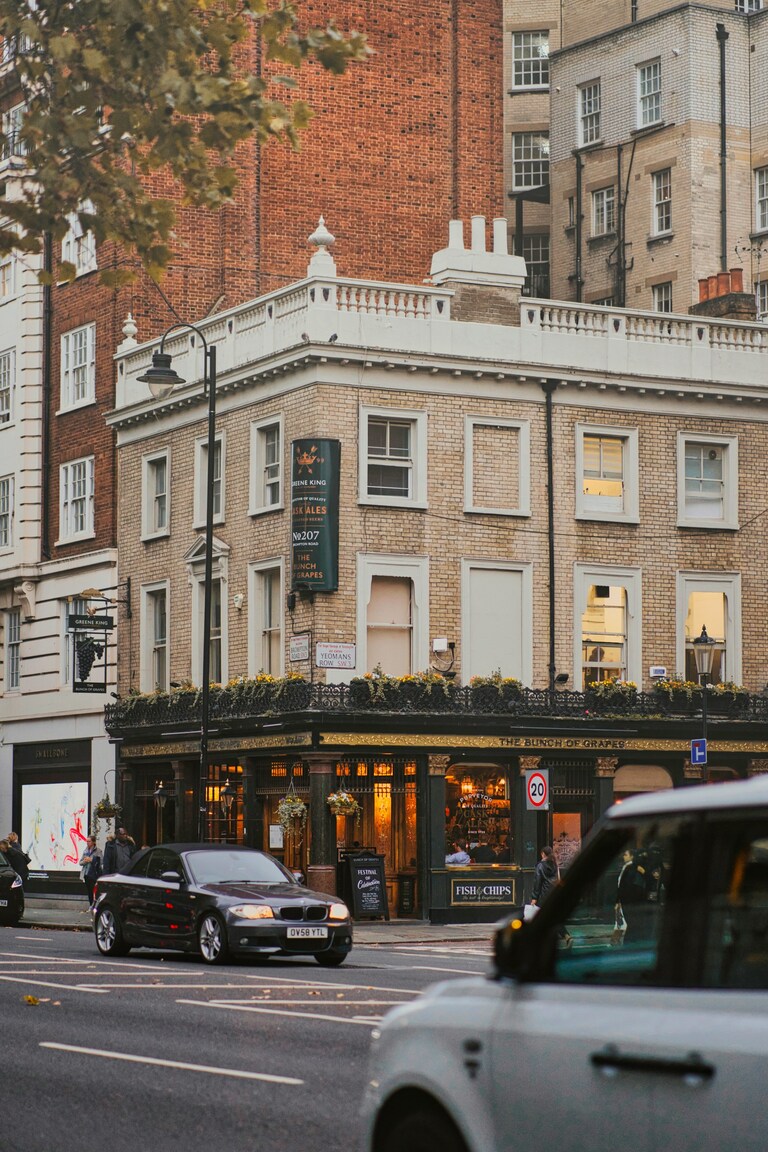
A small room above a noisy pub next to a busy road in London's Zone 1 can cost you £100 a night.
The West End — Covent Garden, Soho, Fitzrovia
This is the heart of tourist London and the most practical base for a first visit. From here you can walk to the British Museum, the National Gallery, the theatres of Shaftesbury Avenue, the restaurants of Soho, the markets of Covent Garden, the Royal Opera House, and the river. The Tube connections from Covent Garden, Leicester Square, Tottenham Court Road, and Oxford Circus reach every corner of the city within 20 to 30 minutes.
The neighbourhood is safe, busy, and well-policed. It is also loud, particularly on weekend nights when the bars and clubs of Soho empty onto the streets. If you are a light sleeper or travelling with young children, check whether your hotel room faces the street before you book — interior courtyard rooms are quieter and worth requesting.
Accommodation here ranges from boutique hotels in converted Georgian townhouses to international business chains to a handful of genuinely excellent small independents. Expect to pay £200 to £400 per night for a well-regarded mid-range hotel and considerably more for anything approaching luxury. Budget hotels exist in this area but rooms are very small and the trade-off between cost and comfort becomes stark quickly.
For most first-time visitors who want to be in the middle of things and can afford it, this is the right area.
→ See Hotels in Covent Garden & SohoSouth Kensington and Kensington
A quieter and in many ways more refined alternative to the West End. The neighbourhood sits just west of the centre and contains three of the world's great museums within five minutes' walk of each other: the Victoria and Albert Museum, the Natural History Museum, Royal Albert Hall and the Science Museum — all of them free. Hyde Park is on the doorstep. The streets are residential, handsome, and calm after dark in a way that Soho is emphatically not.
The area attracts a high proportion of French visitors — the French lycée and a sizeable French expatriate community are long established here — which means excellent patisseries and a generally European feel to the neighbourhood. It is a good base for families, for anyone who values quiet evenings, and for travellers whose interests lean toward museums and parks rather than nightlife.
The Tube connections are excellent: South Kensington station sits on the District, Circle, and Piccadilly lines, giving fast access to the West End, Heathrow, Victoria, and the South Bank. Expect to pay broadly similar rates to the West End for equivalent quality, with the trade-off being slightly less walking access to the theatres and markets but significantly more access to green space and world-class museums.
→ Check Hotels in KensingtonMarylebone
Marylebone — pronounced "Marry-luh-bun", not as it is spelled, and do not let anyone hear you say it wrong — sits north of Oxford Street and is consistently underrated as a tourist base. The high street is excellent: independent shops, good restaurants, a Saturday farmers' market, and a village-like atmosphere that is remarkable for somewhere ten minutes' walk from Oxford Circus.
It is the address of the Sherlock Holmes Museum on Baker Street, which many visitors want to see, and it sits very close to Regent's Park, one of London's finest. The Tube connections from Baker Street and Bond Street are strong. Hotels here tend to be slightly better value than equivalent quality in the West End, and the streets are quieter at night. It is an area Londoners themselves speak well of, which is often a useful indicator.
→ Browse Hotels in MaryleboneBloomsbury
Bloomsbury is the academic quarter — the University of London, the British Museum, and a network of Georgian squares that have barely changed in two hundred years. It is calm, intellectual in atmosphere, and extremely well-connected. The British Museum alone could absorb several full days of a trip, and having it on your doorstep means you can visit in short bursts rather than committing to an entire marathon session.
Hotels here range from large mid-market chains near Russell Square to smaller, characterful townhouse hotels on the quieter squares. It is generally better value than the West End for similar quality, the neighbourhood is safe and well-lit at night, and the combination of Tube lines at King's Cross, Euston, and Russell Square gives excellent city-wide access. Euston and King's Cross are also the main termini for trains north — useful if you are planning day trips to Oxford, Cambridge, or further afield.
The area's one limitation: it is not a nightlife neighbourhood. Restaurants exist but the area goes quiet relatively early. If your evenings are going to centre on theatre, bars, or clubs, you will be commuting to and from Bloomsbury rather than stepping out of your door into the action.
→ See Hotels in Bloomsbury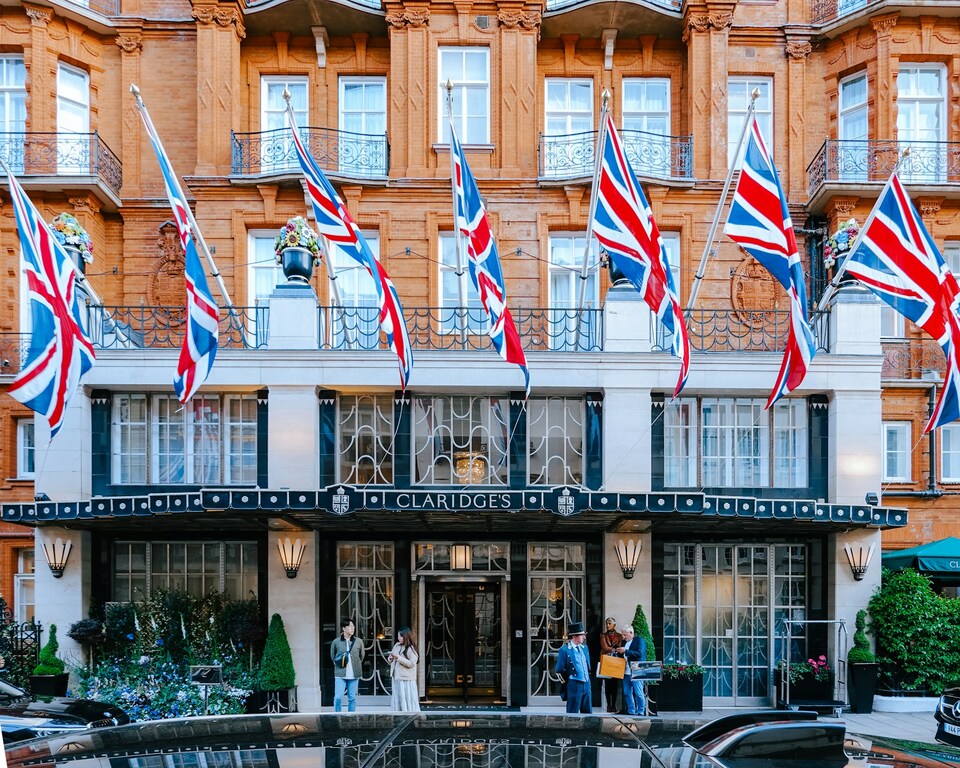
Claridge's Hotel in Zone 1 is a 5-star hotel. It's cheapest room starts at £800 a night, the most expensive is its penthouse suite which is £60,000 a night. (That is not a typo error.)
Victoria and Westminster
Victoria is a transport hub before it is a neighbourhood. Trains to Gatwick, trains to the south coast, National Express coaches, the Victoria line, the District and Circle lines — it all converges here. For that reason, accommodation around Victoria is practical rather than atmospheric. It suits people who are using London as a base for wider travel, or who are arriving from Gatwick and do not want to go further into the city at the end of a long journey.
Westminster itself — the area around the Houses of Parliament, Whitehall, and St James's Park — is more interesting to stay in than its official character suggests. It is extremely safe, extremely central, and the riverside walk between Westminster Bridge and Tower Bridge is one of the finest in the city. Hotels here tend toward the higher end. Budget accommodation is thin on the ground, which is perhaps not surprising given the postcode.
→ See Hotels in WestminsterThe South Bank — Southwark and Borough
A decade ago, staying on the South Bank would have been a slightly unusual choice. Now it is a genuinely excellent one, and prices have risen accordingly. The area between London Bridge and Waterloo contains Tate Modern, Borough Market, the Globe Theatre, the Shard, the Southbank Centre, and some of the best restaurants in the city. The riverside walk is magnificent. The neighbourhood has transformed from an afterthought into one of London's most vibrant quarters.
The Tube connections are good from both London Bridge and Waterloo, and the Elizabeth line at Farringdon (a short walk or one stop) adds another dimension. Accommodation here is more varied than it once was — large chain hotels near the Shard (the pyramid-shaped skyscraper, the UK's tallest building) sit alongside smaller independents in converted warehouses. It is a good choice for anyone whose interests run toward food, culture, and contemporary London rather than the traditional tourist trail. It is also noticeably less crowded with tourists than the West End, which after two days in Covent Garden you may come to appreciate.
→ See Hotels near the South Bank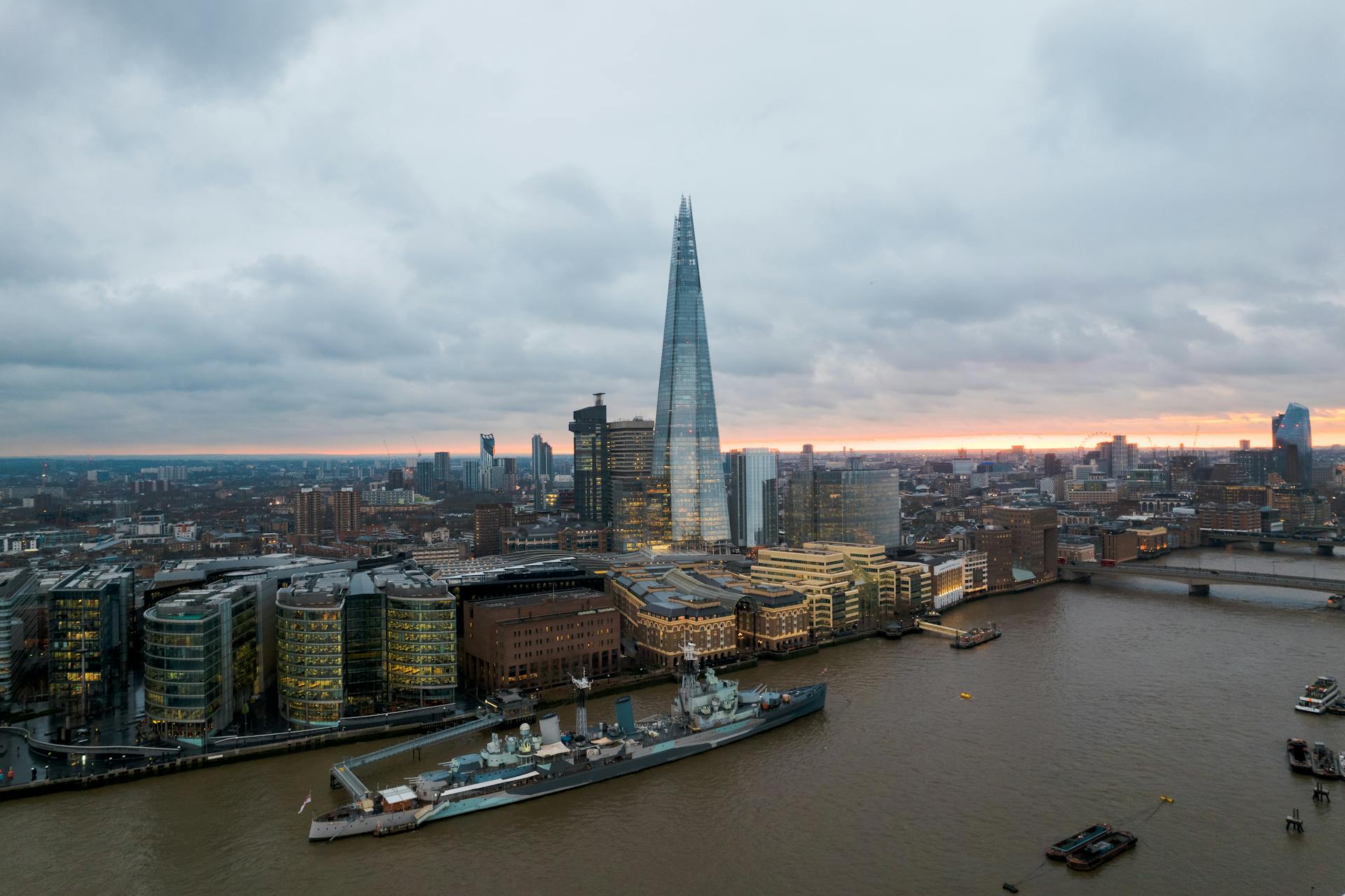
The Shard is the tallest building in Western Europe, it has offices, residences and restaurants. It even has a Shangri-La hotel in it. 301 metres tall (987 feet) with 95 floors, The Shard has a viewing deck on the 72nd floor, but it's not free to visit. Eating at one of the 4 restaurants is a great way to enjoy the views and without the queues; booking is essential.
Best Areas for Tourists to Stay in London at a Glance
| Area | Best For | Atmosphere | Typical Price/night | |
|---|---|---|---|---|
| Covent Garden | First-time visitors | Lively, central | £220–£350 | |
| South Kensington | Families, museums | Quiet and elegant | £200–£320 | |
| Marylebone | Restaurants and charm | Village feel | £190–£300 | |
| South Bank | Food, culture | Modern and vibrant | £200–£330 |
Areas to Approach With Caution
This needs saying plainly, because accommodation booking sites are not in the business of telling you what to be wary of.
Parts of the area around Paddington station — particularly some of the streets immediately north of the station — contain hotels that do heavy business with tourists who chose on price and location alone. The area is not dangerous, but it is not pleasant, and some of the hotels in those streets are among the poorest value in central London: tired rooms, indifferent service, and the noise of a major terminus. Paddington has improved considerably since the Elizabeth line arrived, and there are good hotels there. Choose carefully and read recent reviews.
Earls Court, once a backpacker hub, has declined as a tourist neighbourhood without becoming significantly cheaper. There is little reason to stay there unless you are specifically attending an event at Olympia.
Some parts of the area around King's Cross, while dramatically improved since the St Pancras regeneration, still have pockets that feel rough around the edges late at night. King's Cross station itself is fine and well-policed. The streets immediately behind it warrant a little more awareness after dark than Bloomsbury or Marylebone would.
A Word About Spare-room Platforms
London has a huge range of accommodation options, including short‑term private property rentals. These can work for some travellers, but the experience depends heavily on the individual host and the building you end up in - standards vary. Because London is a city where delays, late arrivals, and unpredictable transport disruptions are common, I generally recommend choosing a hotel. A staffed reception and proper security make a big difference if your flight is delayed, you arrive after midnight, or you simply need help with something practical. Hotels in London tend to offer a more consistent standard and professionally managed experience, which is why I focus my recommendations there. I learned the hard way to not be penny-wise but Pound-foolish.
Quick Answer: Where Most Tourists Should Stay in London
If you want the most convenient base for sightseeing, these are the areas most visitors choose:
- Covent Garden / West End – best for first-time visitors and theatre.
- South Kensington – quiet, elegant, excellent museums.
- Marylebone – charming neighbourhood with great restaurants.
- South Bank / London Bridge – modern London with great food and river views.
The One Piece of Advice That Overrides All the Others
Whatever area you choose, whatever budget you set: read reviews that are less than six months old, and read the critical ones as carefully as the glowing ones. London's hotel market moves fast — a hotel that was excellent three years ago may have changed ownership, deferred maintenance, and declined. A hotel that had mediocre reviews eighteen months ago may have been renovated and is now very good. Recency matters more than overall score.
Check specifically what reviewers say about room size, noise, and the gap between the photographs and the reality. London hotels are world champions at photographing a 12-square-metre room in a way that makes it look spacious. If multiple recent reviewers mention that the room was smaller than expected, it was smaller than expected. Plan accordingly, or choose somewhere else.
Find the Best Hotel for Your London Trip
London has thousands of great hotels and prices change daily, usually going up with less options available. The smartest move is to look now and lock something in before it disappears.
The link below is an affiliate link. If you make a purchase through them, we may earn a small commission at no extra cost to you.
👉 You know the best areas — why not check what’s actually available for your dates?
London hotels fill up fast and prices climb sharply in peak season. Klook offers deals on properties across the areas we recommend with instant confirmation. Take 30 seconds to compare availability and avoid overpaying or ending up with a poor-quality room.
Check Hotel Deals on Klook →Live availability & deals checked in real time • The map on their page top-left is handy • Tick the "<3km from city center" to see well-located hotels