
Getting Around London: Tube, Buses, Trains, Boats & Transport Guide
London is a city of nine million people spread across 1,500 square kilometres. It is vast in a way that surprises almost every first-time visitor who assumed, from looking at a map, that they could walk between the sights. You cannot. The distance from the British Museum to the Tower of London looks modest on paper. It is nearly four miles on foot. Plan accordingly.
The good news is that London's public transport network is one of the best in the world — frequent, extensive, and, once you understand how it works, genuinely easy to use. The further good news is that understanding how it works takes about five minutes. This page is those five minutes.
Understanding London Transport Zones
London’s public transport network is divided into nine fare zones. Think of it as an onion, with Zone 1 being the core in the centre and other zones being the layers in a circle spreading outwards. Most major tourist attractions are located in Zones 1 and 2, which cover central London and the surrounding inner districts.
- Zone 1 – Central London (Westminster, Soho, Covent Garden, the City)
- Zone 2 – Inner London neighbourhoods
- Zones 3–6 – Outer London suburbs
- Zones 7–9 – Greater London outskirts
Heathrow falls within Zone 6, while most sightseeing destinations — including the British Museum, Buckingham Palace and the Tower of London — are within Zones 1 and 2.
Transport fares increase slightly when you travel across more zones, but for most visitors staying in central London this rarely becomes an issue. Getting to and from the airport(s) will most likely be your most expensive travel expense.
Money-Saving Tip
If you stay within central London (Zones 1–2) and use contactless payment, your daily travel cost is usually capped at roughly the same price as a one-day Travelcard. This means you can use buses, the Underground and most trains throughout the day without worrying about rising fares.
The One Thing You Must Do Before You Ride Anything in London
Forget the paper ticket. It still exists, it still works, and it will cost you considerably more than it needs to for every single journey. What you need instead is either an Oyster card or, simpler still, your contactless bank card or phone's payment wallet. Touch in at the start of every journey, then touch out at the end. The system calculates the cheapest fare automatically, applies a daily price cap so you never pay more than a set amount no matter how many journeys you make, and extends that cap across a whole week if you travel Monday to Sunday. It is one of the most visitor-friendly ticketing systems in the world and the vast majority of tourists still do not use it properly.
If you have a contactless Visa or Mastercard — or Apple Pay or Google Pay set up on your phone — you do not even need to buy an Oyster card. Tap your card or phone exactly as you would tap an Oyster card. It works on the Tube, the buses, the Overground, the Elizabeth line, and most National Rail services within London. The one thing it does not do is work on the cable car across the Thames at Greenwich, but that is a novelty rather than a necessity.
Less than half of the Tube network is underground. In the older, more central parts of London it is underground, but in the outer zones it is above ground. Not all the outer zone stations have turnstyles that force you to tap-out. You must remember to find the yellow card-reader and tap your phone or card on it to finish that journey. Sometimes these devices are on the platform and not at the exit.
Public Transport in London is controlled by Transport for London. You can see the current, exact prices for the cost of travel on its services at: https://visitorshop.tfl.gov.uk/en/london-day-travelcard
Do not touch in and then forget to touch out at your destination. The system will charge you a maximum fare for that journey and will assume the worst about where you got off. It is an easy, expensive mistake and an irritating one to make. It can cost you as much as £10 extra each time if you forget. Touch out - every time. It's your new money-saving habit.
How to use the London Tube
The London Underground — the Tube — is the backbone of getting around the city. It is the quickest and cheapest way to cover long distances in London. It is the oldest metro system in the world, which is both its charm and, on hot summer days in a deep-level Victorian tunnel with no ventilation, its most significant drawback. On the Elizabeth line, which opened in full in 2023 and transformed east-west travel across London, the trains are modern, air-conditioned, and spacious. On the older deep-level lines — the Central line in particular — they are not, and in a July heatwave they are something to be endured rather than enjoyed.
The Tube runs from around 5am to just past midnight on weekdays and Sundays. On Friday and Saturday nights, the Central, Victoria, Jubilee, Northern, and Piccadilly lines run all night — the so-called Night Tube. This is genuinely useful for an evening out. Know which lines run overnight and which do not before you decide how late to stay out in an unfamiliar part of the city.
Rush hour — roughly 7:30 to 9:30am and 5 to 7pm on weekdays — is to be avoided if you have any flexibility at all. The Tube at rush hour is not dangerous, but it is extremely crowded, platform staff will hold you back from boarding if carriages are at capacity, and it is a deeply unpleasant introduction to the city if you have just arrived with luggage. If you land at Heathrow on a weekday morning, wait for a coffee before you get on the Piccadilly line. You will thank yourself.
A word on luggage: there aren't escalators at every station, lifts are not universal and some stations — Bank is the notorious example — involve a walk that will make you question your baggage choices. The Transport for London website has a step-free access map. If you have heavy bags or mobility considerations, check it before you travel.
Insider Tip:Count the number of stations on your planned Tube route then multiply by 3. That will be how many minutes it will take from the first station to the last on that route.
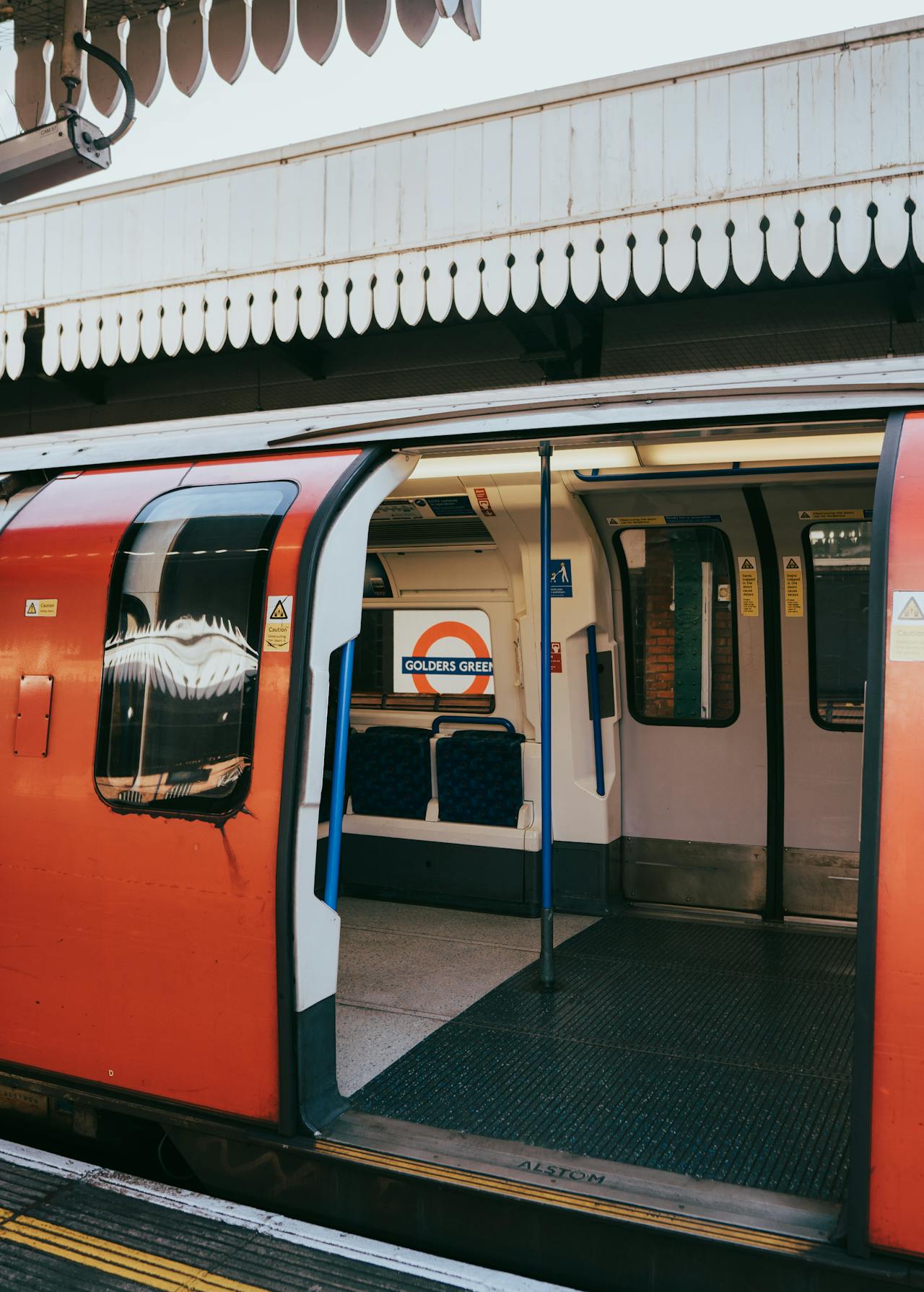
There is almost always a dangerous gap between a Tube train carriage and the platform. The carriage might be higher or lower than the platform, or there is a big gap between even if level. People fall into these daily, even Londoners. Whenever a train is at a platform you'll hear a warning message about "Mind the gap".
How to use the London Buses
The red double-decker London bus is an icon, and it is also a genuinely good way to see the city. Unlike the Tube, which runs mostly underground and shows you nothing, the bus puts London in front of you at street level. The number 11 from Liverpool Street to Fulham Broadway passes St Paul's Cathedral, the Strand, Trafalgar Square, Westminster, and Chelsea. It is, effectively, a sightseeing tour that costs the price of a bus fare.
London buses no longer accept cash. Contactless card, phone, or Oyster only. The daily cap applies across buses and Tube combined, so mixing the two does not cost you extra once you have hit the cap. Buses are slower than the Tube — London traffic sees to that — but for short hops, scenic routes, or when the Tube would require an inconvenient change, they are the right choice.
Not all bus stops are compulsory for the driver to stop, so the custom is to stick your hand out as he approaches. The sign at the stop should indicate if it is a mandatory stop. If unsure, use your hand nevertheless.
One thing catches visitors out repeatedly: you cannot board a bus and ask the driver to tell you when to get off. The driver's job is to drive. Download the Citymapper app — it is free, it is excellent, it works offline once loaded, and it will tell you exactly which stop to get off at, when the next bus is coming, and what your alternatives are if it is late. Use it, it'll transform how you navigate the city.
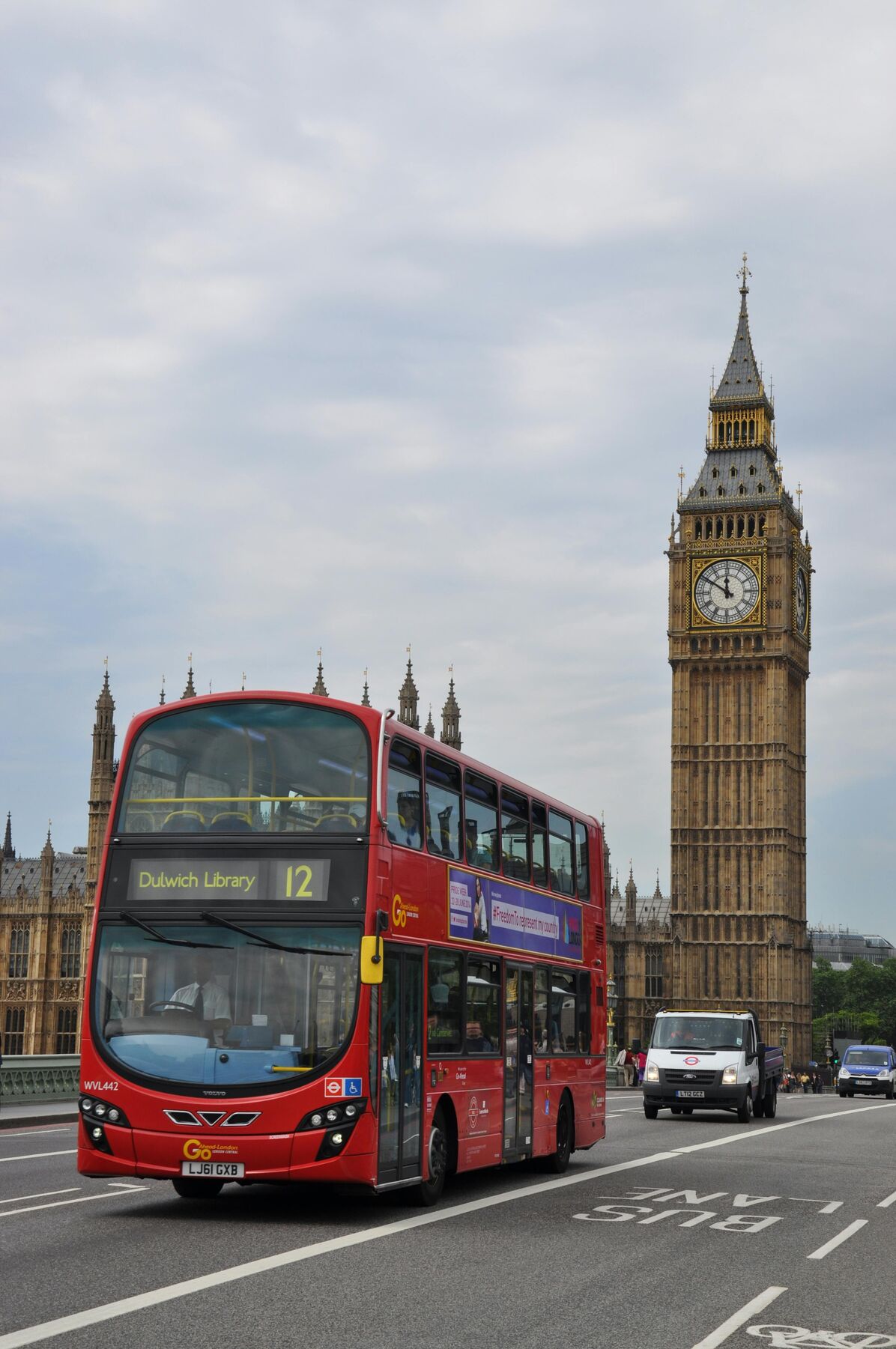
The London buses are a great way of seeing the famous sites if you sit on the top and towards the front. The no.11 route is a good one for sightseeing, as is the no.15. You enter at the front door, tap-in on the yellow card reader next to the driver, then exit through the middle door. There is no need to tap-out on London buses.
How to use London's Black Cabs
The London "black cab" is not just a taxi. The drivers — called cabbies — have passed "The Knowledge", a qualification that requires candidates to memorise every street, landmark, and point of interest within a six-mile radius of Charing Cross. It typically takes three to four years to pass. The result is a driver who does not need a sat-nav, knows every shortcut, and can hold a conversation about the city with genuine authority. They are a London institution and they are worth taking at least once, simply for the experience.
They are also expensive. Black cabs are metered, the meter starts running the moment you get in, and central London traffic means that meter climbs steadily even when you are not moving. For longer journeys across the city, Uber or another licensed app will usually be cheaper. For a short trip when it is raining and one appears immediately, or for a late-night journey when you want the reassurance of a fully regulated, insured, and vetted driver (for passenger safety), the black cab earns its price.
You can hail a black cab on the street whenever its yellow light is on. You can also book one through the Gett or FREE NOW apps. Never, under any circumstances, get into an unlicensed minicab. This point was made in the safety section and it bears repeating here.
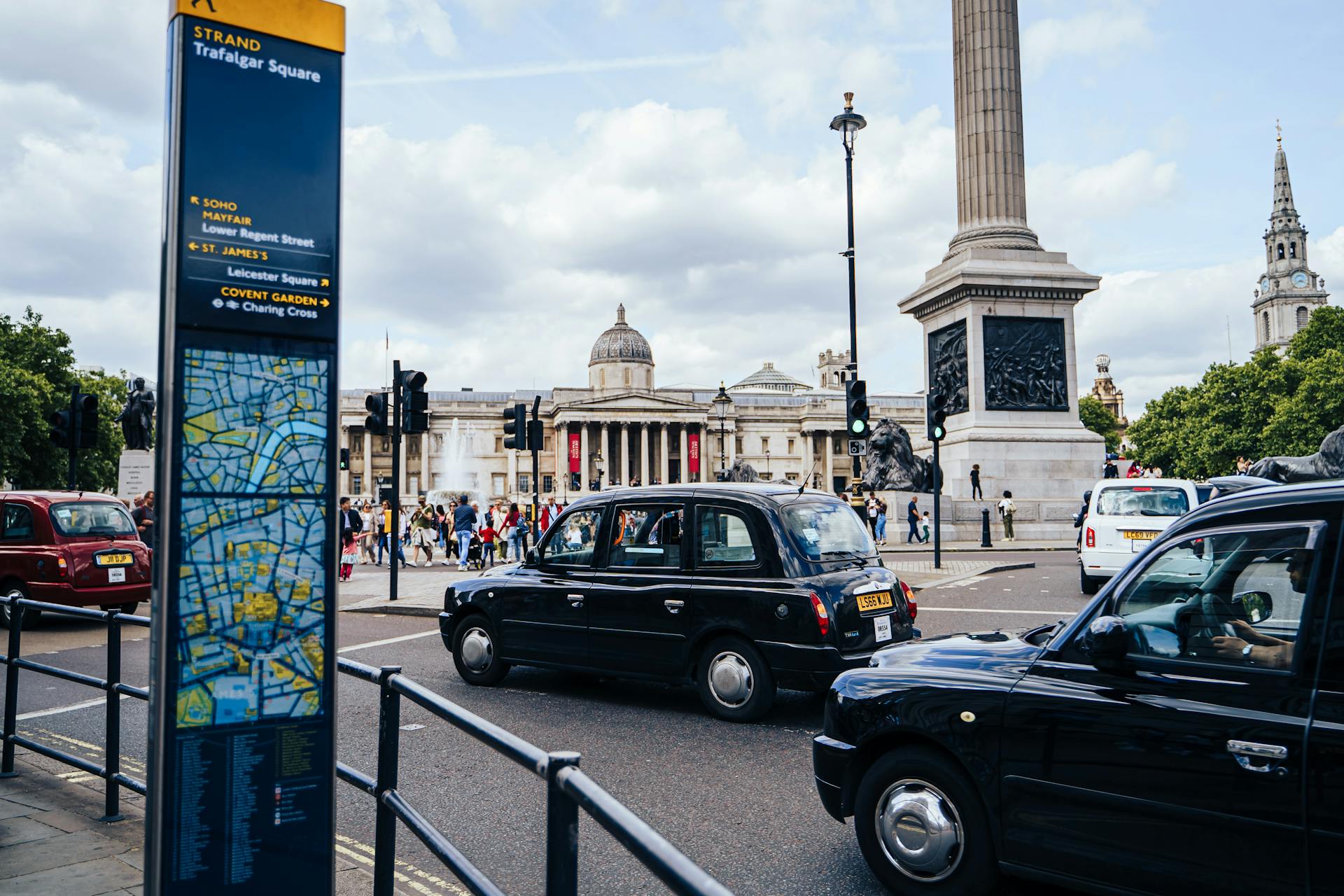
Four London "black cabs" making their way around Trafalgar Square. Can you spot the 2 that aren't black? All distances to and from London are measured from the base of Nelson's Column there, where the boy is playing next to the black lion.
How to use the London River Boats on the Thames
London’s river transport is a genuine part of the city’s public transport network rather than just a sightseeing novelty. Passenger boats operate along the River Thames and are integrated into the wider system run by Transport for London. For visitors, they offer a slower but far more scenic way to travel through the centre of the city.
The main scheduled commuter service is operated by Uber Boat by Thames Clippers. These boats run regular services between piers along the Thames and function in much the same way as a bus route on water. They are primarily designed for commuters but are increasingly used by tourists because the journey passes many of London’s most famous landmarks.
Where the Boats Stop
Instead of street stops or stations, river services operate from piers positioned along the Thames. The most useful central London piers for visitors include Westminster Pier, London Eye Pier, Embankment Pier, Tower Pier, Greenwich Pier, and Canary Wharf Pier. Boats usually run every twenty to thirty minutes depending on the route and time of day.
Most services operate between Putney in the west and Woolwich in the east, passing through the centre of London and stopping at many of the major tourist areas along the river.
Why Visitors Use the River Boats
The Underground is fast but shows you nothing of the city. Travelling by river is the opposite experience. From the deck of a Thames boat you pass many of London’s most recognisable landmarks including Tower Bridge, the Houses of Parliament, St Paul’s Cathedral, Tate Modern, and the Shard.
For travellers moving between Westminster, the South Bank, the Tower of London area, and Greenwich, the boat can function as both transportation and sightseeing at the same time.
One of the most enjoyable journeys is the route from Westminster to Greenwich. The trip takes roughly forty minutes and travels through the historic heart of London before reaching the maritime district of Greenwich.
Payment and Tickets
You can pay for river boats using an Oyster card, a contactless bank card, or by buying a ticket online in advance. You simply tap in at the pier in the same way you would enter a Tube station.
There is one important difference from the Underground and buses: river boats are not included in London’s daily fare cap. Oyster and contactless payments provide a discounted fare, but the journey will still cost more than travelling by Tube.
Even so, the price is usually significantly cheaper than a dedicated sightseeing cruise and the experience is broadly similar.
What the Boats Are Like
The boats themselves are modern high-speed catamarans designed for commuter travel. Inside you will find comfortable seating, large windows, toilets, and a small bar selling drinks and snacks. Many vessels also have an outdoor rear deck which is ideal for photographs.
Because these are commuter services rather than tourist cruises, there is no commentary. The atmosphere is generally quiet and relaxed, with many passengers simply enjoying the view of the city passing by.
When It Makes Sense to Use Them
- Travelling between Westminster and Greenwich
- Moving between central London and Canary Wharf
- Visiting multiple sights along the Thames in a single journey
- When you want a scenic route rather than the fastest route
While the boats are rarely the quickest way to travel, they can easily be the most enjoyable.
When They Are Less Practical
- If your destination is not close to a river pier
- If you need the fastest route across the city
- If travelling late at night when services are limited
A Good Visitor Strategy
Many travellers use the river boats once during their stay as part of a day exploring central London. A typical plan is to spend the morning around Westminster and the South Bank, take a boat to Greenwich in the afternoon, explore the historic maritime district and Royal Observatory there, and then return to central London by train or Docklands Light Railway.
Used this way, the river boat becomes both transportation and one of the most memorable journeys of the trip.
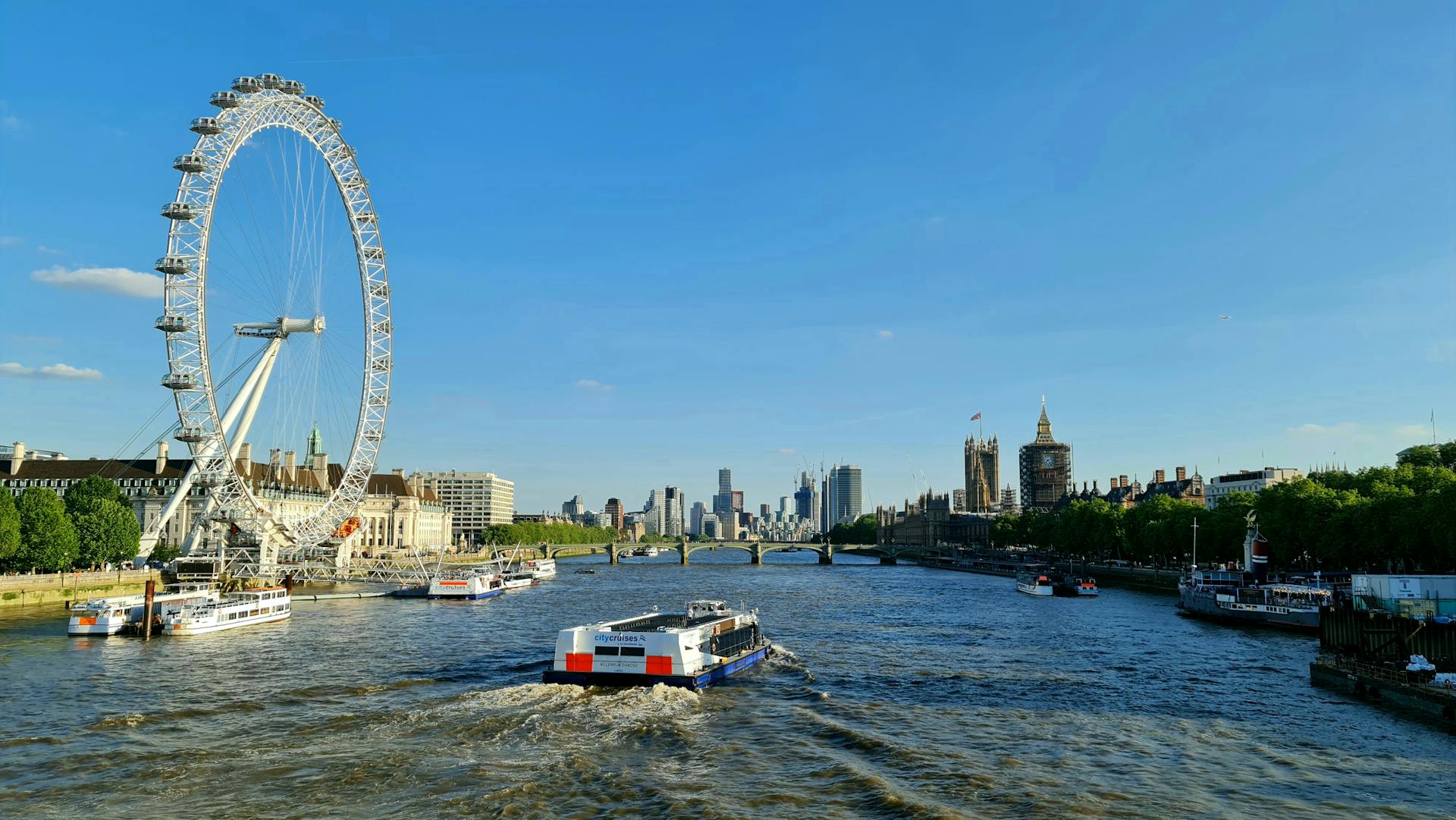
The river boats are not very frequent but worth the wait and extra fare. It is specatulcar way of seeing one of the world's greatest cities, if not the greatest.
How to use the London Overground
The London Overground is often overlooked by visitors, largely because it does not appear as prominently on tourist maps as the Tube. That is a mistake. The Overground is an extremely useful orbital rail network that circles much of London to the north side and connects many neighbourhoods that the Underground does not serve well.
Unlike the Tube, most Overground lines run above ground and feel more like commuter trains. The carriages are modern, spacious, and air-conditioned, which immediately makes them more pleasant during the summer months than many deep-level Underground lines. Because the routes avoid central London tunnels, journeys can also feel quicker and less crowded.
The network forms a rough loop around London with branches reaching into the north, east, south, and west of the city. Stations such as Stratford, Camden Road, Clapham Junction, and Highbury & Islington act as important interchange points between the Overground, Underground, and National Rail services. If you are travelling between neighbourhoods rather than heading into central London, the Overground is often the most direct route.
From a visitor’s perspective the system works exactly like the Tube. Oyster cards and contactless bank cards are accepted, you simply touch in at the start of your journey and touch out at the end. The same daily fare caps apply, so using the Overground does not increase your travel costs once you reach the cap.
One of the most useful Overground routes for travellers runs between Stratford in East London and Richmond in the west, passing through lively areas such as Hackney, Camden, and Hampstead. It is a good way to explore parts of London that many tourists never see.
More information and maps are available on the Transport for London website: https://tfl.gov.uk
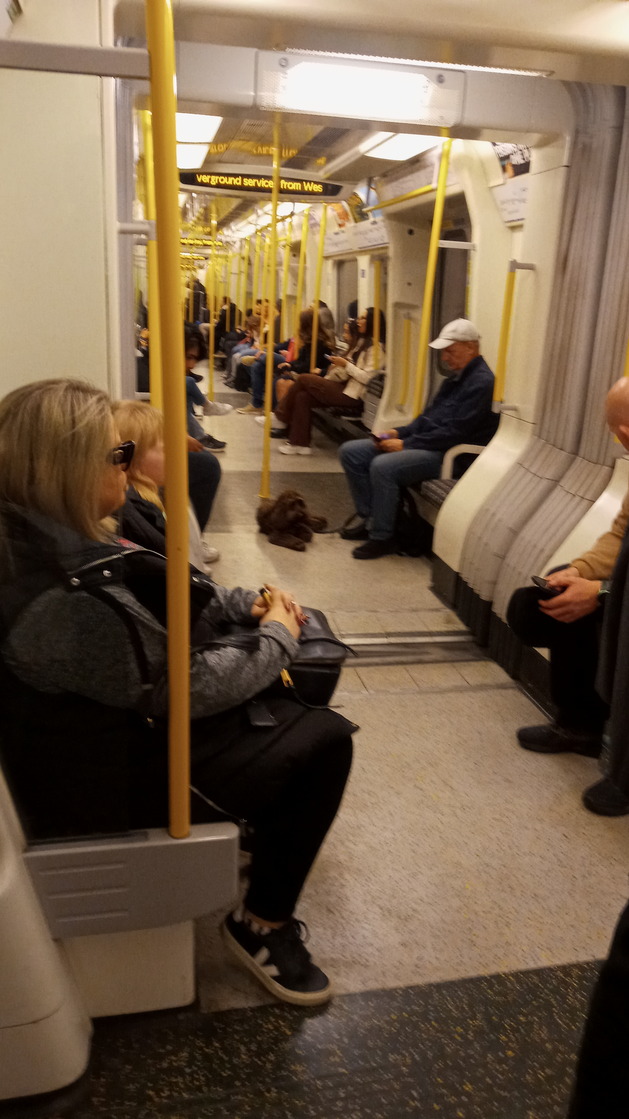
The Overground service is largely above ground and strangely devoid of tourists. Its carriages are newer than most Tube trains and more spacious. Just remember to also "Mind the gap" at the platforms.
Mainline Trains (National Rail)
London also has a large network of mainline railways known collectively as National Rail. These are the traditional intercity and regional trains that connect London with the rest of Britain, but many of them also function as suburban commuter lines within the city itself.
For visitors, this matters more than you might expect. Several destinations that appear to be part of the Underground network are actually served by National Rail trains. Greenwich, Hampton Court, and parts of South London are good examples. In many cases the National Rail train will be the fastest and most direct option.
The trains operate from London’s large historic rail terminals — Paddington, King’s Cross, St Pancras, Victoria, Waterloo, Liverpool Street, London Bridge, Euston, and Charing Cross. Each station originally served a different railway company and still tends to handle trains heading in a particular direction out of the city.
For journeys within Greater London you can usually use the same payment system as the Underground. Oyster cards and contactless bank cards work on most National Rail routes inside the London fare zones. As with the Tube, you must touch in and touch out at the station barriers so the correct fare can be calculated.
Visitors often discover that these trains are significantly faster than buses or the Underground for longer journeys. For example, travelling from Waterloo to Greenwich by train takes around ten minutes, compared with considerably longer by Tube and bus combinations.
If you want to check routes or train times, the official journey planner for the UK rail network is available at: https://www.nationalrail.co.uk
Major Train Stations in London
London has several large railway terminals that connect the capital with the rest of the United Kingdom. These stations are often used by tourists taking day trips to destinations outside the city.
- Paddington – trains to Oxford, Bath, and western England
- King’s Cross – trains to Cambridge, York, and northern England
- St Pancras International – Eurostar trains to Paris and Brussels
- Waterloo – trains to southwest England
- Victoria – trains to Brighton and southern England
- Liverpool Street – trains to eastern England
Most of these stations connect directly to the Underground network, making it easy to transfer between trains and London’s local transport system.
Uber and Ride-Hailing in London
Uber operates legally and extensively in London. Bolt is the main competitor and is often slightly cheaper. Both are legitimate, both use licensed private hire drivers, and both are fine to use. As noted in the safety section: always check the number plate on the car against what the app shows you before you get in. It takes five seconds.
Uber is particularly useful late at night when the Tube has stopped on lines without a Night Tube service, when you have luggage, or when you are travelling somewhere the bus network does not cover conveniently. It is not always faster than the Tube in peak hours — it is subject to the same traffic — but door-to-door convenience has its value.
Do Not Rent a Car in London
This needs saying plainly because some visitors still consider it. Do not rent a car to explore London. Parking in central London is scarce, expensive, and in many areas simply not available to non-residents. The congestion charge applies to most of central London on weekdays and costs £15 per day on top of everything else. Traffic is slow, road layouts are complex, and there is an expanding network of Low Emission Zones where older vehicles face additional daily charges. The public transport network will get you everywhere a car would, faster and at a fraction of the cost.
A car makes sense if you are leaving London for the countryside or the coast. For the city itself, it is an expensive inconvenience. It is the worst way to see London.
Walking in London
London rewards walkers who understand its scale. The south bank of the Thames from Tower Bridge to Tate Modern is one of the great urban walks in the world. The parks are connected in a green chain across the heart of the city. Covent Garden to Soho to Fitzrovia to Marylebone is a perfectly walkable afternoon if the weather holds.
The mistake is assuming that adjacent stations on the Tube map are adjacent in real life. They are often not. Covent Garden and Leicester Square are a four-minute walk apart. Charing Cross and Embankment serve essentially the same location. The Tube map is a diagram of connections, not a map of distances; it is not to scale. Look at a real map before deciding whether to walk or ride, and you will sometimes find that walking is the better answer — and sometimes find that it very much is not. Either way you see and experience more by walking.
Quick Summary: Best Ways to Get Around London
- Fastest transport: London Underground (The Tube)
- Best for sightseeing: London buses and river boats
- Best for outer London: London Overground and National Rail trains
- Best payment method: Contactless bank card or smartphone
- Best tip: Stay within Zones 1–2 if possible
Frequently Asked Questions About Transport in London
Do tourists need an Oyster Card in London?
Most tourists do not need an Oyster Card. Visitors can simply use a contactless bank card or smartphone payment (Apple Pay or Google Pay) to tap in and out of stations. The fare system automatically applies daily caps so you never pay more than the price of a Travelcard for the zones you travel in.
Is the London Underground the fastest way to get around?
In most cases, yes. The London Underground (commonly called the Tube) is the fastest way to travel across central London because trains run frequently and avoid road traffic. However, buses can sometimes be more convenient for short journeys because they allow you to see the city while travelling.
Can you use contactless cards on London buses?
Yes. London buses do not accept cash, but you can pay by tapping a contactless bank card, smartphone, or Oyster Card on the card reader when boarding. There is no need to tap again when leaving the bus.
Are London taxis expensive?
Traditional black cabs are reliable and regulated but are usually more expensive than public transport. They are best used late at night, when travelling with luggage, or when public transport services are limited.
What is the difference between the Tube and the London Overground?
The Tube runs mostly underground through central London and forms the core of the city's transport network. The London Overground operates mainly above ground and connects outer districts, often linking areas that are not served directly by Underground lines.
Is it easy to travel from London to other cities by train?
Yes. London is the hub of the United Kingdom's rail network. Major stations such as Paddington, King's Cross, Waterloo, and Victoria offer fast train services to cities including Oxford, Cambridge, Brighton, and Manchester, making day trips from London very easy.