
Food and Dining in London
Thirty years ago, London's reputation for food was a joke with a long punchline. It is now one of the finest dining cities in the world, and this is not a recent development that has been adequately communicated to the rest of the planet. More Michelin-starred restaurants operate in London than in any other city outside France and Japan. More cuisines are genuinely and authentically represented here than in almost any city you can name. The notion that British food is bad has curdled into a cliché that bears no relationship to eating in London today.
That does not mean every meal will be excellent. London also contains an enormous number of mediocre tourist-facing restaurants, particularly in the West End, that charge central London prices for food that does not justify them. The geography of London's food scene matters. This page will tell you where to eat what, and where to avoid paying a lot for very little.
One practical note before we begin: a 12.5% service charge is now added automatically to most London restaurant bills. Check your bill before you add a tip on top. You are paying it either way; doubling it is a choice, not an obligation.
British Food — What It Actually Is
The single most underrated thing to eat in London is proper British food. Not the caricature — not overcooked vegetables and flavourless meat — but the real thing, done well. A Sunday roast in a good gastropub, carved to order with roasted potatoes, Yorkshire pudding, vegetables and a jug of proper gravy, is one of the finest meals in European cuisine and costs £18 to £25 in most places. Steak and kidney pie, native oysters from the coasts of Essex and Kent, potted shrimps from Morecambe Bay, game dishes in autumn and winter, smoked salmon fish from Scotland — this is a food culture of considerable depth and quality that tourists almost entirely miss because they have been told there is nothing there.
Borough Market on the South Bank is the place to encounter British produce at its best. The market operates Thursday through Saturday and concentrates more high-quality British food — cheeses, charcuterie, bread, seasonal vegetables, game, fish — in one place than anywhere else in the country. Go hungry on a Thursday or Friday morning, before the weekend crowds arrive, and eat your way around it. Budget £15 to £20 per person for a serious exploration.
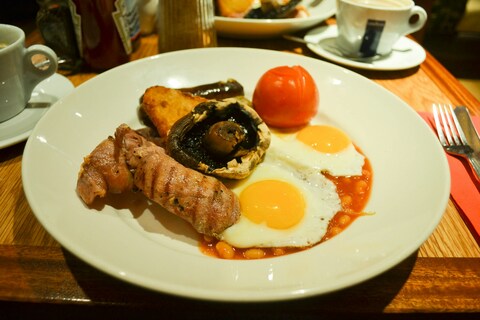
There is so much more to British food than a fried breakfast. London is the the most cosmopolitan city in the world, less than half its inhabitants were even born in the UK. This fact is reflected in the rich culinary scene.
By Geography — Where to Find What
🥟 Chinatown — Soho
London's Chinatown occupies a cluster of streets around Gerrard Street in Soho and is the densest concentration of Chinese and Hong Kong restaurants in the country. The quality varies considerably — some restaurants here are outstanding, others exist on footfall and tourist inertia. The Cantonese dim sum on weekend mornings is the best reason to visit: proper har gow, char siu bao, cheung fun, and turnip cake, served from trolleys in the traditional style, for remarkably little money. Go before noon or queue.
Beyond Chinatown proper, the broader Soho area contains some of the finest Chinese regional cooking in London, including Sichuan restaurants whose heat levels are genuine rather than tourist-calibrated.
Best for: Weekend dim sum mornings | Tip: Arrive before noon — the best restaurants fill fast and don't take bookings for dim sum
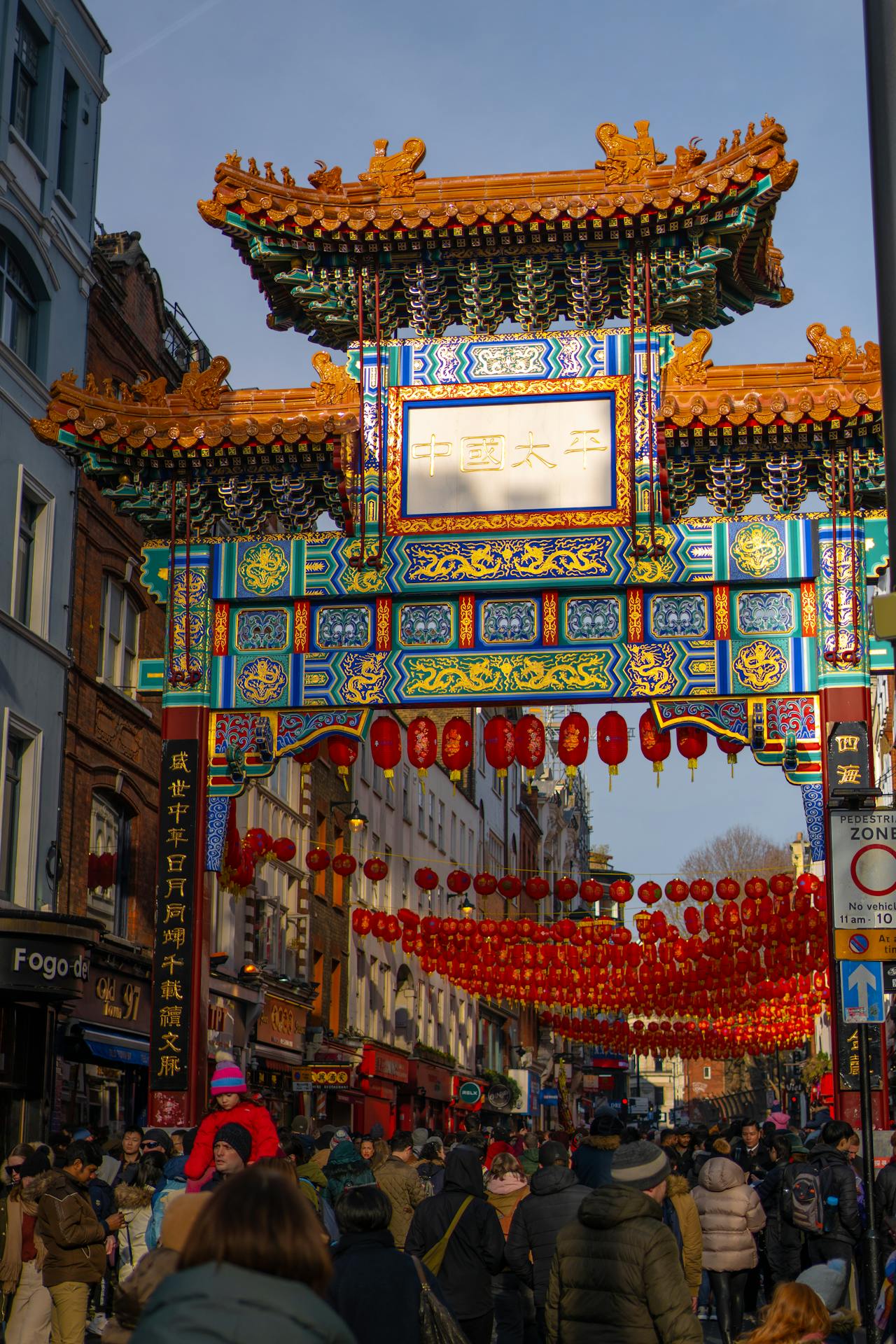
London's China Town is only a few square blocks and next to Leicester Square, also accesible from Charing Cross Road. The best eateries are the small ones hidden down the alleys.
🫕 Edgware Road — West London
Edgware Road, running north from Marble Arch, is London's Middle Eastern corridor. Lebanese, Egyptian, Syrian, and Persian restaurants cluster along its length and into the surrounding streets of Maida Vale and Paddington. The Lebanese restaurants here — meze, grilled meats, flatbreads baked to order — represent some of the best value dining in central London. A full meze spread for two with wine costs £40 to £60 and will be excellent. The shisha cafés open late, giving the area a different character after midnight than almost anywhere else in central London.
Best for: Lebanese meze; late-night dining | Budget: £40–60 for two with wine
🥯 Brick Lane — East London
Brick Lane is famous as London's Bangladeshi restaurant street, and the fame has done it no favours. The restaurants here employ touts who stand outside and negotiate aggressively for your business — a reliable indicator of a restaurant that relies on passing trade rather than the quality of its food. The better Bangladeshi and South Asian cooking in London is found not on Brick Lane itself but in the surrounding streets of Whitechapel and Bethnal Green.
That said, Brick Lane has two things of genuine merit: the Sunday market, one of the better street food and vintage markets in east London, and the bagel shops at the northern end. Beigel Bake at number 159 has been open 24 hours a day since 1977 and makes the finest salt beef bagel in London for approximately £4. At any hour of the day or night. This is non-negotiable if you find yourself in the area.
Best for: Beigel Bake salt beef bagels; Sunday street market | Avoid: The tout-fronted Bangladeshi restaurants on the main strip
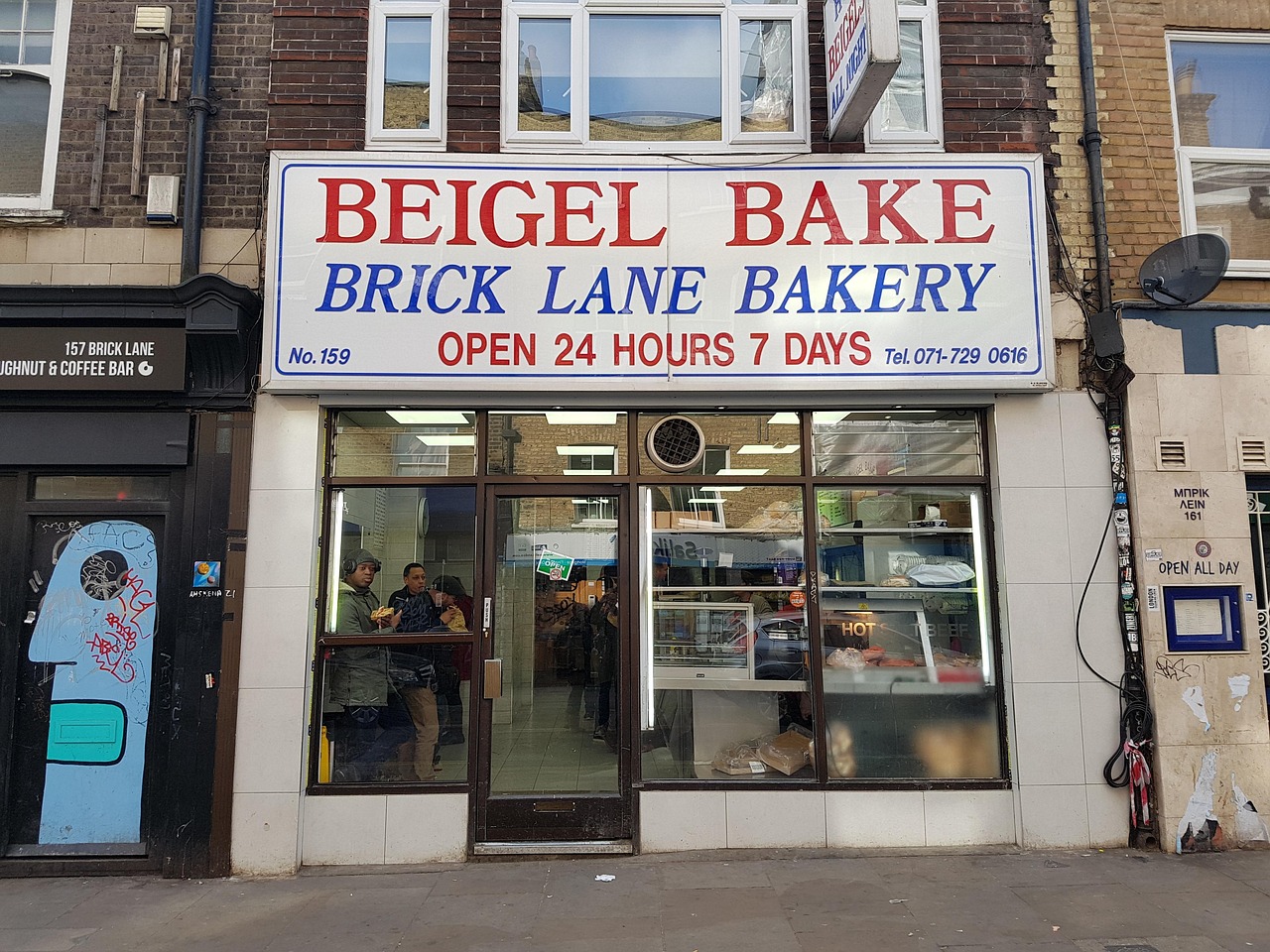
The variety of cuisines found on Brick Lane is living testimony to the waves of immigrants that started their new lives in London over the centuries. This is a 24/7 bagel bakery: Beigel Bake.
🍛 Southall — West London
Southall is not a tourist neighbourhood and does not pretend to be. It is a large South Asian community about 40 minutes from Paddington on the Elizabeth line, and it contains some of the finest Punjabi food in Europe. The restaurants along the Broadway serve food to a community that knows exactly what it is eating — there is no tourist markup, no simplified menu, no apology for spice levels. A full lunch for two costs £15 to £20.
If you have any serious interest in Indian food and are prepared to travel 40 minutes by train for an outstanding meal, go to Southall. Do not bother with the Indian restaurants around Covent Garden.
Best for: Authentic Punjabi cuisine | Budget: £15–20 for two | Getting there: Elizabeth line to Southall
🌍 Brixton — South London
Brixton Market and the surrounding Coldharbour Lane area have evolved into one of the most interesting food neighbourhoods in London. The covered market contains small independent food stalls and restaurants across several interconnected arcades — Caribbean food, Japanese, Ethiopian, and Venezuelan alongside proper coffee and natural wine bars. It is the least tourist-facing entry on this list, the most representative of how Londoners actually eat, and the prices reflect that.
Best for: Caribbean food; independent stalls; how Londoners actually eat | Getting there: Victoria line to Brixton
🥙 Golders Green and Finchley — North London
If Jewish and Israeli food interests you, this is where to come. Golders Green has a large Jewish community and the food that accompanies it: Ashkenazi delis, Israeli falafel restaurants, kosher bakeries, and Middle Eastern grocers with exceptional produce. The salt beef sandwich at Carmelli's bakery and the Israeli breakfast at Benji's are specifically worth the journey from central London.
Best for: Jewish deli food; Israeli cuisine | Getting there: Northern line to Golders Green
The Markets
Beyond Borough Market, several other food markets are worth knowing about. Maltby Street Market in Bermondsey, open Saturday mornings only, is where London's serious food producers sell directly — smaller, less crowded, and more genuinely artisan than Borough. About a ten-minute walk from London Bridge station. Broadway Market in Hackney, open Saturdays, combines good food stalls with a lively independent shopping street and is a fair representation of east London's food culture. Columbia Road Flower Market, in east London on Sunday mornings, surrounds itself with good coffee shops and brunch spots at their best in the two hours before the flower stalls get too crowded. Greenwich Market is between the train station and the Maritime Museum and is worth a visit if you are nearby.
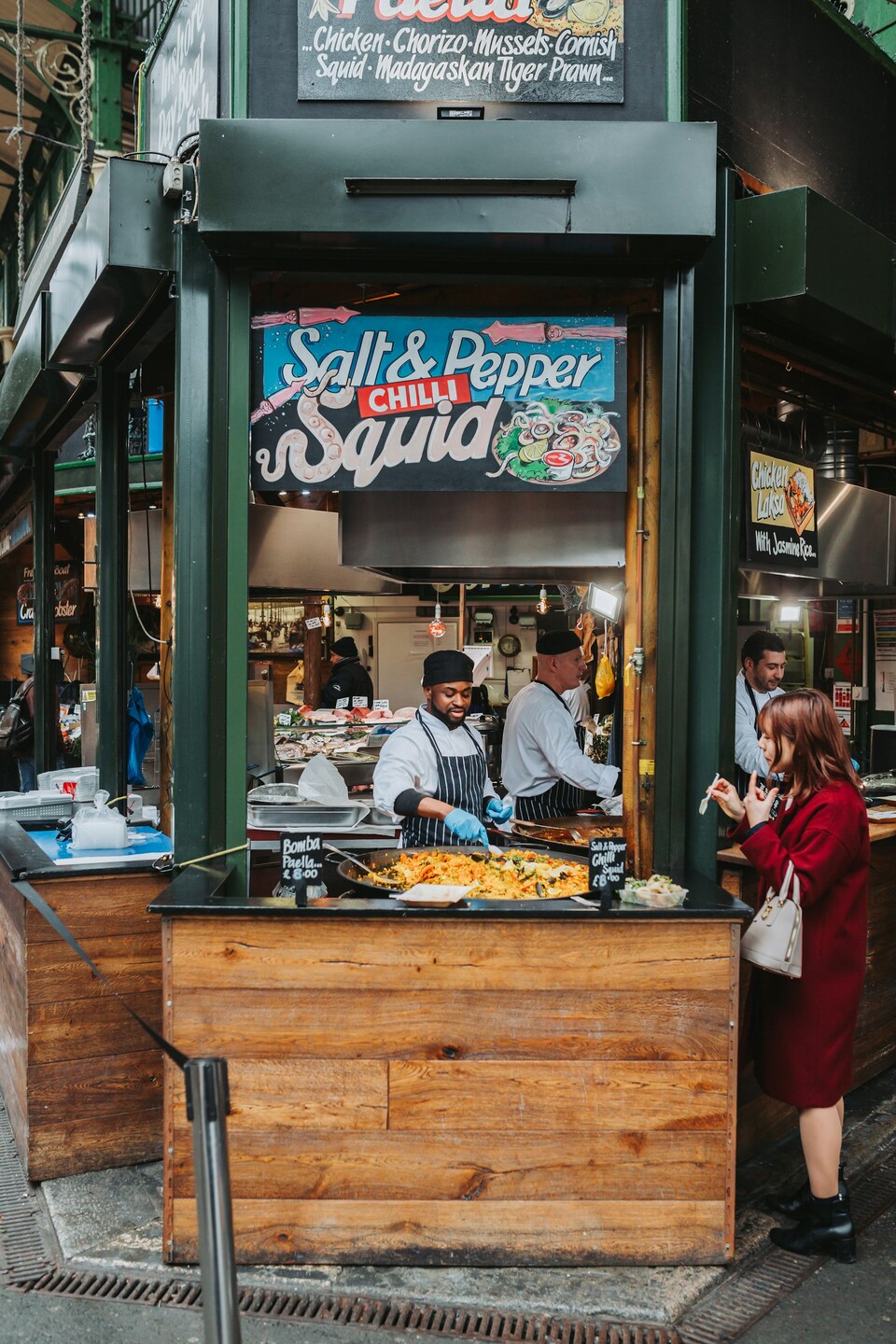
The British Empire's legacy lives on in the lively markets dotted around London. To survive as a food vendor in London what you're selling has to be good, so standards are high.
The Pub — An Institution, Not a Bar
The pub requires its own section because it is not a restaurant with beer or a bar with food. It is a social institution with specific etiquette — order at the bar, rounds are expected in groups, you do not tip the bar staff — and, in its best incarnation, a genuinely excellent place to eat. What follows are pubs notable for specific reasons rather than simply being famous.
⭐ The Harwood Arms, Fulham
The only pub in London to hold a Michelin star, consistently, since 2010. It serves British game and seasonal cooking at a standard that would justify the price in any fine dining restaurant, in a room that still feels like a neighbourhood pub.
Book well in advance.
🏺 The Anchor Bankside, Southwark
Samuel Johnson drank here. Samuel Pepys watched the Great Fire of London from the riverbank outside in 1666. The building is genuinely 18th century, the riverside terrace is magnificent, and the beer is well-kept. Go for a pint rather than a meal and stand outside with a view of the Thames.
📖 The Lamb and Flag, Covent Garden
One of the oldest pubs in the West End, established 1623. Charles Dickens drank here regularly; it appears in his writing as a drinking house of specific character. The rooms are tiny, the ceilings are low, and on a cold evening with a proper bitter it is everything a London pub should be. It is always busy — arrive early or accept standing outside.
🌸 The Churchill Arms, Kensington
Famous for two things: an extraordinary display of hanging flower baskets on its exterior that has won awards for thirty years, and a Thai kitchen in the conservatory at the back that serves outstanding food at pub prices. The combination is implausible and entirely London. Book the Thai kitchen. The main bar does not take bookings.
⚓ The Prospect of Whitby, Wapping
London's oldest riverside pub, with a history dating to 1520. It sits on the north bank of the Thames east of the City, with a pewter bar top, a flagstone floor, and a gallows outside by the water that was once used to hang pirates. Turner painted the Thames from here. Dickens and Pepys both visited. Go in the evening for the atmosphere and the river view at dusk.
Getting there: Overground to Wapping station — worth the detour.
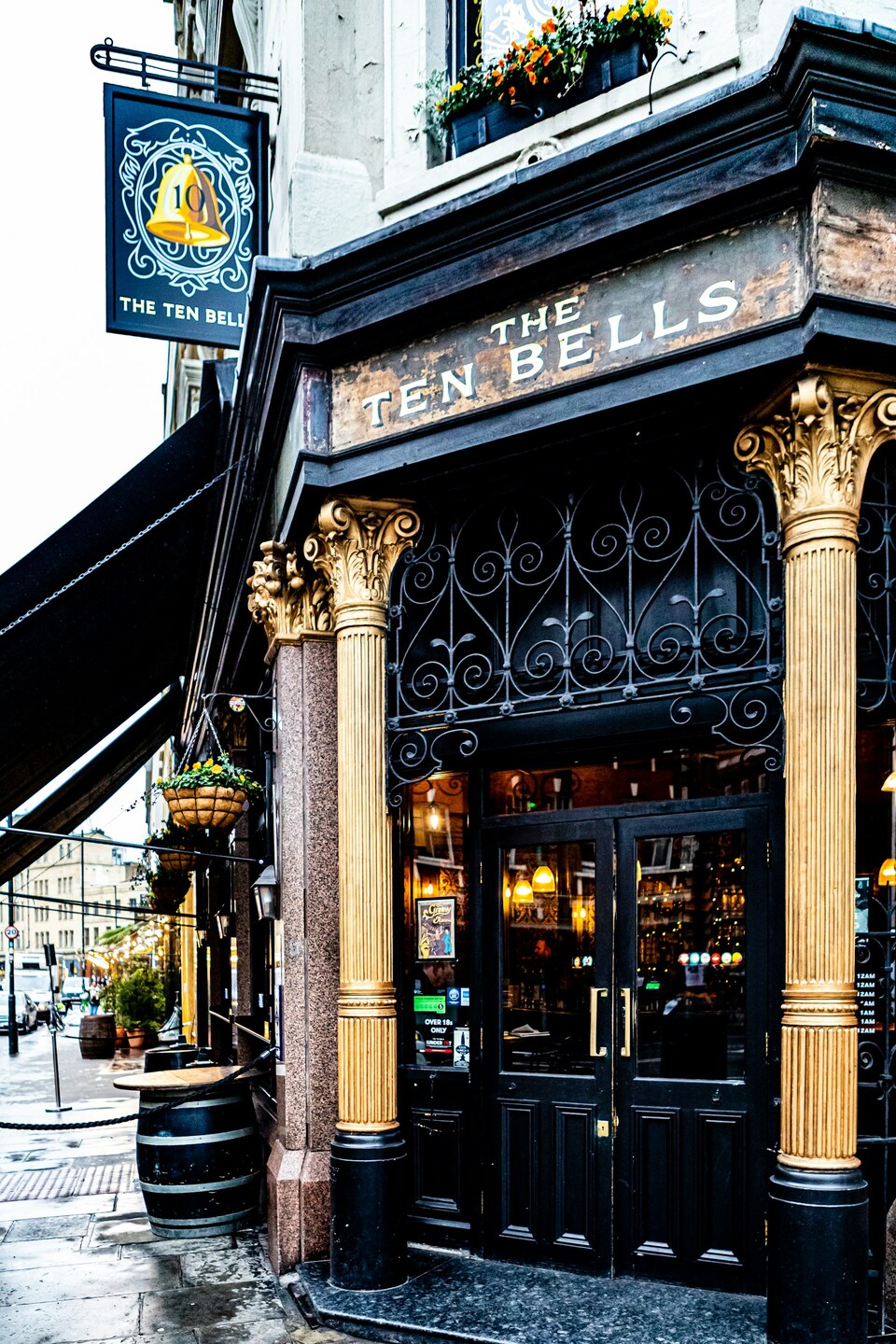
No two pubs (public houses) are the same. Some are "free houses" in that they are owner-operated and serve whatever food and drink they wish, others are owned by a big brewery and only serve that brewery's products. Free houses tend to serve a wider variety of beers.
The One Thing Not to Do
Do not eat dinner in the immediate vicinity of Leicester Square. The restaurants on and around the square exist because the location is impossible to avoid rather than because the food merits a visit. The price-to-quality ratio in that specific cluster — chain restaurants, tourist menus, cover charges, service that knows it will never see you again — is the worst in London. Walk ten minutes in any direction and you will do significantly better for less money. Soho to the north, the South Bank to the south, Covent Garden to the east — all of them contain restaurants worth eating in. Leicester Square itself does not.