
London for Americans
More Americans visit London than any other European city. This is not a coincidence. The shared language removes the single biggest barrier that makes foreign travel feel foreign, the history is intertwined in ways that reward curiosity, and enough of the surface culture — the humour, the music, the legal system, the democratic tradition — feels recognisable to make the city accessible without ever feeling entirely familiar. That last part is the point. London is comfortable enough to navigate easily and different enough to genuinely surprise you. It is the ideal first step into the wider world for Americans who have not travelled much outside the United States, and a city that continues to reward those who have.
This page covers the places and experiences that resonate most specifically with American visitors — the historical connections, the institutions, the moments where the two countries' shared story becomes tangible, and a few things that will catch you off guard if nobody warns you.
The American Roots of the Revolution — and Where to Find Them
Here is the thing about the American Revolution that London makes viscerally clear: it happened here too. The debates that produced the Declaration of Independence were happening simultaneously in the Palace of Westminster, the coffee houses of the Strand, and the pamphlets of Fleet Street. London was not simply the enemy — it was the other half of the argument, and many in Britain were on the American side of it.
🏛️ Houses of Parliament
The Houses of Parliament are where that argument played out. You can visit both chambers — the House of Commons and the House of Lords — on guided tours, and the direct lineage from this building to the US Congress is not abstract. The structure of American government was built partly in deliberate response to, and partly in deliberate imitation of, what happened in these rooms.
The exterior, seen from Westminster Bridge at dusk, is one of the great views in the world for free.
Cost: ~£28 adults | Booking: Required online
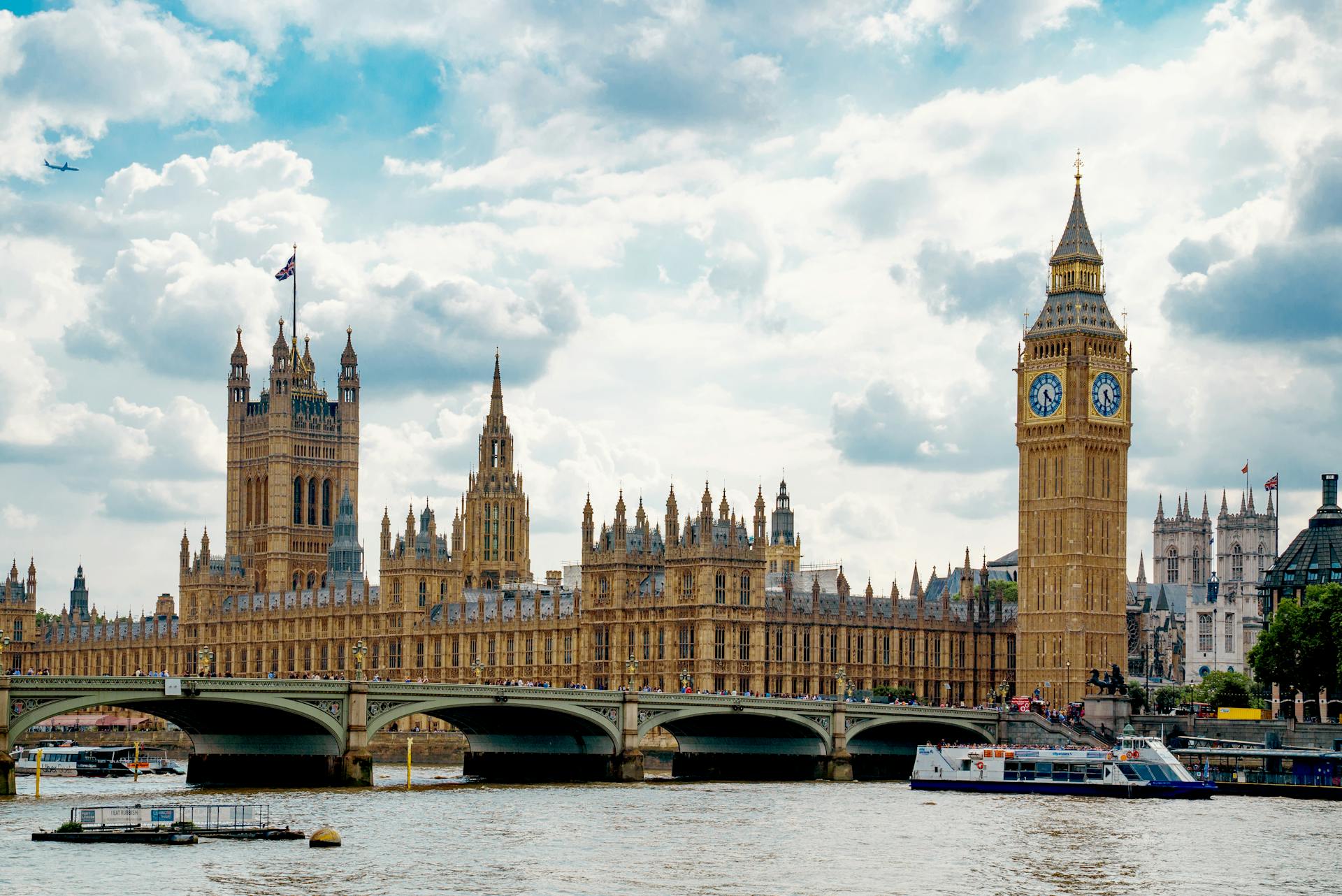
The British Houses of Parliament consist of the House of Commons (which citizens vote for) and the House of Lords (inheritied titles and appointed by the monarch on advice of the Prime Minister). These two bodies debate new laws in this building. You might be surprised by how small the chamber for the Commons is.
📜 The British Library — Magna Carta
The British Library in St Pancras holds one of the four surviving original copies of Magna Carta — the 1215 document from which American constitutional rights directly descend. It is on permanent free display in the Sir John Ritblat Treasures Gallery alongside the Lindisfarne Gospels, a Gutenberg Bible, and handwritten Beatles lyrics. The distance between Magna Carta and the Bill of Rights is not as great as most Americans have been taught to assume, and standing in front of the original document makes that connection real in a way that no classroom does.
Cost: Free | Booking: None required
🇺🇸 Benjamin Franklin House
The Benjamin Franklin House at 36 Craven Street, just off the Strand, is the only surviving home of any Founding Father outside the United States. Franklin lived here for 16 of the years between 1757 and 1775, working as a colonial diplomat and making increasingly futile attempts to prevent the war that was coming. The house runs small, atmospheric tours that are extraordinarily good value for anyone interested in this period of history.
Cost: ~£15 | Booking: Essential — tours are small and sell out
The War Connections
The Second World War is present in London in a way that Americans often find unexpectedly moving. This city was bombed for 57 consecutive nights during the Blitz of 1940 and 1941. Roughly 43,000 civilians were killed. The damage to the fabric of the city was enormous. And the Americans came.
🪖 Churchill War Rooms
The Churchill War Rooms beneath Whitehall are the actual underground bunker from which Churchill directed the British war effort. The Cabinet War Rooms are preserved exactly as they were left in 1945 — the maps still on the walls, the phones still on the desks, the transatlantic hotline to Washington still in its booth. The Churchill Museum attached to the bunker is one of the best biographical museums in the world.
Cost: ~£30 adults | Booking: Essential online — queues can be substantial in summer
✝️ American Memorial Chapel — St Paul's Cathedral
The American Memorial Chapel inside St Paul's Cathedral is less visited than it deserves to be. Installed in 1960 as Britain's memorial to the 28,000 American servicemen and women based in Britain who lost their lives in the Second World War, it is one of the most quietly affecting rooms in London. The Roll of Honour — containing all 28,000 names, turned one page per day — sits at the centre of it.
Cost: Included with St Paul's entry (~£25) | Booking: Recommended online
🎖️ Imperial War Museum
The Imperial War Museum in Lambeth is free, comprehensive, and does not flinch. Its coverage of American involvement in both world wars is substantial, and the Holocaust galleries — among the finest in the world — are harrowing and essential.
Cost: Free | Booking: Timed entry slot required online
Royal London — The Honest Assessment
American fascination with the British monarchy is a source of gentle bemusement among Londoners, who tend toward a more complicated relationship with the institution. The interest is entirely understandable — a constitutional monarchy with a thousand years of continuous history, ceremonial traditions of extraordinary visual spectacle, and a cast of characters who have been global news for decades is genuinely compelling from the outside.
Buckingham Palace State Rooms are open in August and September only. The Royal Mews next door, where the ceremonial carriages and horses are kept, is open most of the year and is more interesting than it sounds. The Crown Jewels in the Tower of London are not to be missed: the Cullinan Diamond alone — the largest gem-quality rough diamond ever found, set into the Sovereign's Sceptre — is an object of extraordinary scale and history.
The Changing of the Guard is worth seeing once. The Household Cavalry Mounted Regiment can be seen at their daily inspection on their way down the Mall at 10:45am most days, which is considerably less crowded than the Buckingham Palace ceremony and gives a closer view of the horses and the uniforms. Position yourself on the south side of the Mall near St James's Palace.
Literary and Cultural London
The American literary connection to London runs deep. Henry James lived here for twenty years and is buried in the Chelsea Old Church. T.S. Eliot — born in St Louis, became a British citizen, won the Nobel Prize — worked as an editor at Faber & Faber on Russell Square, a building still operating as a publisher today. Sylvia Plath lived and wrote in Primrose Hill; the flat at 3 Chalcot Square, where she completed much of her most important work, still stands.
🎭 Shakespeare's Globe
Shakespeare's Globe on the South Bank is a faithful reconstruction of the original 1599 theatre and offers both performances and tours. The groundling standing tickets — £5, in the open-air yard in front of the stage — are the best value in London theatre and the most authentic way to experience the plays. Stand where the original Elizabethan audience stood. It rains occasionally. That is also authentic.
Cost: £5 groundling standing; tours from ~£20 | Booking: Recommended for performances
🔍 Sherlock Holmes Museum
The Sherlock Holmes Museum at 221b Baker Street is unabashedly a tourist attraction rather than a serious cultural institution, but Holmes himself is a character whose influence on American detective fiction — from Raymond Chandler to the entire procedural television genre — is total and rarely acknowledged. The museum is small, fun, and worth an hour.
Cost: ~£18 adults | Booking: Advisable online
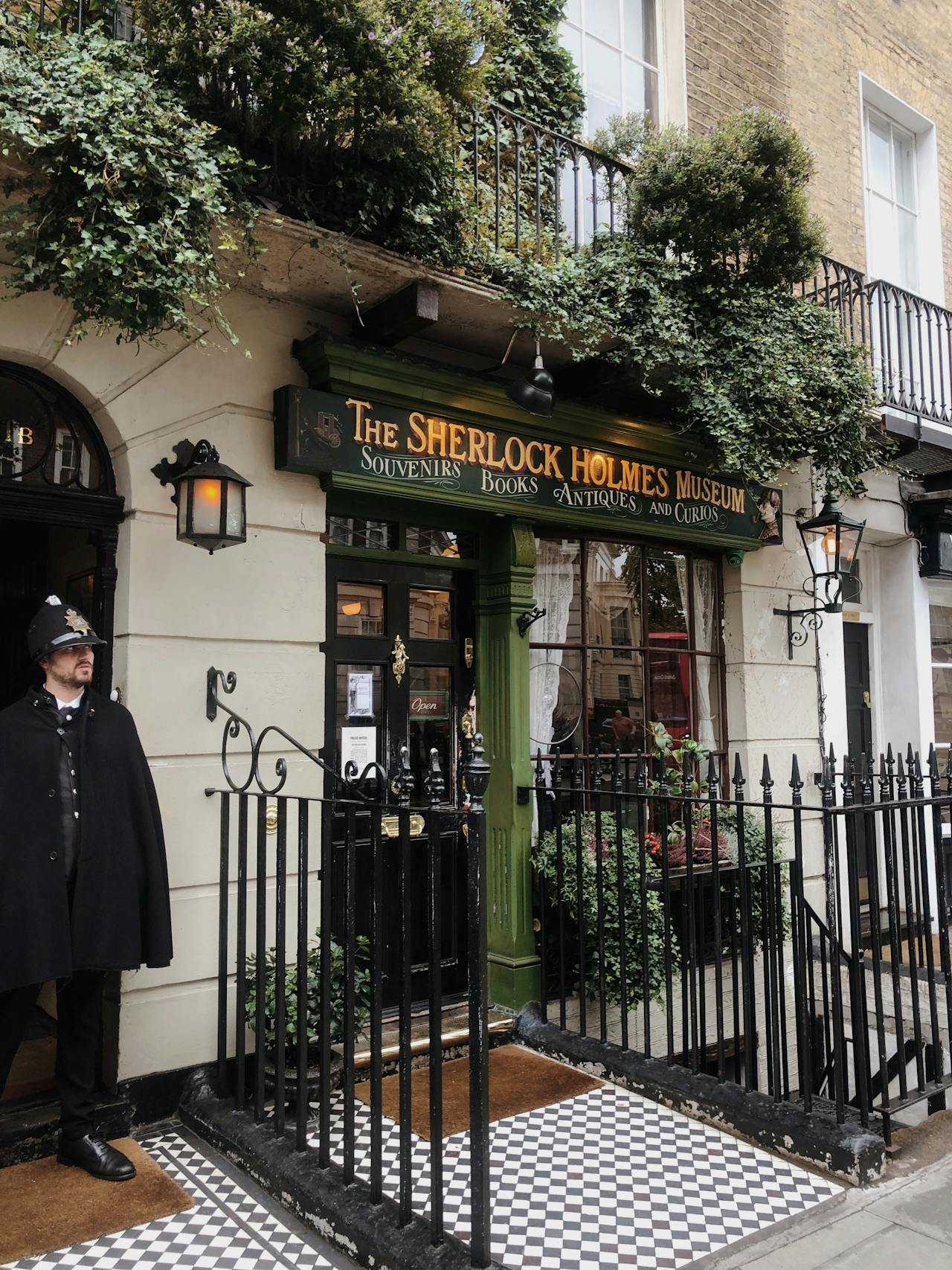
The Sherlock Holmes Museum takes you back to another time, the Victorian era, when London was unquestionably the greatest city on earth. The nearest Tube station is...Baker Street.
A Few Things That Will Catch You Out
Service charges. London restaurants increasingly add a 10% service charge to the bill automatically. Check before you add a tip on top of it — you will otherwise have tipped twice. You are entitled to have the service charge removed if the service was poor; ask politely.
Pub culture. The pub is not a bar. It is a social institution, and the etiquette is different: you order at the bar, not from a server, you do not tip the bar staff (it is not expected and can cause mild confusion), and rounds are a social expectation in a group — if someone buys you a drink, you buy the next one. A pint of decent beer in a central London pub costs approximately £6 to £8. It is worth every penny of cultural immersion.
Floors. The ground floor in Britain is what Americans call the first floor. The first floor is what Americans call the second floor. This will catch you out in a hotel or museum at least once. Now you know.
And finally: they know about the tipping culture difference. They are not offended by it. They are simply operating a different system, and the system works. Observe it, and you will find London considerably warmer than its reputation for reserve suggests.