
Visiting London with Children
A practical age-based planning guide for families
London is one of the finest cities in the world to visit with children, and this is not an accident. It has more free world-class museums than any comparable capital, parks on a scale that most cities cannot match, and enough genuinely excellent family attractions to fill a fortnight. The challenge is not finding things to do — it is understanding which things suit which ages, and avoiding the category of experience that looks appealing on a website but produces a fractious child and a fraying parent by 11am.
The age-banded breakdown below is structured around how children actually experience things, not how attractions market themselves. A three-day itinerary and budget guidance follow at the end.
One thing to address before we begin: safety. London is safe for families. The practical precautions are the same ones that apply to adults, with one additional note — do not let children of any age use their phones openly on the street. Phone snatching by riders on electric bikes is a documented and growing problem in central London, and children are not exempt. In museums, parks, and anywhere with a roof over your head, phones are fine. On the pavement, they go in a pocket.
🍼 Babies (0–2 Years)
🦕 Natural History Museum — South Kensington
Why it works: Enormous, stroller-friendly, and filled with visual stimulation at exactly the right intensity. The blue whale skeleton suspended in the Hanna gallery is the finest thing to show a baby in any museum anywhere, and it costs nothing. Calm, well-lit, and temperature-controlled year-round. One of the best museums in the world.
Best time: Weekday mornings 10:00–12:00, avoiding school trips which arrive in force from 10:30.
Cost: Free | Booking: Required online | Time: 1–2 hours
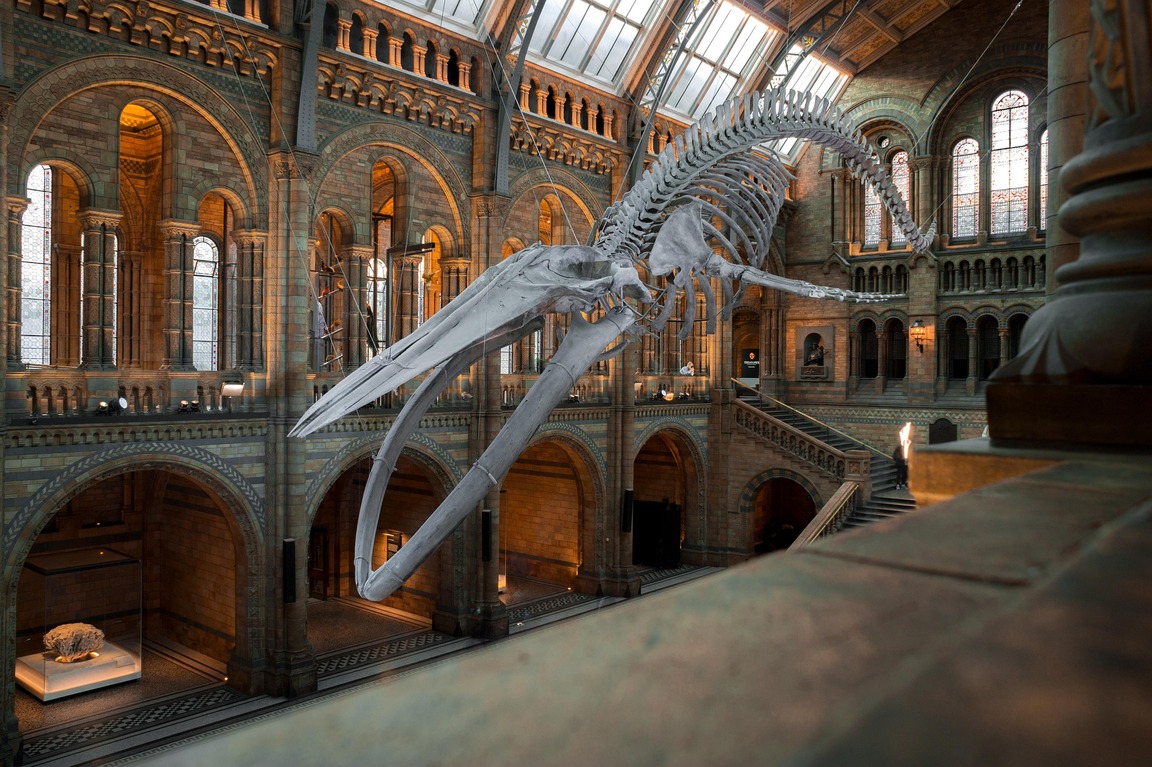
The Natural History Museum has old-fashioned static displays as well as leading-edge interactive exhibits. The Earth gallery even lets you experience what an earthquake feels like. The building itself is a remarkable architectural achievement that you might have seen in Hollywood movies.
🌿 Kew Gardens — Richmond
Why it works: 330 acres of managed gardens with smooth paths, large open lawns, and a magnificent Victorian glasshouse. Calm, green, and at any time of year genuinely beautiful. The Waterlily House alone is worth the journey. Buggies are welcome everywhere.
Best time: Morning, before the afternoon family groups arrive in summer.
Cost: Adults ~£22; under-4s free; under-17s free | Booking: Online | Time: 2–3 hours
🐠 SEA LIFE London Aquarium — South Bank
Why it works: Dark, calm, and full of slow-moving colour. Contained route, stroller-accessible, manageable length. The shark walkthrough tunnel reliably produces the widest eyes of any child under two. It can feel chilly in there, so take a light jacket for everybody.
Best time: Weekday mornings at opening (10:00).
Cost: Adults ~£28–32; under-3s free | Booking: Always online — walk-up prices are substantially higher | Time: 1–1.5 hours
Usually not worth it with babies: The Tower of London (cobblestones, crowds, standing in the cold), the London Eye (30 minutes at height is wasted on a 14-word vocabulary), West End shows (wait another two years minimum), and the Tube at rush hour with a buggy on a deep-level line in July is mega-stressful for all in your group.
🚼 Toddlers (2–5 Years)
Energy management is the entire job at this stage. Every plan needs a backup plan, every backup plan needs an exit strategy, and every exit strategy needs a snack. London rewards the prepared parent.
🏰 Diana Memorial Playground — Kensington Gardens
Why it works: A large, beautifully designed adventure playground centred on a full-scale wooden pirate ship, in one of London's finest parks. It is enclosed, supervised, and free. Children do not want to leave. This is the correct problem to have.
Best time: Weekday mornings to avoid weekend crowds. Opens 10:00.
Cost: Free | Note: Under-12s only; accompanying adults must be with a child | Time: 1.5–2.5 hours
🚂 London Transport Museum — Covent Garden
Why it works: Real buses and Tube trains that children can climb on, sit in, and pretend to drive. It is louder than a conventional museum, which suits this age group admirably. The All Aboard play zone is specifically designed for under-fives.
Cost: Adults ~£23; under-17s free | Booking: Online | Time: 2–3 hours
🦁 ZSL London Zoo — Regent's Park
Why it works: A proper zoo in the middle of the city, running since 1828. Gorillas, lions, giraffes, penguins, and a tiger enclosure. The new Monkey Valley walkthrough gives children a genuine sense of being inside the habitat. Buggy-friendly on main routes.
Cost: Adults ~£35; children 3–15 ~£27; under-3s free | Booking: Essential online — gate prices are higher and the ticket queue wastes your best morning hours | Time: 3–4 hours
Often disappointing with toddlers: The British Museum (artefacts behind glass, explanations aimed at adults), Changing of the Guard (45 minutes of standing with nothing at toddler eye level except other people's legs), and restaurants not chosen with children in mind.
🧒 Pre-Teens (6–11 Years)
This is the golden age for London. Old enough to absorb history, young enough to find a dinosaur skeleton genuinely thrilling, and capable of walking further and complaining about it less. Almost everything the city offers works for this group.
🔬 Science Museum — South Kensington
Why it works: Six floors of hands-on science, technology and engineering. The Wonderlab interactive gallery is outstanding — live science demonstrations, experiments children can participate in, and enough to hold a curious 8-year-old's attention for hours. The actual Apollo 10 command module is in here. It's next to the Natural History Museum.
Cost: Permanent collection free; Wonderlab ~£10 per child / £14 per adult | Booking: Online | Time: Half a day minimum
🏰 Tower of London — City of London
Why it works: The combination of the Crown Jewels, a working medieval fortress, the story of the two princes who disappeared inside it, and the fact that people were beheaded in the courtyard they are currently standing in is precisely as gripping as it sounds at this age.
Cost: Adults ~£34; children 5–15 ~£17; under-5s free | Booking: Essential online | Time: 3–4 hours — do the free Yeoman Warder tour first
Tip: Arrive at 9:00am opening. By 11am in summer it is extremely crowded.
🧙 Warner Bros. Studio Tour — Harry Potter — Watford
Why it works: The original sets, costumes, props, and creatures from all eight films. The Great Hall, Dumbledore's office, Diagon Alley, and the full-scale Hogwarts model. For any child who has read the books or seen the films, this is not an attraction — it is a pilgrimage. It is genuinely spectacular.
Cost: Adults ~£55; children 3–15 ~£47 | Booking: Book the moment your trip dates are confirmed — sells out weeks ahead in school holidays | Time: Full day (4–5 hours inside, plus travel to Watford)
Getting there: Train from Euston to Watford Junction (20 mins), then dedicated shuttle bus to the studio.
⛵ Cutty Sark and Greenwich — South-East London
Why it works: A real Victorian clipper ship to explore top to bottom, combined with the Royal Observatory, the meridian line they can stand on with one foot in each hemisphere, and a hill in Greenwich Park to roll down. The journey there by Thames Clipper river bus is itself an event.
Cost: Cutty Sark: adults ~£20, children 4–15 ~£10. Royal Observatory: adults ~£18, children ~£9. National Maritime Museum: free | Time: Full day
It can be said that the best things in London are free. Just walking around Zone 1 near the River Thames yields enjoyable, memorable experiences for the whole family. The Southbank is more stroller-friendly and you get to see the historic buildings across the river.
🧑🎓 Teens (12–18 Years)
Teens respond to autonomy, credibility, and the sense that they are experiencing something real rather than something designed for them. London delivers all three, if you choose well. The worst thing you can do is take a teenager to an attraction they can see through as being aimed at younger children. The second worst is not giving them any say in the itinerary.
🎭 A West End Show
Why it works: London's West End is the finest concentration of live theatre in the English-speaking world. A well-chosen show — Hamilton, The Lion King, Les Misérables, The Book of Mormon for older teens — is an event that most teenagers will talk about for years. Book the show; let the teen choose which one.
Cost: £30 for restricted-view seats up to £100-plus for premium; day seats and returns from the TKTS booth in Leicester Square for significantly less | Time: An evening (shows typically run 2.5 hours with interval)
🏙️ Sky Garden — City of London
Why it works: Free, spectacular, and requires planning to access — which gives it a sense of occasion. The Sky Garden occupies the top three floors of 20 Fenchurch Street (the "Walkie Talkie" building) and offers a 360-degree panorama from 160 metres. The booking requirement means most tourists don't know about it; the free entry means those who do feel they've found something. Both things appeal to teenagers considerably more than a £35 observation wheel.
Cost: Free | Booking: Must be booked online at skygarden.london — sometimes weeks ahead | Time: 1.5–2 hours
🍜 Borough Market — London Bridge
Why it works: Let them eat what they want from one of the world's great food markets. Proper street food, extraordinary produce, vendors who know exactly what they're selling and why. Give them a budget and let them explore independently. Go Thursday or Friday morning before the crowds arrive.
Cost: Free entry; budget ~£15–20 per person for food | Time: 1.5–2 hours
🎸 Camden Market
Why it works: Chaotic, creative, and completely unlike anything in the rest of central London. Street food, independent fashion, vintage clothing, music, and an atmosphere that has attracted generations of teenagers for fifty years. Worth the usual precautions around pickpockets in a busy market — bags forward, phones away.
Time: 2–3 hours
3-Day Flexible Family Itinerary
Day 1 — Museums and the South Bank
Morning at the Natural History Museum or Science Museum (NHM for babies and toddlers; Science Museum Wonderlab for pre-teens). Midday walk to the South Bank — lunch at Borough Market or riverside food stalls near Tate Modern. Afternoon: SEA LIFE Aquarium for younger children; Tate Modern (free) for older children and teens.
Day 2 — History and the River
Tower of London, arriving at 9:00am sharp — Yeoman Warder tour first, Crown Jewels second. Afternoon: Thames Clipper from Tower Pier to Greenwich. Greenwich Park, Cutty Sark, and the Observatory for pre-teens; the park and the hill are sufficient for younger children.
Day 3 — Age-Dependent Focus
| Age Group | Suggested Focus |
|---|---|
| Babies | Kew Gardens morning; quiet afternoon in Hyde Park near the Diana Playground |
| Toddlers | Diana Memorial Playground + London Zoo (afternoon, when toddlers revive) |
| Pre-Teens | Full day at Warner Bros. Harry Potter Studio Tour — book weeks ahead |
| Teens | Sky Garden in the morning + West End show in the evening |
Timing and Seasonal Considerations
- Summer (July–August): UK school holidays run from late July through August. The most crowded period at every attraction without exception. Book everything months ahead. The Harry Potter Studio Tour in August without a booking is simply not an option.
- Spring and Autumn: The best times for family visits. Crowds are lower, prices more manageable. Easter week is the exception — school groups and European tourists arrive in force.
- Winter (November–March): Christmas in London is genuinely magical for children — the lights, the markets, the atmosphere. January and February are the quietest and cheapest months. Museums packed in August are navigable in February.
- The Tube with children: Avoid rush hour (7:30–9:30am and 5:00–7:00pm weekdays). A deep-level Tube train at capacity with a pushchair and a toddler is not a pleasant experience for anyone involved, including the other passengers.
Budget Guidance — Per Family of Four
| Category | Approximate Daily Spend |
|---|---|
| Attractions (mix of free and paid) | £60–£140 |
| Meals (lunch + dinner) | £80–£140 |
| Transport (two adults; daily cap) | £25–£40 — children under 11 travel free with a paying adult |
| Harry Potter Studio Tour (all four) | ~£200 plus travel to Watford |
| West End show (four tickets, mid-range) | £150–£280 depending on show and seat |
Children under 11 travel free on the entire London Tube and bus network when accompanied by a paying adult. Children aged 11–15 travel at a child rate. This is a meaningful saving over a multi-day visit.
After a long day exploring London, you'll appreciate staying somewhere central. Our guide about where to stay as a tourist in London explains the suitable neighbourhoods for you.