
Arriving in London — Heathrow & Gatwick
London is served by two major international airports. Most long-haul visitors arrive at Heathrow; a significant number — particularly those on budget and charter carriers — arrive at Gatwick. This page covers both in full, so you know exactly what to expect from the moment your wheels touch down.
Before You Land — The UK ETA
If you are a citizen of the United States, Canada, Australia, or most other countries that previously enjoyed visa-free entry to the UK, the rules changed in 2024. You now need an Electronic Travel Authorisation — an ETA — before you board your flight. It is not a visa. It is an online pre-clearance that costs £20, takes a few minutes to apply for, and is linked electronically to your passport. You do not print it or carry it. The airline checks it when you check in.
What you must not do is assume that because you have visited the UK before without any formality, you can still do so now. If you board without an ETA, you will be denied boarding, or turned around on arrival. Apply at the official UK government website — not through any third-party service that charges more for exactly the same application. Do it the moment you book your flights. Do not leave it to the week before you travel.
Citizens of Ireland and British nationals do not need an ETA.
✈️ Arriving at Heathrow
Heathrow is the fifth busiest airport in the world. On a busy day, over 230,000 passengers pass through it. Some of them — more than you might expect — arrive unprepared for what the airport asks of them, and they pay for it in lost time, unnecessary expense, and a first hour in the United Kingdom that sets the wrong tone for everything that follows.
This page exists so that this is not you.
The Size of Heathrow
Heathrow has five terminals, and this is the first thing to get right. Terminals 1, 2, 3, 4 and 5 are not all connected. Terminal 5 is where British Airways and Iberia operate exclusively, and it sits some distance from the others. Terminal 4 is also separated and requires a dedicated rail connection. If you are connecting between flights at Heathrow and your terminals are not adjacent, add at least 90 minutes to your connection time. Heathrow will eat a 45-minute connection alive and not apologise for it.
When you look up your arriving flight, confirm your terminal before you travel. The terminal determines which Tube station you arrive at, which exit your taxi or pickup will use, and how long it will take to walk from the gate to the exit. In Terminal 5, after a long-haul flight, the walk from gate to passport control can feel longer than the flight itself. It is not — but bring comfortable shoes and don't be in a hurry.
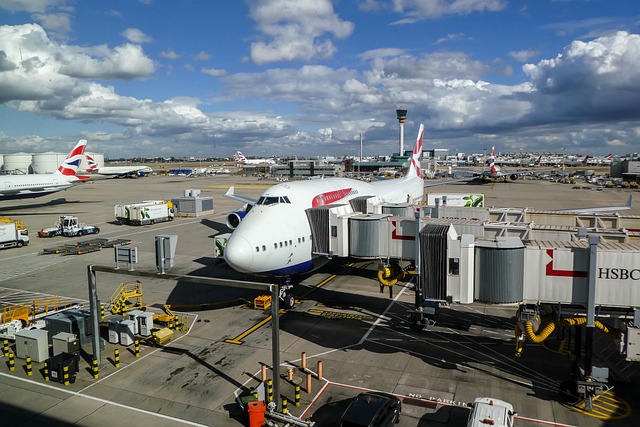
London Heathrow is a huge, busy airport and takes a long time to walk around. It has 3 train stations and is one of 4 airports that serve London.
Passport Control
UK passport control is divided into two streams: UK and Irish citizens, and everyone else. If you hold a biometric passport from a country eligible for the e-gates — which includes the US, Canada, Australia, New Zealand, Japan, South Korea, and most EU nations — you may be able to use the automated e-gates rather than joining the queue for a manned desk. The e-gates scan your face and your chip. They are fast when they work and occasionally temperamental when they don't. If the gate rejects you, join the queue for a border officer — it happens to everyone occasionally and is not a cause for alarm.
Border officers at Heathrow are professional and matter-of-fact. Answer their questions directly and honestly. They will typically ask the purpose of your visit, where you are staying, and how long you intend to remain. Have your accommodation address to hand — not just the city, the actual address. If you are staying in multiple places, know your first address. "I haven't booked yet" is an answer that will slow things down considerably.
Wait times at passport control vary enormously. Early morning arrivals from North America and the Middle East can produce queues of an hour or more if multiple long-haul flights land together. There is nothing to be done about this except to be patient, stay hydrated, and not make yourself anxious about onward connections you have planned too tightly.
Customs
After collecting your bags, you will pass through customs via one of two channels: green (nothing to declare) or red (goods to declare). Most tourists take the green channel without incident. Know the limits before you travel: you can bring in up to 200 cigarettes, 18 litres of still wine, four litres of spirits, and goods worth up to £390 purchased outside the UK. Anything above those limits should go through the red channel. Customs officers do conduct random checks in the green channel. The consequences of being stopped with undeclared goods significantly above the limit are not worth the risk.
Your First Decisions After Arrivals
The Arrivals hall at Heathrow is the moment when several things compete for your attention simultaneously: people holding signs, currency exchange desks, a taxi rank, and the exit to the Tube. Make your decisions before you get there, not while you are jet-lagged and disoriented in the middle of the hall.
1.) Money. Do not change currency at the airport. The exchange desks in Arrivals — Travelex is the main operator — offer rates that range from poor to genuinely bad. The gap between what they offer and the real rate is their profit, and it is substantial. If you need sterling immediately, use a cashpoint inside the terminal before you exit arrivals. Better still, why not use a bank card with no foreign transaction fees and offer excellent rates with no markup? See how at the Practical London page to Avoid being ripped off by your bank while you're in London.
2.) SIM card. If you want a UK SIM, the airport sells them from vending machines and a national newsagent called WHSmith. EE, Vodafone, and O2 networks all have good coverage, but small limited plans which can work out to be quite expensive or inconvenient. You will almost certainly get a better deal buying a eSIM online before you travel and activating it on arrival. We found the two best eSIMs for London, why not see if they suit you?
Launch eSIM Comparison Page in a new tab3.) Getting into the city. You have three real options, each suited to a different situation.
The Elizabeth line is the correct answer for almost everyone travelling to central London. It runs from all Heathrow terminals directly into the heart of the city — Paddington, Bond Street, Tottenham Court Road, Farringdon, Liverpool Street — in around 40 minutes, for a fare of approximately £14 with a contactless card. The trains are modern, spacious, and air-conditioned. They run every 20 minutes. It is fast, cheap, reliable, and, crucially, has room for luggage in a way the older Piccadilly line does not. The Piccadilly line also connects Heathrow to central London, takes around an hour, and costs less — but the trains are narrow, the carriages get crowded, and standing with large bags through the rush-hour Tube is not the welcome to London you deserve.
The Heathrow Express is a dedicated rail service to Paddington in 15 minutes. It is fast and comfortable. It also costs about £37 for a single (one-way) ticket. Unless someone else is paying, or you are cutting a connection very fine, the Elizabeth line does the same job at a third of the price and the difference in journey time is rarely worth it unless you really need to get to Paddington in a hurry..
A taxi — black cab or pre-booked minicab — makes sense if you have significant luggage, are travelling as a group that splits the cost, or are going somewhere the Elizabeth line does not serve directly. A black cab from Heathrow to central London will cost £65 to £95 depending on traffic and destination. Traffic on the M4 corridor into London can be severe at peak times. A taxi during the morning rush hour from Heathrow can take well over an hour and cost significantly more than the meter started out suggesting.
Prefer a completely hassle-free arrival?
A pre-booked private transfer is the simplest way to get into London. Your driver meets you in the arrivals hall (even if your flight is delayed), helps with your luggage, and takes you directly to your accommodation — no ticket machines, no navigation, no guesswork, no stress.
This makes the most sense after a long-haul flight, if you are arriving late at night, travelling with children or a mobility-impaired person, or carrying multiple large bags. Maybe you just want to arrive in London in style? Pricing is usually comparable to a taxi, but with a fixed cost agreed in advance and no risk of bad traffic pushing the fare higher.
Check prices & availabilityThis is an affiliate link. If you book through it, we may earn a small commission at no extra cost to you.
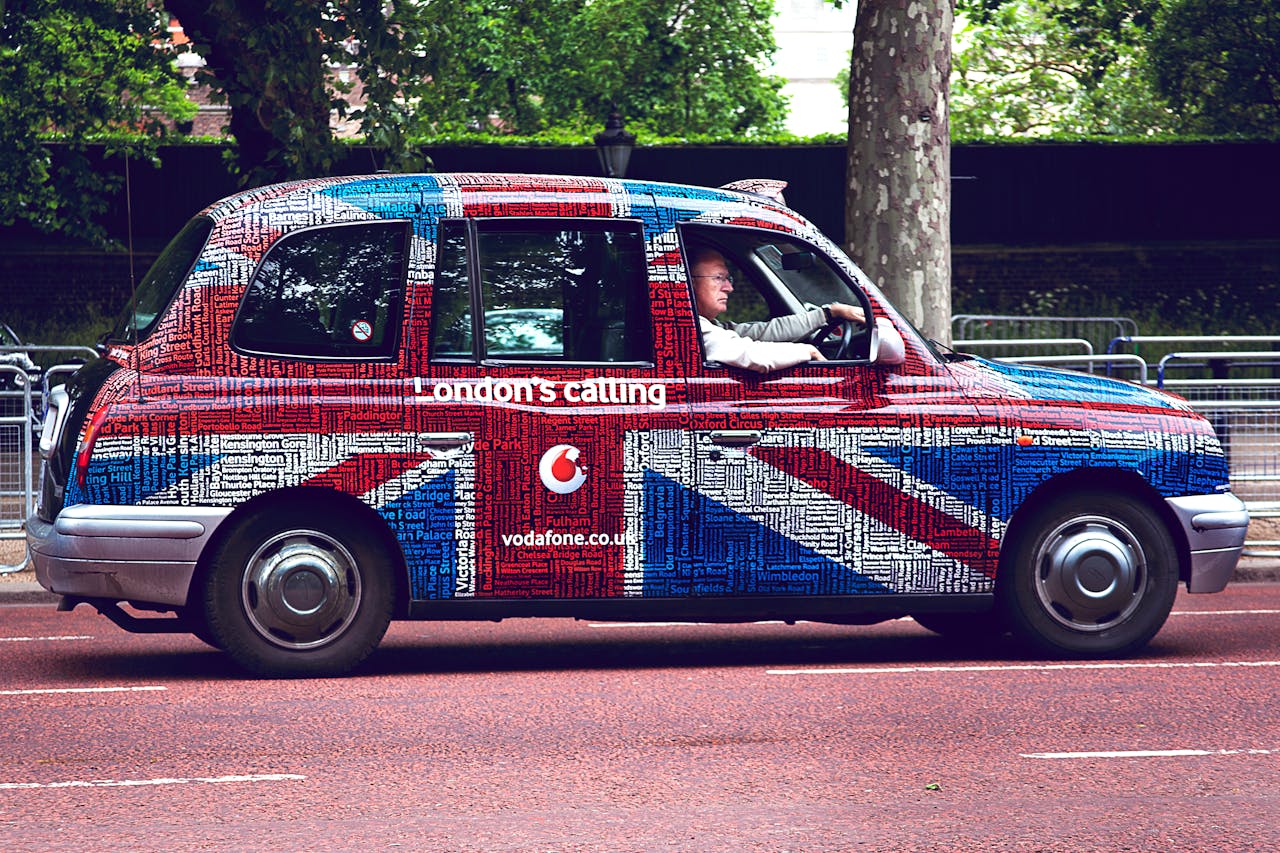
Not all of London's "black cabs" are actually black. Some sell advertising on their vehicle for extra money. They are the most expensive transport option in London, but serve a purpose under certain circumstances.
If You Are Connecting Onwards
If Heathrow is a connection rather than a destination, you should already know your terminal situation. If your connection is tight and you are arriving from outside the EU or UK, you will need to pass through passport control, collect bags, clear customs, re-check bags, and pass through security again unless you are airside on a protected through-connection. If in doubt, ask your airline when you book. Heathrow connections require more time than most airports of equivalent size, because of the terminal separation and the volume of passengers.
The minimum recommended connection time at Heathrow is 90 minutes for domestic and short-haul, and two hours for long-haul. In practice, anything under two hours carries risk. Heathrow is not forgiving of tight connections, and neither is the airline if you miss your onward flight because of it.
✈️ Arriving at Gatwick
Gatwick is London's second airport and, for a significant number of visitors, the better one to arrive at. It handles around 47 million passengers a year across two terminals. It is smaller than Heathrow, less complicated, and — this matters after a long flight — considerably less exhausting to navigate. If you have a choice of which London airport to fly into, the decision is worth thinking about carefully rather than defaulting to the famous name.
Two Terminals, One Important Difference
Gatwick has a North Terminal and a South Terminal. Unlike Heathrow's five-terminal spread, both of Gatwick's terminals are on the same site and connected by a free, frequent, and fast monorail that takes about two minutes. Missing your terminal at Gatwick is easily corrected. Missing your terminal at Heathrow can cost you an hour. This is one of several ways in which Gatwick is simply less stressful than its larger rival.
That said, you still need to know which terminal your flight uses before you travel. easyJet operates almost exclusively from the North Terminal. British Airways, Norwegian, TUI, and most long-haul carriers use the South Terminal. Check before you go. The monorail fixes mistakes, but it still takes time you might not have if your connection is tight.
Passport Control and Customs
The process at Gatwick mirrors Heathrow exactly: e-gates for eligible biometric passport holders, manned desks for everyone else, then baggage reclaim, then customs. The ETA requirement that applies at Heathrow applies equally here — there are no exceptions by airport. If you need one and don't have one, Gatwick's border officers will turn you around just as efficiently as Heathrow's will.
Where Gatwick differs meaningfully is in queue times. Because it handles fewer long-haul flights than Heathrow — and therefore fewer situations where five wide-body jets land within the same thirty minutes — passport control queues at Gatwick are generally shorter and more predictable. Not always, and not guaranteed, but as a consistent pattern, processing times here tend to be better than at Heathrow. For travellers who have experienced an hour-long queue at Heathrow passport control after a transatlantic flight, this difference is not trivial.
Getting Into London from Gatwick
The Gatwick Express is a dedicated rail service to London Victoria that runs every 15 minutes and takes 30 minutes. At approximately £22 for a single with a contactless card, it is more expensive than taking the Tube from Heathrow but covers a longer distance quickly and efficiently. Victoria is a well-connected hub that will get you onward by Tube, bus, or taxi without difficulty.
Here is what most guides fail to mention: the Gatwick Express is not the only train from Gatwick to London, and it is not always the right one. Southern and Thameslink also run services from Gatwick to London Bridge, St Pancras International, Farringdon, and Blackfriars — all on the same tracks, stopping at more stations, taking slightly longer, and costing considerably less. If your destination in London is closer to London Bridge or anywhere on the Thameslink corridor, a regular Southern service may deliver you closer to your hotel, faster overall, for less money. Check the journey planners rather than assuming the Express is automatically the right product.
Taxis from Gatwick to central London cost broadly £80 to £110 depending on destination and traffic, and the journey takes 45 minutes to well over an hour depending on conditions on the M23 and M25. Gatwick sits 30 miles south of London — further from the city than Heathrow — and the road journey reflects that. Uber operates from Gatwick, as do pre-booked minicab services. For groups with luggage, a shared taxi can be reasonable value. For a solo traveller, the train is nearly always the right answer.
Heathrow vs Gatwick — The Honest Comparison
Heathrow wins on connections to more destinations globally and on the speed and cost of its Elizabeth line link into central London. If you are flying with British Airways, American Airlines, or another major carrier on a transatlantic or long-haul route, Heathrow is probably where you will land regardless of preference.
Gatwick wins on simplicity. It is a calmer, more manageable airport. Its two-terminal layout is intuitive, passport control queues are usually shorter, and the overall experience of arriving there is less likely to leave you feeling as though the airport itself was the hardest part of the trip. Budget and charter carriers — easyJet, Norse Atlantic, Corsair, and others — operate there in large numbers, which is why it handles a high proportion of leisure travellers rather than business passengers. That tends to produce a slightly more relaxed atmosphere on the ground.
If you are given a genuine choice, flying into Gatwick and out of Heathrow — or vice versa — is a perfectly sensible arrangement that London's transport network supports easily. The two airports are connected by National Rail in under an hour. Treating them as interchangeable entry and exit points rather than assuming you must use the same one twice is a habit worth developing.
Do You Really Need Travel Insurance for London?
The British NHS provides emergency treatment, but it does not guarantee everything will be free. Depending on your situation, overseas visitors can still be charged—especially once care moves beyond the immediate emergency stage. People from the USA, Canada, Australia and New Zealand are often surprised that no healthcare treaty exists with the UK.
If you’re from an European country and are travelling with a EHIC card, you’ll still get access to medically necessary state care, but even that comes with limits:
- No cover for private treatment
- No cover for getting you home (repatriation)
- No cover for cancellations, delays, or lost belongings
In practical terms: you’ll be looked after—but you’re still financially exposed.
Where Travel Insurance Makes the Difference
Most problems travellers face aren’t major emergencies. They’re the frustrating, expensive situations around the edges: missed connections, extended stays, follow-up treatment, or needing to change plans quickly.
Without insurance, those costs fall directly on you. With it, they’re handled.
It’s not about expecting something to go wrong. It’s about having peace of mind and not having to deal with it alone if it does.
The link below is an affiliate link. If you make a purchase through them, we may earn a small commission at no extra cost to you.
Compare Travel Insurance OptionsVisitorsCoverage lets you compare multiple travel insurance providers all in one place. It is particularly well suited to US travellers, while offering options for all nationalities. You can choose just medical cover or just trip insurance or both. This marketplace offers many options to suit every wallet.
Compare your insurance options here →Typical Situations Where Insurance Helps
- Flight delays forcing an unexpected overnight stay
- Follow-up treatment after an emergency visit
- Lost or delayed luggage requiring replacement essentials
- Cutting your trip short due to illness or family emergencies
What It Could Cost Without Insurance
- Short hospital stay: hundreds to thousands of pounds
- Medical evacuation or repatriation: potentially tens of thousands
- Last-minute flight changes: significantly higher fares
- Replacing lost belongings: entirely out of pocket