
London Weather — What They Don't Tell You
The reputation precedes it: grey skies, drizzle, umbrellas, fog. The British themselves have turned their weather into a national personality trait, a subject of daily conversation and endless self-deprecating humour. Visitors arrive expecting the worst.
The truth is more interesting than the cliché, and more useful.
London's weather is genuinely unpredictable — but not in the way people imagine. It is rarely extreme. It does not do the prolonged deep freezes of Moscow or Chicago, nor the sustained punishing heat of Madrid or Athens. What it does, in any season, at almost any time, is change. Sometimes within the same afternoon. That is the single most important thing to understand about London's climate, and it is the thing that will most directly affect how you pack and how you plan.
A forecast here is a suggestion, not a promise. Build that into your thinking from the start.
The Rain Thing
Let's settle this first, because it dominates every conversation about London weather and is widely misunderstood. London receives around 600 millimetres of rain per year. That is less than Rome. Less than Miami. Considerably less than Sydney. By the objective measure of annual rainfall, London is not a particularly wet city.
What gives it its reputation is not the volume but the character of the rain. It tends to arrive as persistent drizzle rather than tropical downpours. It can hang around for an entire day without ever quite amounting to much. It does not announce itself with thunder and then clear the air and move on the way a Mediterranean or subtropical storm does. It seeps. Londoners do not run for cover when it rains the way people in sunnier cities do, because if you ran for cover every time it drizzled in London you would spend half your life standing in doorways.
The practical upshot: you need a compact umbrella or a light waterproof jacket, available at all times. Not a heavy rain mac. Not waterproof trousers. Something you can fold into a bag and pull out at a moment's notice. Every day. Every season. This is non-negotiable.
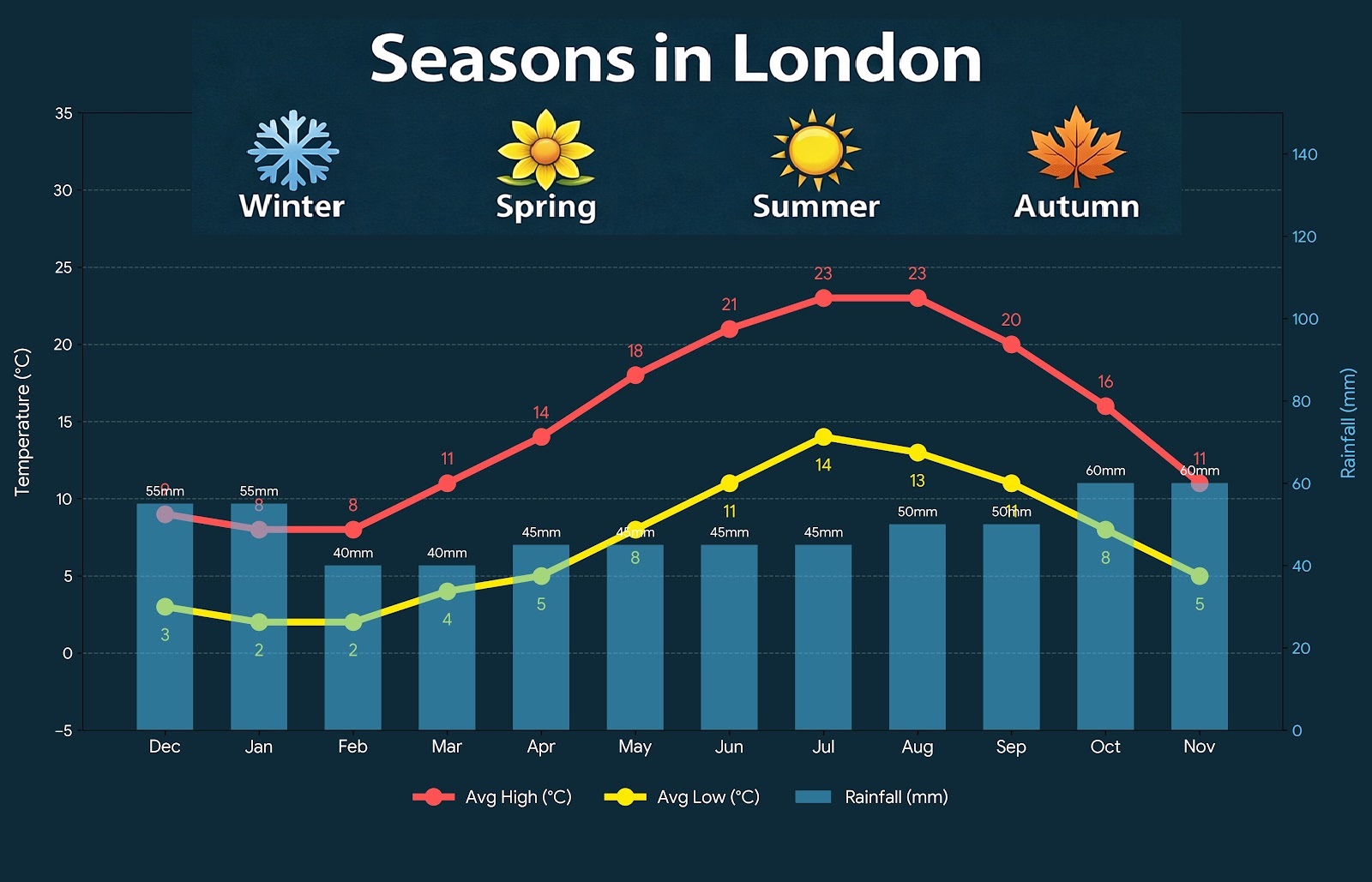
There is no "rainy season" in London, it rains evenly across the year. Dry Summer days do happen and some Winter days are perfectly clear. Winters are mild by European standards.
Winter — November to February
London winters are grey, damp, and short on daylight. By December the sun rises around 8am and sets before 4pm. That is eight hours of usable daylight on a good day, and on a cloudy one it can feel like the sun barely showed up at all. Temperatures hover mostly between three and nine degrees Celsius, occasionally dipping below freezing overnight, rarely staying there for long.
Snow in London is an event. It happens, but it does not happen reliably, and when it does the city treats it with a mixture of delight and mild civic chaos. Do not plan a winter trip around the prospect of a white London. It will probably not deliver.
What winter does deliver, and this is genuinely underappreciated, is atmosphere. The Christmas markets in Hyde Park and the Southbank run through late November and December. The city's museum culture — which is world-class and almost entirely free — comes into its own when going outside is less appealing. Theatres, concert halls, and restaurants are at their most vibrant when summer tourists are not competing for every seat. Hotel prices drop considerably outside the Christmas peak. If culture, food, and value matter more to you than daylight, a winter visit makes real sense.
Bring a proper winter coat, layers, and waterproof footwear. The cold in London is damp cold, which cuts through you more effectively than dry cold at the same temperature. A number on a thermometer does not tell the whole story.
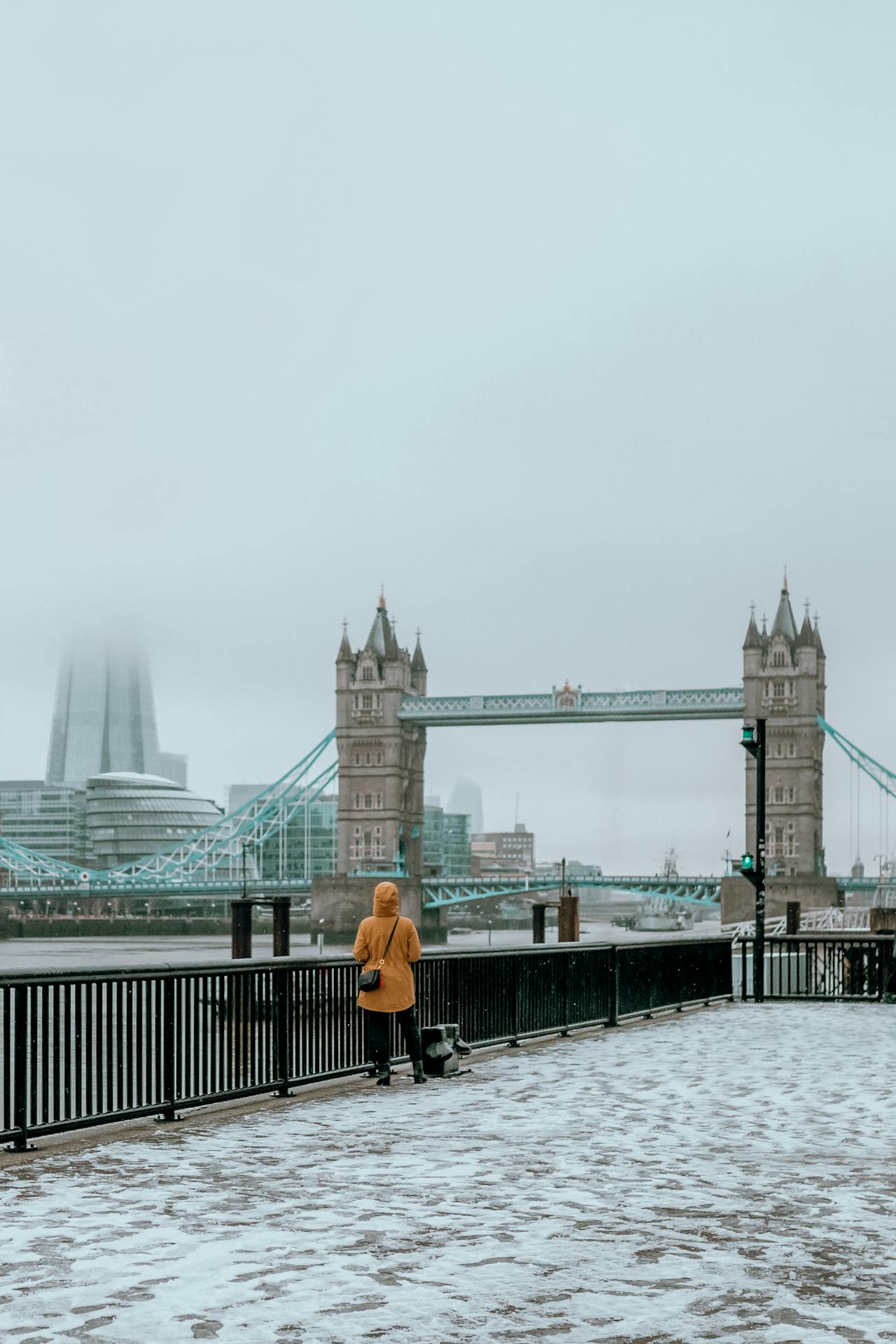
Snow in London is a rarity, but if it happens the city slows down and walking can become slippery.
Spring — March to May
Spring is when London earns its reputation as one of the world's great cities. The parks — and London has more parkland per head of population than almost any comparable capital — come back to life in a way that genuinely stops people in their tracks. Hyde Park, Kensington Gardens, St James's Park, Regent's Park: the cherry blossom, the daffodils, the return of long light evenings. The city visibly exhales.
Temperatures climb from around seven or eight degrees in March to the mid-teens by May. April is the pivot month: it can be quite cold at the start and genuinely warm by the end. Rainfall is spread fairly evenly but the showers tend to be shorter and the periods of sunshine longer than in winter. The daylight expands rapidly — by May you have until 9pm before it gets dark.
Spring is an excellent time to visit. Crowds are building but have not yet reached summer intensity. Prices are rising but not at their peak. The city is at its most photogenic. The one caveat: Easter week brings a surge of domestic and European tourism, particularly school groups. If you are visiting in late March or April, check when Easter falls that year and factor it in.
Summer — June to August
A good London summer is one of the finest things in European travel. Temperatures typically reach the low to mid twenties Celsius on a warm day, the parks fill up, pub beer gardens become social institutions, and the long evenings — it stays light until nearly 10pm in June — create a sense of abundance that Londoners spend the rest of the year looking back on fondly.
But here is the thing about a good London summer: it is not guaranteed. The city has no reliable dry season. June can be magnificent or it can be the kind of relentless grey drizzle that makes you question your choices. July and August are the warmest months statistically, but "statistically" covers a considerable range. In recent years, climate patterns have produced some genuinely hot summers — 2022 saw temperatures exceed 40 degrees Celsius for the first time in recorded history — interspersed with summers that were largely forgettable.
London buildings and the Tube system were not designed for heat. There is very little air conditioning on the Underground, and almost none in older hotels, pubs, or houses. When London gets a proper heat wave, the city suffers in a way that visitors from hotter climates find faintly absurd. If you visit in a hot July, the Tube can be genuinely unpleasant, and you should plan outdoor activities for mornings rather than the middle of the day.
Summer is also when London is at its most crowded and most expensive. The main attractions have long queues, hotels charge peak rates, and the city's population swells with tourists from around the world. Book everything well in advance.
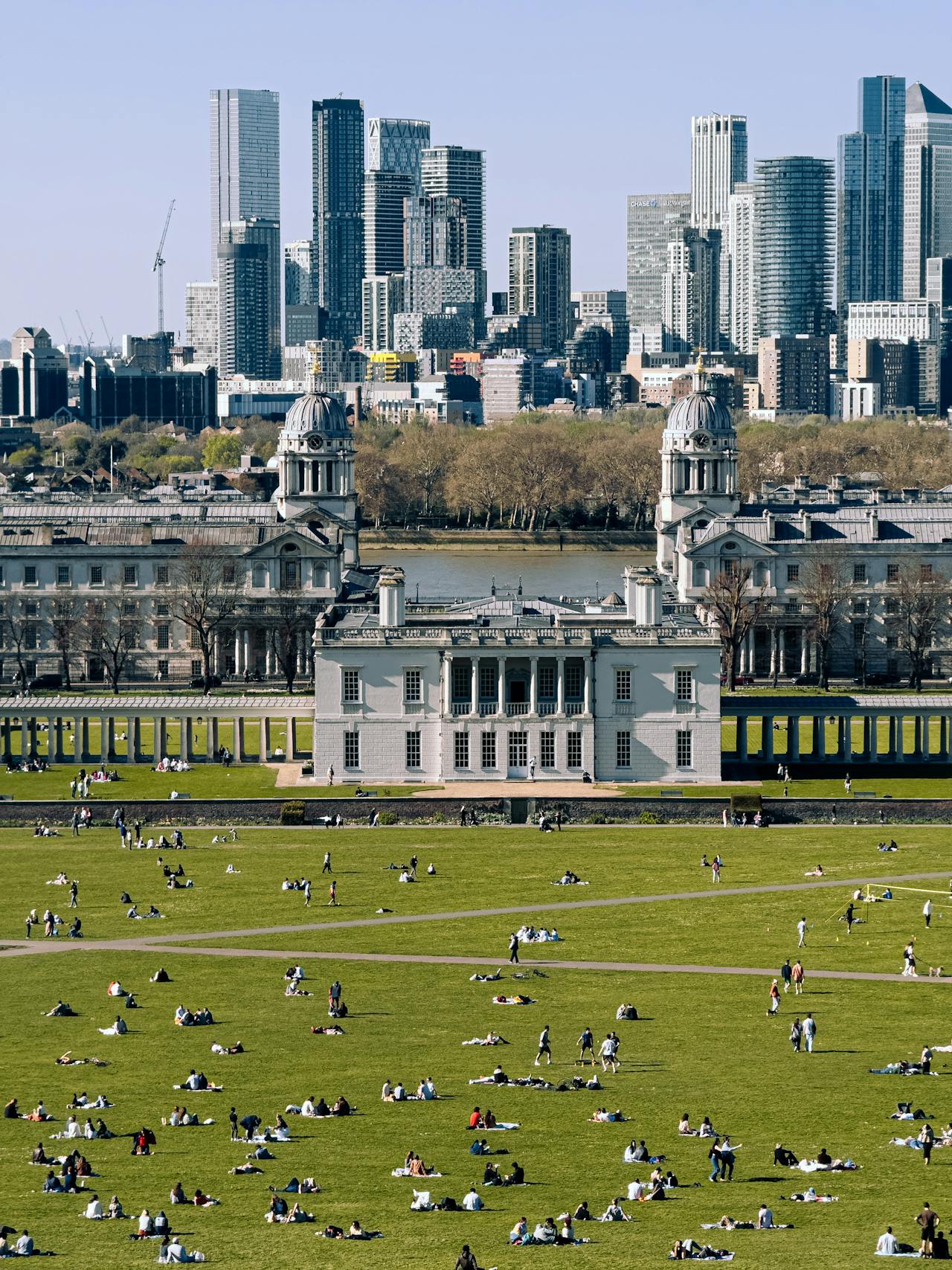
In Summer London's many parks becoming very popular. This is Greenwich Park with the new financial district of Canary Wharf in the background.
Autumn — September to October
September is London's best-kept seasonal secret. The summer crowds evaporate after the school holidays end in early September. Prices soften. The weather — often warm and settled in early autumn — can produce some of the finest days of the year. The parks turn gold and amber. There is a clarity to the autumn light that photographers understand instinctively.
By October, temperatures are falling into the low to mid-teens and the evenings are noticeably shorter and cooler. Rain becomes more frequent as the month progresses, and by late October you are essentially at the threshold of winter. But September and early October are consistently excellent: warm enough for outdoor sightseeing without summer's crowds or prices, and with enough daylight to make the most of long evenings.
If you can visit only once and your sole constraint is weather, September is the answer most Londoners would give you.
The One Rule That Overrides Everything
Whatever month you visit, whatever the forecast says the night before: pack layers and a waterproof and assume the weather will do something you did not expect. Every day. Without exception.
The visitors who have a miserable time in London because of the weather are the ones who arrived with a fixed idea of what the day would look like. The visitors who love it are the ones who dressed for flexibility, had an indoor alternative ready when the heavens opened, and were back outside in the park an hour later when the sun came back out.
London's weather is not a problem to be solved. It is a condition to be accommodated. Accommodate it, and the city will give you a great deal in return.