
Affiliate disclosure: Some of the links on this page are affiliate links. If you click through and make a booking, we may earn a small commission at no extra cost to you. This helps keep this website completely free and independent. Thank you for your support.
The Vienna Practical Guide
The pleasures of Vienna are substantial and well-documented. The practical friction points are fewer than in most comparable cities — Vienna is extremely well-organised — but they exist, and several of them will catch you out if you arrive unprepared. This page covers the essentials: the socket that won't accept your charger, the customs that mark you as a tourist the moment you ignore them, the food you should eat while you're here, the language that will serve you better than silence, and the emergency numbers you need to know before you need them.
Vienna on a Sunday — What's Actually Open
This is what derails many tourist's plans for Vienna: almost everything is closed on a Sunday. Austria takes Sunday seriously. Shops are closed by law — supermarkets, clothing stores, pharmacies, department stores, virtually all retail. If you arrive on a Sunday without food where you are staying, you will discover this quickly. The 3 major railway stations (Wien Hauptbahnhof, Wien Westbahnhof, Wien Mitte) are the only exceptions: their concourse shops operate seven days a week, including the supermarkets there.
What Sunday emphatically does not mean is a dead city. Restaurants and coffee houses trade normally, and Vienna's museums — the city's greatest assets — are almost all open. Sunday is, in many ways, the best day to visit the major collections: Viennese residents tend to treat Sunday as family and park day, and the weekday tour-group coaches are absent. The flagship museums are open and, depending on the time of year, less crowded than a weekday in high season.
🏛️ Museums Open on Sundays
All of the following are open on Sundays and public holidays, typically from 10am:
- Kunsthistorisches Museum — open daily except Monday, 10am–6pm (Thu until 9pm)
- Albertina and Albertina Modern — open daily 10am–6pm (Wed and Fri until 9pm)
- Belvedere (Upper and Lower) — open daily 10am–6pm
- Schönbrunn Palace and Zoo — open daily from 9am
- Hofburg Imperial Apartments — open daily 9am–5:30pm
- Leopold Museum (MuseumsQuartier) — open daily except Tuesday, 10am–6pm
- MAK (Museum of Applied Arts) — open Wed–Sun 10am–6pm
- Wien Museum Karlsplatz — open Tue–Sun 10am–6pm
- Military History Museum — open daily 9am–5pm
- Haus des Meeres (aquarium) — open daily 9am–6pm
- Natural History Museum — open daily except Tuesday, 9am–6:30pm
- Mozarthaus Vienna — open daily 10am–6pm
- Stephansdom — open to visitors; guided tours 1pm–4:30pm (not during services)
- Vienna State Opera — building tours run most Sundays 10am–4pm (check spielplan.wiener-staatsoper.at)
Always verify current hours on official websites before visiting, as seasonal adjustments and temporary exhibitions can affect opening times.
☕ How Viennese People Actually Spend Sunday
The city's coffee houses do their best business on Sunday mornings. A long, unhurried Frühstück (breakfast) at a traditional café — eggs, bread, cold cuts, fruit, and several coffees — is the standard Viennese Sunday ritual, typically lasting two hours. Café Landtmann, Café Schwarzenberg, and Café Sperl are all good options. Bring a newspaper or a book; no one will hurry you.
After late morning, the Prater parkland, the Donauinsel, and the city's main parks (Burggarten, Volksgarten, Stadtpark) fill up with residents on bikes, on foot, and in family groups. The Ringstraße, with its Sunday-reduced traffic, is at its best for a walk or a cycle. The Wurstelprater amusement park operates normally. The Riesenrad runs all day.
In the outer districts, the Heurigen — traditional Viennese wine taverns — open on Sunday afternoons. A lunch or early afternoon at a Heuriger in Grinzing, Heiligenstadt, or Neustift am Walde, with cold buffet food and a glass of local Grüner Veltliner, is how Viennese families have spent Sundays for generations. Worth the short U-Bahn or tram ride out of the centre.
Electrical Sockets and Voltage
Austria uses the Type F socket — the standard continental European two-round-pin plug. If you are arriving from the UK, the United States, Australia, or any country outside continental Europe, your plugs will not fit without an adapter. Buy one before you leave home — airport prices are avoidable and the hardware-shop price is approximately £3 / €3. One adapter covers Austria, Germany, France, Spain, Italy, and most of the Schengen area.
Austrian mains voltage is 230V at 50Hz. Modern electronics — laptop chargers, phone chargers, camera batteries — are almost universally dual-voltage (look for "Input: 100–240V" on the label) and will handle 230V without issue. American devices built for 110–120V only are at risk; hair dryers are the most common casualty. Buy a universal travel hair dryer before you travel if this applies.
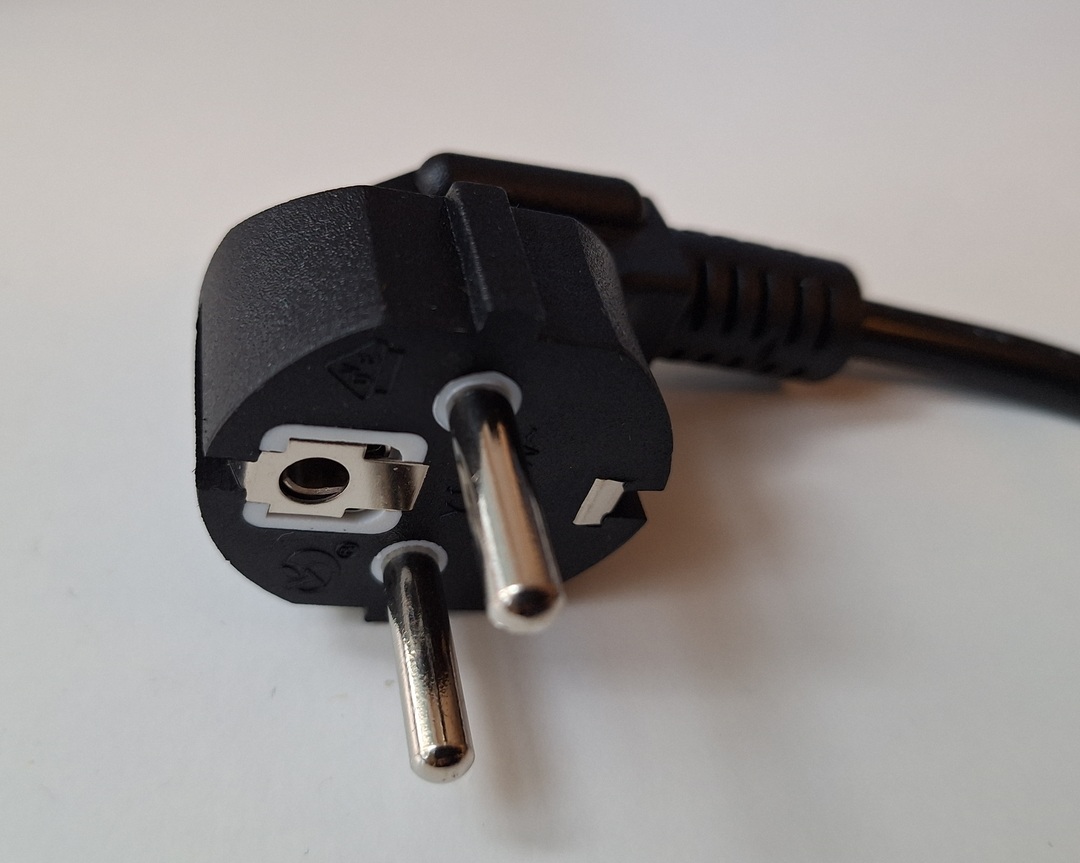
This is the Austrian electrical plug. There is no on-off switches on the wall sockets, it's always on. Keep prying little hands away if travelling with kids.
Money, Currency, and Paying
Austria uses the Euro (€). Sterling, dollars, and Swiss Francs are not accepted in shops or restaurants. Vienna is increasingly cashless but not yet as thoroughly so as London — traditional coffee houses, Chinese restaurants, some Naschmarkt stalls and many smaller restaurants are cash-only or cash-preferred. Carry approximately €50–80 in cash for these situations.
Withdraw Euros from bank ATMs rather than standalone street machines, which charge higher fees. Airport exchange desks offer poor rates and should be used only as a last resort. A bank card with no foreign transaction fee such as Wise gives you the interbank rate and is the most cost-effective approach. When paying by card in a restaurant, the server brings the terminal to the table. Austrian terminals use chip-and-PIN; contactless works for amounts below €50.
The Wise card for Vienna — the city is going cashless, your card should be ready
Vienna has a reputation as a cash city. For years it was — coffee houses expected it, smaller restaurants preferred it, markets ran on it. That's changing. Card acceptance has expanded significantly across the city, and contactless payment is now standard at the vast majority of hotels, restaurants, shops and museums. You can get through a full week in Vienna tapping your card almost exclusively.
Which makes it worth asking: which card are you tapping?
If it's your regular bank card, every transaction costs more than the price tag. Your bank applies its own exchange rate to turn Euros into your home currency — not the real rate, a marked-up version — and then adds a foreign transaction fee. Neither appears as a line item on your statement. It's built into what looks like a normal transaction amount. Over a week of hotel dinners, Ringstrasse museums, and Naschmarkt lunches, that invisible cost is real.
The Wise card eliminates it. Before you leave, you transfer what you plan to spend into your Wise account and load the card. From that point, it works exactly like any other contactless card — tap to pay everywhere that accepts Mastercard, which in Vienna is essentially everywhere. Every transaction clears at the real mid-market exchange rate with no foreign transaction fee. Add it to Apple Pay or Google Pay and you don't even need to carry the physical card.
The app gives you complete visibility. Every time the card is used, you get an instant notification. Your balance updates in real time, your spending is categorised automatically, and you always know what's left of what you loaded. There's no exchanging cash at airport booths — where the rates are appalling — no guessing what things actually cost you, no surprise when you get home.
Vienna still has moments that call for cash — smaller coffee houses, certain markets, the occasional taxi. The Wise card is the cheapest way to handle those too. Your free monthly ATM allowance converts at the real rate. When the machine asks whether to dispense in Euros or your home currency, always select Euros. Anything else means the ATM is adding its own markup on top.
If your card is ever lost or stolen — unlikely in Vienna, but possible anywhere — you freeze it immediately from the app. And because Wise is a separate account from your regular bank, a thief can only access what you loaded. Nothing else.
Get the Wise card before your Vienna trip →Affiliate link — I may earn a small fee if you sign up, at no cost to you. I use Wise myself when I travel. There is a surprise gift that comes with my link.
Tipping
Tipping in Vienna is expected at 5–10% but not at American levels. Round up to the nearest convenient amount — on a €38 bill, paying €40 is correct. You pay the tip directly to the server rather than leaving it on the table. Saying Stimmt so (keep the change) when paying cash is the standard phrase. Tipping also applies in taxis (round up to the nearest euro), at hair salons and for hotel porters (€1–2 per bag).
Medical Emergencies
🚨 Emergency Numbers
112 — Pan-European emergency (all services; works from any phone including no-credit or foreign SIM)
133 — Police
144 — Ambulance
122 — Fire
141 — Medical duty service (evenings, weekends, public holidays — equivalent to NHS 111)
140 — Mountain Rescue (rural/alpine areas)
For non-emergency situations, Austria's pharmacy network — Apotheken, identified by a green cross — is extensive and well-trained. Pharmacists can advise on and dispense a wide range of treatments without a prescription. Present your European Health Insurance Card (EHIC) if you hold one at hospitals. American, Australian, Canadian, and other visitors without reciprocal healthcare agreements should carry their own private travel insurance with medical coverage.
Travel Insurance for Vienna: Don’t Assume You’re Covered
Vienna has one of the best healthcare systems in Europe—efficient, modern, and reliable.
But for visitors, the key issue isn’t quality. It’s access and cost.
If You’re Visiting from the UK
UK travellers can use a GHIC (Global Health Insurance Card) to access medically necessary state healthcare in Austria.
However, this comes with clear limitations:
- No cover for private treatment
- No cover for repatriation to the UK
- Some costs may still need to be paid upfront or reclaimed later
A GHIC is useful—but it is not full protection.
If You’re Visiting from the US or Elsewhere
You will not have automatic access to Austria’s public healthcare system. In many cases, treatment must be paid for upfront.
Emergency care is available—but billing still applies if you’re not insured.
The Practical Reality
Austria’s healthcare system works extremely well—but it assumes you’re already covered within it.
For travellers, that often means dealing with:
- Upfront payments
- Administrative complexity
- Gaps between public and private care
Why Travel Insurance Matters Here
Travel insurance removes those gaps. It gives you access to private care if needed, covers repatriation, and avoids uncertainty around costs.
It’s less about risk—and more about avoiding friction in a system that isn’t designed for visitors.
The link below is an affiliate link. If you make a purchase through them, we may earn a small commission at no extra cost to you.
Compare Travel Insurance OptionsVisitorsCoverage lets you compare multiple travel insurance providers all in one place. It is particularly well suited to US travellers, while offering options for all nationalities. You can choose just medical cover or just trip insurance or both. This marketplace offers many options to suit every wallet.
Compare your insurance options here →Typical Situations Where Insurance Helps
- Upfront payment for doctor or hospital visits
- Accessing private care to avoid delays
- Medical transport or repatriation
- Trip disruption due to illness or unexpected events
What It Could Cost Without Insurance
- Doctor consultations: paid upfront
- Hospital treatment: potentially significant out-of-pocket costs
- Repatriation: very high cost depending on circumstances
- Travel changes: expensive last-minute bookings
Water
Vienna's tap water is among the finest in the world. The city's supply comes directly from two Alpine spring systems in the Styrian Alps and the Rax/Schneeberg mountains, transported by gravity through pipelines covering over 150 kilometres without pumping. It arrives in Vienna with no treatment beyond minimal chlorination — clean, cold, and alpine. You do not need bottled water in Vienna. Carry a refillable bottle and fill it from any tap, drinking fountain, or the city's Brunnen street fountains. This is what the Viennese themselves do.
Manners and Customs
The Viennese have a reputation — not entirely unearned — for a certain cool formality with strangers. This is not rudeness, Austrian society is formal. It is a social register that values propriety and does not perform warmth it does not yet feel it. A waiter addressed as Herr Ober (the correct honorific) will serve you better and more warmly than one hailed across the room. Do not cross the road on a red pedestrian light — you may be fined - Viennese pedestrians genuinely do not do it. Dress matters at cultural venues: the Vienna State Opera, the Musikverein, and smarter restaurants expect smart dress at evening performances; jeans and trainers are not appropriate.
Sundays in Vienna are quiet: almost all shops are closed. Restaurants and cafés are open, as are a few museums that sell coffee. Plan your shopping for weekdays or Saturdays and treat Sunday as the city treats it: slowly.
Austrian Food and Viennese Specialities
Viennese cuisine is the product of an empire. For centuries, the Habsburg court drew ingredients, techniques, and recipes from across Central Europe — Hungarian paprika and goulash, Bohemian dumplings, northern Italian influences on schnitzel, Balkan stews — and combined them with the refinement that an imperial capital demands. The result is a table where farmer's food, court cuisine, and one of the great pastry traditions in the world coexist with considerable ease. It is hearty where it needs to be, delicate where it chooses to be, and almost uniformly excellent.
The Savoury Dishes
🥩 Wiener Schnitzel
The city's most famous dish and Austria's most protected one. A true Wiener Schnitzel is made from veal — thinly pounded, breaded, and pan-fried in clarified butter or lard until the coating is golden and crisp but not touching the meat (the puffed, loose breading is the mark of a properly made one). It is served with a wedge of lemon, a small mound of lingonberry jam, and either potato salad or buttered parsley potatoes. By Austrian law, a schnitzel must be labelled Schnitzel Wiener Art if pork is used — the distinction matters and genuine veal versions are available at better restaurants. Figlmüller in the 1st district is Vienna's most celebrated schnitzel establishment; the portions are famous for overhanging the plate.
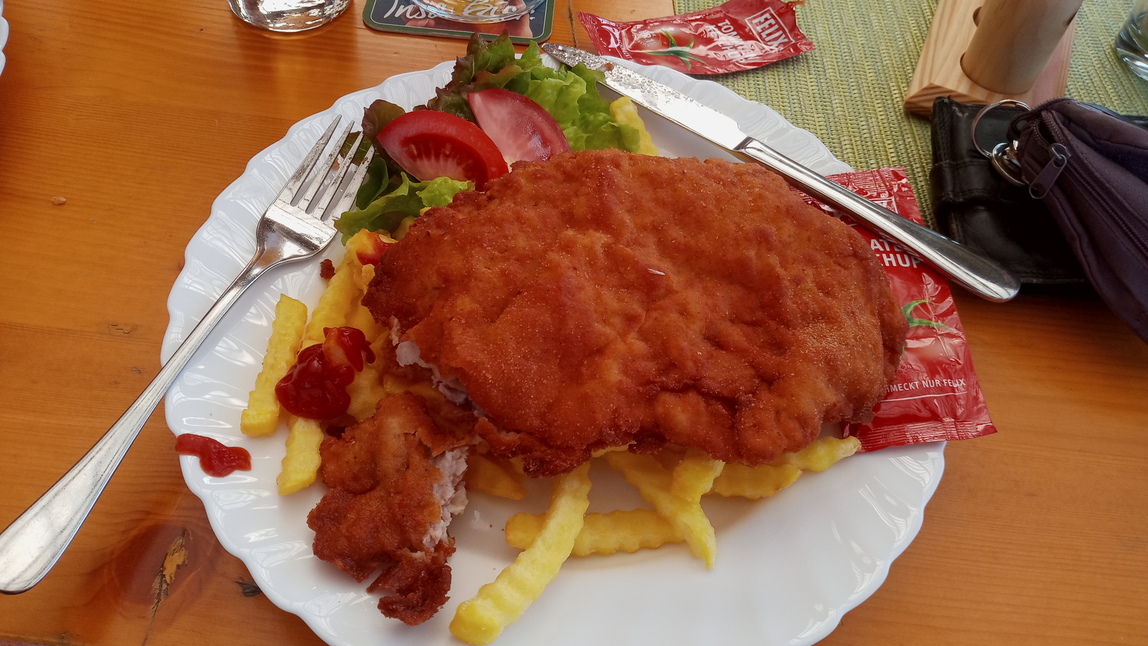
The famed Wiener Schnitzel is usually made from pork in most restaurants these days. It was originally derived from an Italian dish called "Cotellete Milanese" from when northern Italy was part of the Austrian Empire.
🍲 Tafelspitz
The dish that Emperor Franz Joseph is said to have eaten daily — and if the imperial kitchens made it as it should be made, the habit is entirely understandable. Tafelspitz is a cut of beef (traditionally from the top hind end) simmered slowly in broth with root vegetables until it becomes profoundly tender. It is served in two courses: first the clear, amber broth in bouillon cups, then sliced beef with boiled potatoes, creamed spinach, and two sauces — one of apple and horseradish, one of chive cream. The Plachutta restaurants in Vienna have made Tafelspitz their signature and are widely regarded as the definitive addresses for it.
🫕 Wiener Gulasch
Not the Hungarian original but Vienna's own interpretation — a thick, dark beef stew built on a deep paprika base, simmered until the onions dissolve entirely into the sauce and the beef is yielding. Wiener Gulasch is darker, richer, and more concentrated than its Hungarian cousin, and it is served with a Semmel (bread roll) for mopping. At its best — late at night at a traditional Beisl, with a glass of Viennese Grüner Veltliner alongside — it is one of the finest things you can eat in Central Europe.
🌭 Würstelstand
Vienna's sausage stands are a civic institution, operating around the clock and entirely without pretension. The Käsekrainer — a pork sausage with chunks of melted cheese inside — is the queen of the Würstelstand menu, always served with a roll and mustard. The stands are where Viennese people end evenings, start early mornings, and solve mild hunger crises at any hour in between. Using one is not a tourist experience. It is what you do in Vienna.
The Sweet Dishes
🎂 Sachertorte
In 1832, a 16-year-old apprentice chef named Franz Sacher was asked to create a dessert for Prince Metternich's table when the head chef fell ill. The result — two layers of dense chocolate sponge filled with apricot jam and coated in a smooth dark chocolate glaze — became the most famous cake in the world. The Hotel Sacher, established by Sacher's son in 1876, has served it ever since. The Original Sachertorte is always served with a generous dome of unsweetened whipped cream (Schlagobers) on the side — the Viennese consider the cake too dry without it. A legal dispute between the Hotel Sacher and the Demel bakery over which held the right to the "original" name ran for decades in the Austrian courts; today both serve authorised versions. Go to the Hotel Sacher café on the Ringstrasse for the canonical experience.
🥞 Kaiserschmarrn
The name translates literally as "Emperor's mess" — a shredded, caramelised pancake dusted with icing sugar and served with plum compote or apple sauce. Legend has it that the dish was created when a farm cook accidentally tore a pancake while trying to serve Emperor Franz Joseph, then improvised by scattering the pieces with sugar and fruit preserve. The Emperor loved it. Whether or not the story is accurate, the dish has been inseparable from Viennese dessert culture ever since. It can be ordered as a dessert or as a main course.
🍏 Apfelstrudel
Apple strudel is older than the Habsburg Empire in its current form, its origins tracing back through Viennese adaptations of Ottoman pastry traditions. The dough is stretched by hand until paper-thin — a process that demands considerable skill — then filled with tart cooking apples, cinnamon, raisins, and breadcrumbs. It is served warm, dusted with icing sugar, with vanilla sauce or whipped cream. The Café Central makes one of the finest versions in the city and serves it throughout the day.
Coffee — The Essential Guide
Vienna's coffee house culture is UNESCO-listed as an intangible cultural heritage, and the coffee itself is more varied and more specific than most visitors expect. The first Viennese coffee house opened in 1685, following the retreating Ottoman army's abandoned supplies of coffee beans after the second Turkish siege of Vienna. The institution has been refining the menu ever since.
☕ The Coffee Menu — What to Order
Melange — The classic. Espresso extended slightly with hot water, topped with hot milk and milk foam. Milder and more forgiving than a cappuccino. This is what most people should order first.
Kleiner/Großer Schwarzer — Single or double espresso. Black, no milk.
Verlängerter — A "lengthened" espresso diluted with hot water; the Viennese Americano.
Einspänner — Double espresso in a glass, topped with a generous dome of whipped cream. Named after the one-horse carriage whose drivers drank it to keep warm; the cream acts as insulation. Do not stir — sip through the cream.
Fiaker — Double espresso in a glass with sugar and a shot of rum or slivovitz. Named after the two-horse carriage drivers who needed warming on long winter journeys.
Kleiner Brauner — Single espresso served with a small jug of milk or cream on the side.
Your coffee will always arrive on a small silver tray with a glass of cold water alongside. The water is complimentary, a tradition dating to the 1873 World Exhibition when coffee houses advertised their use of Alpine spring water. The spoon placed face-down across the glass, by Habsburg etiquette, signals that the water has been freshly poured.
The Heuriger — Vienna's wine taverns in the vine-growing villages on the city's north-western edge — deserves a separate mention. These are the places where Viennese wine is served from the current year's harvest alongside cold cuts, bread, and simple hot dishes. Grinzing, Sievering, and Neustift am Walde are the classic addresses. In autumn, the partially fermented new wine — Sturm — is served by the carafe and is one of the season's particular pleasures. A Heuriger afternoon is one of the experiences that distinguishes a visit to Vienna from a visit to any other city.
Austrian German — A Practical Guide for English Speakers
Most English speakers arriving in Vienna for the first time fall into one of two camps. The first arrives assuming that English will cover everything and German can be safely ignored. They are mostly right — central Vienna is an international city and English is widely spoken in tourist areas — but they miss something. The second camp studied German at school or university, arrives confident, and is immediately destabilised by an accent and a set of vocabulary that does not quite match what they learned. They are experiencing something real: Austrian German is not the same language as the German taught in most British and American classrooms.
Why Austrian German Is Different
The German taught in schools and on apps like Duolingo is Hochdeutsch — standard High German, based broadly on the northern and central German spoken in Hanover and the media. Austrian German — Österreichisches Deutsch — is a distinct variety with its own accent, its own vocabulary, and in the Viennese dialect, Wienerisch, its own pronunciation rules that deviate significantly from the standard. The relationship is roughly analogous to the difference between standard American English and broad Scottish English. Educated Viennese will switch to something close to standard German, or to English, the moment they identify you as a foreign visitor. The goal of this guide is not to make you pass as Viennese — it is to give you enough working knowledge that the interaction starts well and ends with what you wanted.
Pronunciation — The Rules That Matter
🔤 Key Pronunciation Rules
W is pronounced like English V. Wien (Vienna) = "Veen". Wein (wine) = "Vine". This single rule prevents the most common mispronunciation.
V is pronounced like English F. Vier (four) = "Fear".
J is pronounced like English Y. Ja (yes) = "Ya".
EI is pronounced like English long I ("eye"). Wein = "Vine". Mein = "Mine".
IE is pronounced like English long E ("see"). Wien = "Veen".
EU / ÄU is pronounced like English "oy" (as in "boy"). Heute (today) = "Hoyta".
Z is pronounced "ts". Zimmer (room) = "Tsimmer".
ST at the start of a word is pronounced "SHT". Stephansplatz = "SHTeffansplats". Straße = "SHtrahssuh".
SP at the start of a word is pronounced "SHP". Speisekarte (menu) = "SHPyzekarrtuh".
Umlaut Ä sounds like A in "bed". Ö — say "ay" while rounding your lips as if to say "oh". Ü — say "ee" while rounding your lips as if to say "oo". ß is simply a double S — Straße = "Strahsse".
Austrian vs. Standard German — Key Vocabulary
If you studied German and arrive in Vienna confidently, several everyday words will be different from what you learned. On a restaurant menu, Semmel is a bread roll (standard German: Brötchen). Obers is cream (Sahne). Topfen is quark or soft cheese (Quark). Palatschinken are thin pancakes — if you order Pfannkuchen in Vienna (standard German for pancakes), you will receive a jam doughnut. Erdäpfel (literally "earth apple") are potatoes (Kartoffel). Paradeiser are tomatoes (Tomate).
For greetings: Grüß Gott — literally "God's greetings" — is the standard Austrian greeting in shops, restaurants, and formal encounters. Not religious in intent; simply customary. It will be warmly received. Servus is informal — hello or goodbye between people who know each other. The Viennese informal farewell is Baba — it has nothing to do with anything you might associate with the word in English, and it sounds more endearing than it looks written down.
Phrases That Will Actually Help You
💬 Essential Phrases
Grüß Gott — "Groos Got" — Hello / Good day (use on entering any shop, café, or restaurant)
Bitte — "Bittuh" — Please / You're welcome / Here you are
Danke / Danke schön — "Dankuh / Dankuh shurn" — Thank you / Thank you very much
Entschuldigung — "Ent-shool-digoong" — Excuse me / I'm sorry
Sprechen Sie Englisch? — "SHPrecken zee Eng-lish?" — Do you speak English?
Ich verstehe nicht — "Ish fair-shtay-uh nisht" — I don't understand
Wo ist...? — "Vo ist...?" — Where is...? (+ die U-Bahn / die Toilette / der Ausgang)
Die Rechnung, bitte — "Dee Recknoong, bittuh" — The bill, please
Zahlen, bitte — "Tsahlen, bittuh" — I'd like to pay
Stimmt so — "Shtimmt zo" — Keep the change
Einmal / zweimal — "Yne-mal / Tsvy-mal" — One / two (for ordering: Einmal Melange, bitte)
Haben Sie einen Tisch für zwei? — "Hahben zee eyenen Tish foor tsvy?" — Do you have a table for two?
The One Thing That Will Immediately Improve Every Interaction
Say Grüß Gott when you walk in anywhere. Not "Hi", not "Hello", not nothing. Grüß Gott. Then Sprechen Sie Englisch? if you need it. The Viennese are not unfriendly — they are formal, and the correct opening of an interaction matters to them in a way it does not in London or New York. Walking into a shop and immediately asking a question in English, without first greeting the person behind the counter, is mildly rude in Vienna. It would not be commented on — the Viennese are too polite for that — but it registers, and the difference in warmth is real and immediate.
Two words of German, correctly deployed, unlock a city. The city has been here for a thousand years. It can wait two seconds while you look it in the eye and say hello properly.