Last verified: 28 August 2026.
When to Visit Cape Town
A practical guide about Cape Town's seasons and weather, helping you decide when to visit.
Cape Town rewards visitors in every season. But it does not reward every visitor in every season — and there is a difference worth understanding before you book.
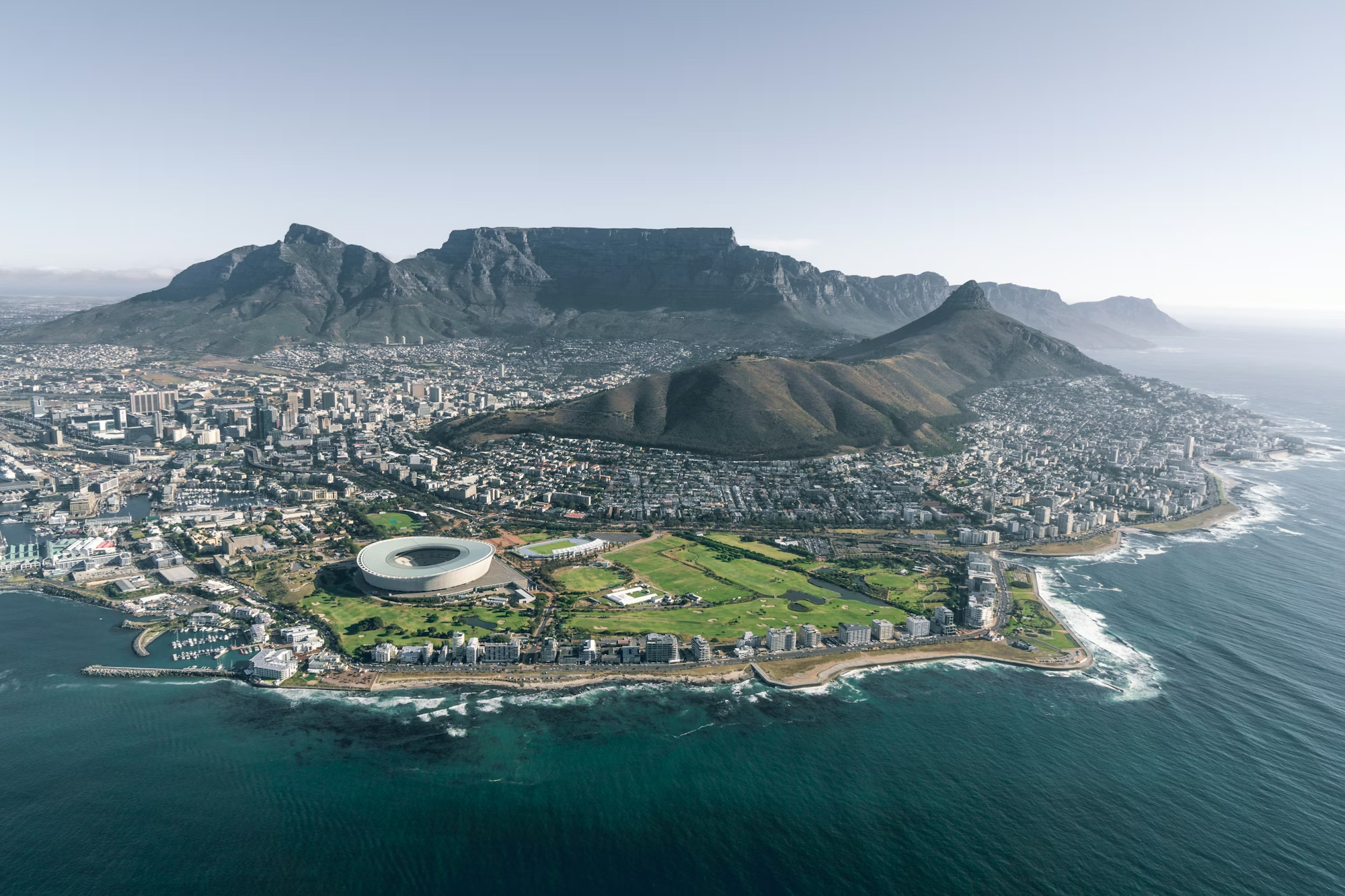
The city sits at the southern tip of Africa on a narrow, mountainous peninsula with two oceans converging at its foot. Table Mountain — over a thousand metres high — runs like a spine through the middle of it. The result is a climate that is genuinely Mediterranean in character: hot, dry summers and cool, wet winters. What that description does not prepare you for is how quickly and dramatically the weather can shift, how much it can vary from one side of the mountain to the other, and the role of one of the most famous winds in the southern hemisphere.
Get those things straight and you will plan a far better trip.
The Cape Doctor
Before we get to the seasons, a word about the wind. The "Cape Doctor" is a powerful, dry south-easterly that sweeps up the peninsula, primarily in summer. Capetonians call it the Doctor because it blows the smog and pollution out to sea and leaves the air crystal clear. If you're lying on a beach in Camps Bay and suddenly find sand in your teeth and your umbrella in the sea, you've met the Cape Doctor.
At its worst it blows for days without stopping and can make outdoor dining, sightseeing at exposed viewpoints, and any beach that faces south-east genuinely miserable. At its mildest it is refreshing and keeps temperatures from becoming unbearable. You will not always be able to predict it more than a day ahead, so build flexibility into your plans in summer and always have an indoor alternative ready.
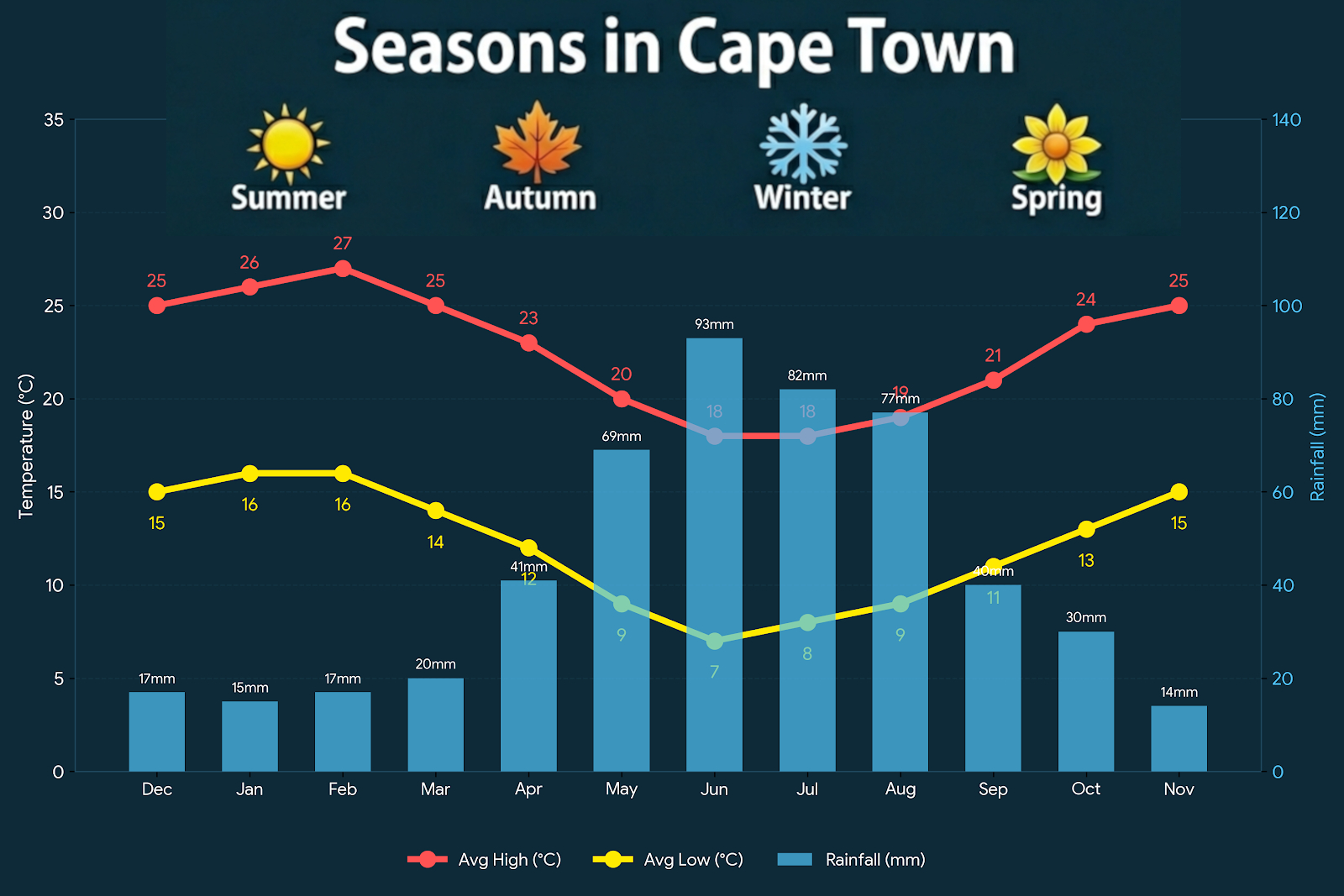
Cape Town's climate is pleasant, but even in Summer each day is slightly different. There are occasional rain showers in Summer as are there occasional perfect days in Winter. You need to check the weather forecast especially if you want to go to the top of Table Mountain.
Summer — December to February
This is when most visitors come, and the appeal is obvious. Days are long and hot, the skies are reliably blue, the beaches are magnificent, and the city is at its most buzzing. Outdoor restaurants fill up, rooftop bars do brisk business, and sunset picnics on Signal Hill have become a Cape Town institution. Daytime temperatures regularly reach the high twenties and sometimes the low thirties Celsius (mid-80s to low 90s°F).
The trade-off is real. Accommodation prices are at their highest — substantially so over the Christmas and New Year period. Popular attractions such as the Table Mountain cableway get very busy, and the queues are not to be underestimated. Book the cableway, book your restaurants, and book your accommodation well in advance if you are travelling between mid-December and the end of January. Traffic on the scenic Atlantic seaboard routes can be genuinely unpleasant at weekends.
And then there is the Cape Doctor, in its full summer strength. Some beach days will simply be too windy for comfort. On those days, head to False Bay on the eastern side of the peninsula — Muizenberg, Kalk Bay, Fish Hoek — where the mountain provides shelter. The water there is warmer too, because it comes up from the Indian Ocean rather than the icy Benguela current of the Atlantic.
None of this should put you off summer. It remains the classic time to visit. Just go in knowing what to expect.
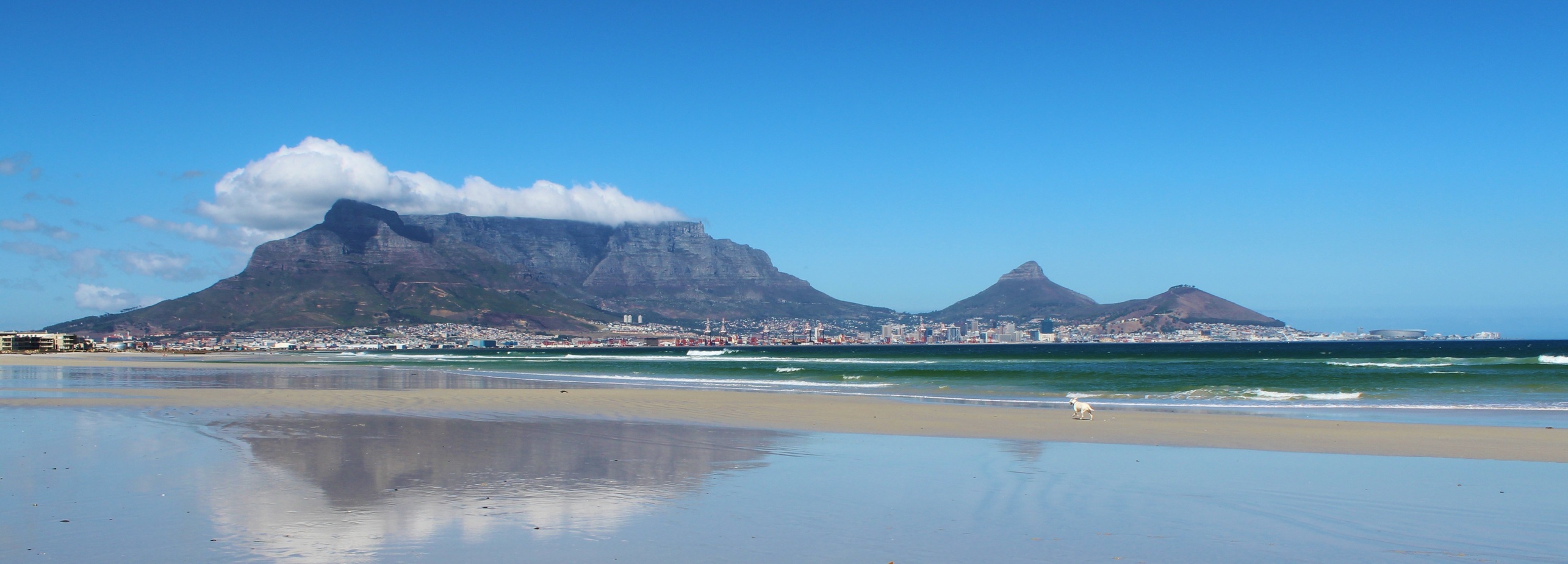
Summer in Cape Town is glorious, but it comes with a price by way of higher prices, crowds and queues. This photo was taken from Milnerton beach.
Autumn — March to May
Ask anyone who has lived in Cape Town when to visit, and many will say autumn without hesitation. The crowds thin out after the school holidays end in mid-January, the southeasterly wind loses its ferocity, and the temperatures remain genuinely warm — typically the low to mid twenties Celsius (low to mid 70s°F) during the day and pleasantly cool in the evenings. The sea, having absorbed months of summer heat, is at its warmest on the Atlantic side. Accommodation prices drop.
Autumn is also harvest time in the Cape Winelands. The vineyards around Stellenbosch, Franschhoek, and Paarl — all within an hour of the city — turn gold and red, and the estates are busy pressing grapes rather than pouring for Instagram. It is, in many ways, the finest time to visit the wine country.
Rain begins to arrive more frequently toward May as winter approaches, but it rarely dominates for long. March and April in particular offer some of the most reliably pleasant weather of the year. If you have a completely free choice of when to go, this is a very strong candidate.
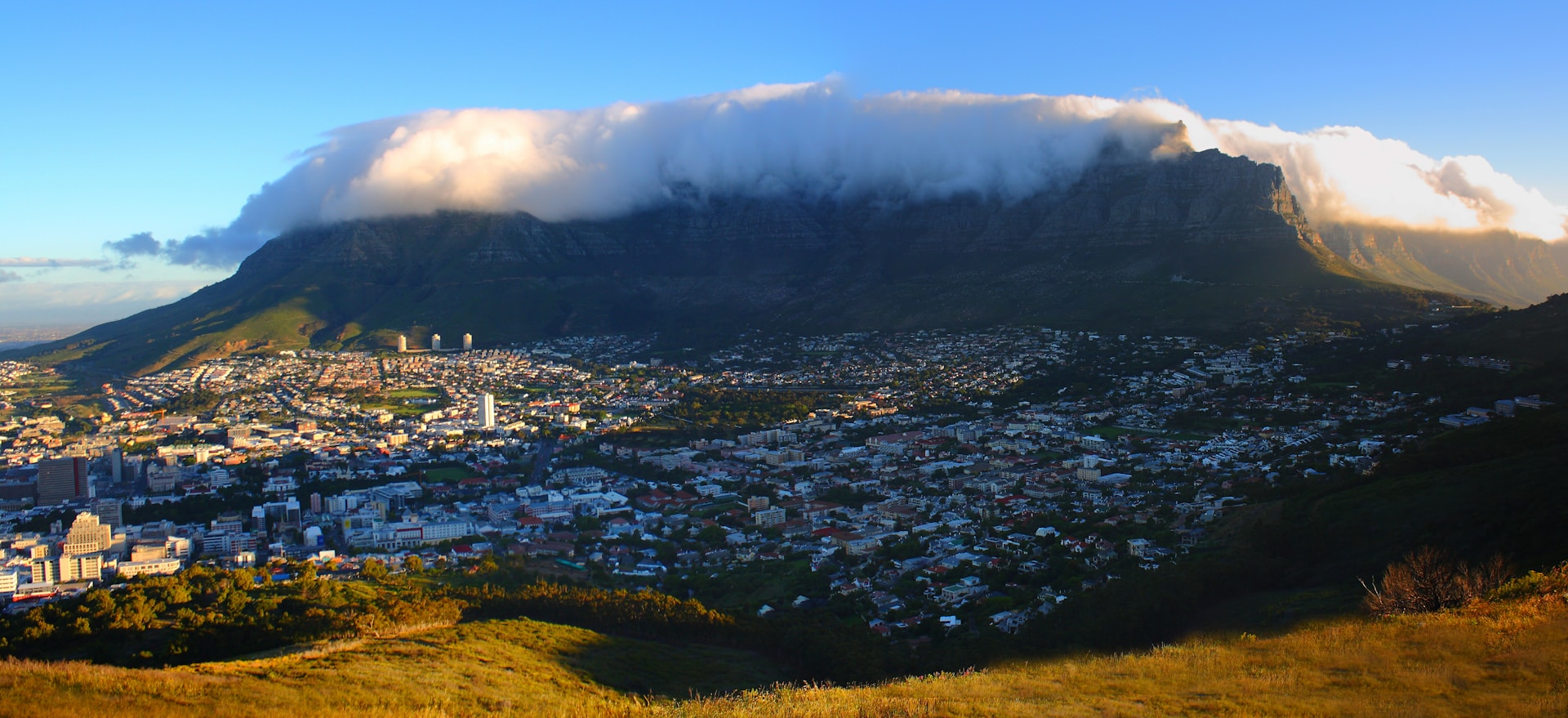
It is usually in the afternoons that the "tablecloth" forms on the mountain and the wind starts to blow. The cableway will stop running when conditions get like this. Note how some areas are bathed in sunshine whilst others are in the shade.
Winter — June to August
Winter is the wet season, and it is honest about it. Cold fronts roll in off the Atlantic, sometimes several in a row, and they bring wind, rain, and grey skies for days at a stretch. Daytime temperatures sit mostly in the low to mid-teens Celsius (mid-50s to low 60s°F). If you are expecting wall-to-wall sunshine and beach days, winter will disappoint you.
But winter is not a reason to avoid Cape Town — it is a reason to plan differently. Between the fronts the light is extraordinary: crisp, sharp, and clear in a way that summer haze cannot match. Table Mountain, which spends a lot of summer wearing its famous "tablecloth" of cloud, is often perfectly clear in winter. Hotel prices fall sharply, sometimes dramatically. Popular restaurants become easy to book. The city's excellent food and wine scene, which can feel somewhat rushed in peak summer, breathes.
Winter is also whale season. Southern right whales come into the sheltered bays of the False Bay coast — particularly around Hermanus, about an hour and a half from the city — to calve, and they are spectacular. If wildlife matters as much to you as beach weather, June to October is when you want to be here.
Pack warm layers, bring a good waterproof, and treat any sunny winter's day as the gift it is.
Spring — September to November
Spring is a season of rapid change in Cape Town, and it has one natural spectacle that makes it genuinely unmissable for the right kind of traveller: the wildflowers. The Western Cape is one of the world's six floral kingdoms, and in spring the coastal and mountain landscapes erupt in colour in a way that has to be seen to be believed. The Namaqualand daisy fields further up the west coast are internationally famous, but even close to the city the fynbos and coastal vegetation put on a vivid show.
Temperatures climb progressively through the season, from the low to mid-teens Celsius (mid-50s to low 60s°F) in September to the low twenties (low 70s°F) by November. Rain decreases month by month, and by October the Cape Doctor begins to reassert itself, announcing that summer is on its way. Late cold fronts can still arrive through October, so if you are visiting in early spring, keep your plans flexible.
The crowds are still well below summer peak in September and October, prices are reasonable, and the combination of warming weather, recovering vegetation, and whale-watching still available in the early part of the season makes this an excellent choice for travellers who want variety.
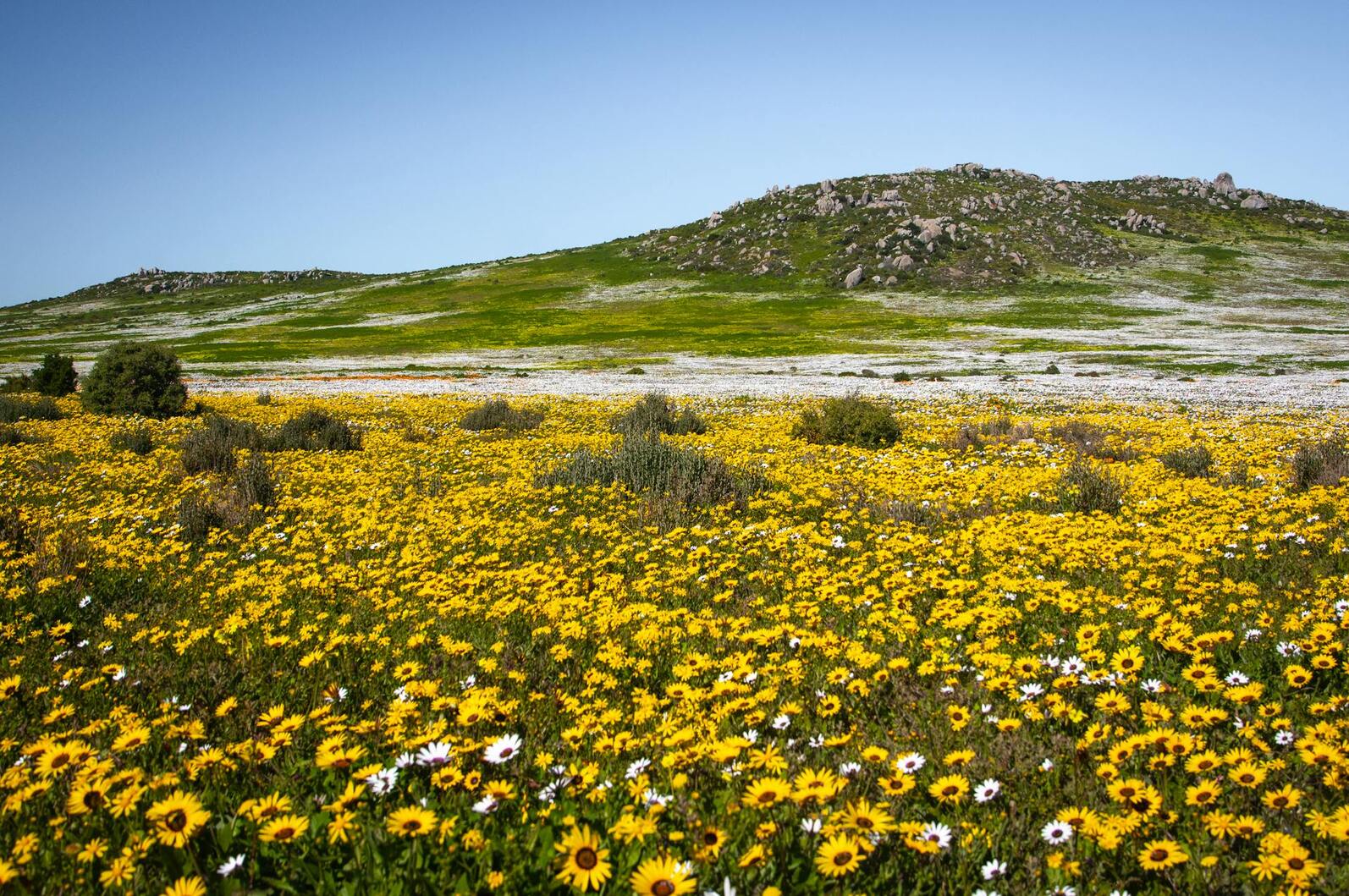
Namaqualand is a floral spectacle unrivalled in the world. It is Mother Nature showing off for countless miles. As climate patterns are changing, the season for this is growing shorter.
So — when should you go?
For a first visit, the shoulder seasons are the honest answer: March to April in autumn, or October to November in spring. You get warm weather, manageable crowds, fair prices, and enough reliability in the forecast to plan outdoor activities without constant anxiety about the wind or the rain.
If what you want is the full, high-energy Cape Town summer experience — the beaches, the buzzing waterfront, the late sunsets, the outdoor everything — then December through February is your time. Go in with your eyes open about prices, wind, and the need to book ahead, and you will have a wonderful trip.
If budget matters more than guaranteed sunshine, or you are more interested in food, wine, culture, and walking a quieter city, winter is a genuinely underrated option. The people who dismiss it almost always haven't been.
There is no bad time to visit Cape Town. There is only a time that suits your trip — and one that doesn't. Now you know the difference.