Day Trips from Cape Town
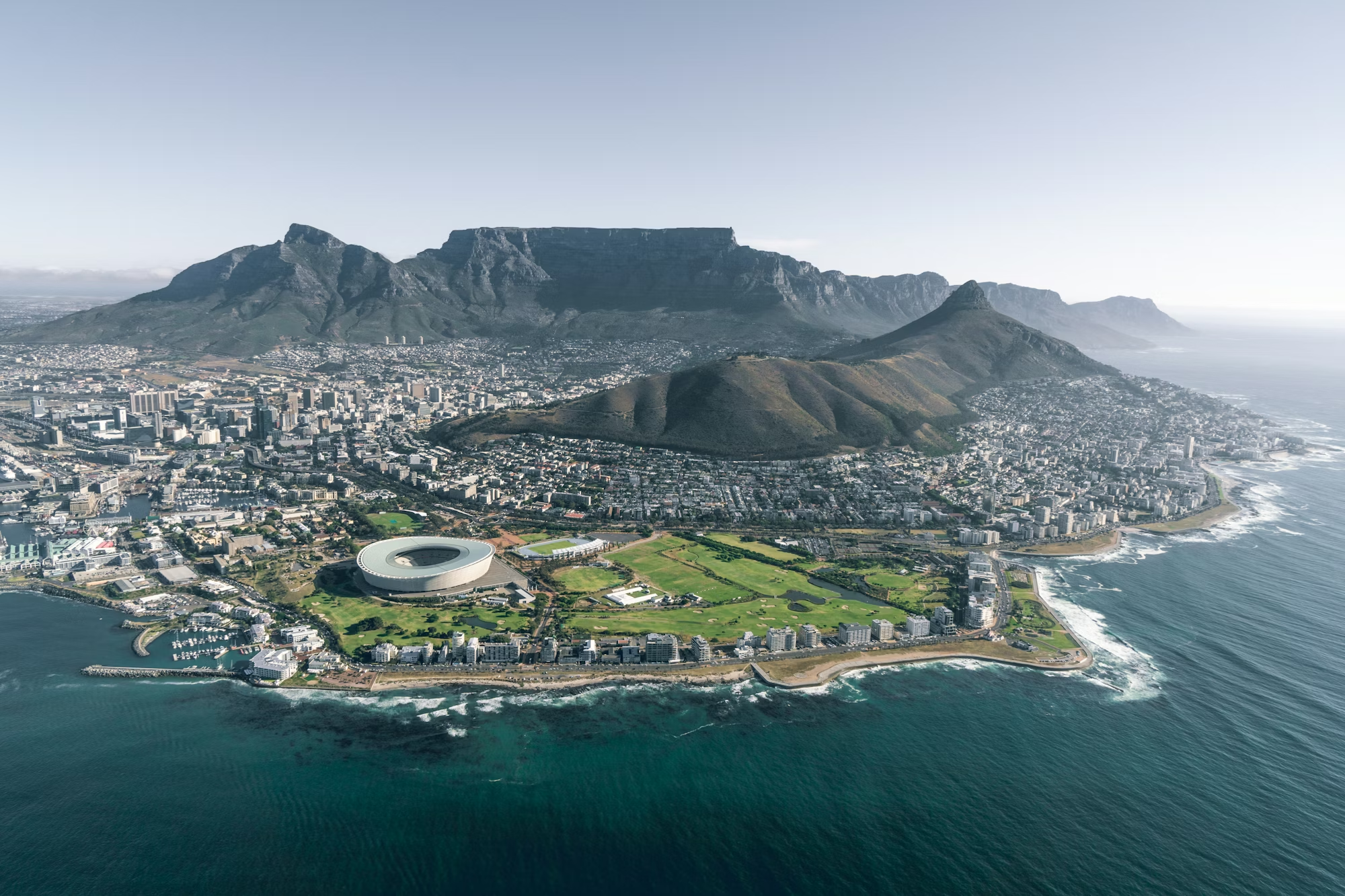
Cape Town has a quality that not every great city can claim: its surroundings are as extraordinary as the city itself. Within 90 minutes of the City Bowl you have mountain passes, wine valleys, whale-watching coastline, historic towns, and some of the finest food and wine experiences in the southern hemisphere. The city rewards those who use it as a base rather than treating it as a destination in isolation. This page covers the day trips that are worth making, what to expect at each, how to get there safely, when to go, and what things cost.
A practical note before anything else: all of these destinations require a car or an organised tour. Public transport does not serve the Winelands in any way useful to a tourist, and the train service to Hermanus does not exist. Rent a car, hire a driver for the day, or join an organised tour — the latter being the correct choice if wine is involved, because drink-driving enforcement in South Africa is real and the roads between wine estates at the end of a long tasting afternoon are not where you want to be making poor decisions. As of January 2026 South Africa is moving toward a zero-alcohol policy for drivers. A hired driver or organised wine tour is not an optional luxury on a Winelands day — it is the right way to do it.
There are no places in Cape Town to see the big wild animals that people associate with South Africa. Those are predominantly found in the north-east of the country, 3 hours flying time away. However, there are small private game ranches that are a 2 hour drive away from Cape Town. You book, they might collect you very early in the morning or you can drive out to them. These can be done in a day, with a late return, so it is a long day, but the memories will last a lifetime. You can also stay overnight at some of these game farms if your budget and timing allows.
If you visit the nearby wine farms of the Cape Winelands (of which there are hundreds), try to do so on weekdays. On weekends it gets very busy, finding parking becomes a problem and it feels like a rushed experience. Sitting on a verandah (“stoep” in SA parlance) having a leisurely fine lunch, quaffing perfectly chilled, locally made wine as you take in the sublime scenery is an experience to be savoured, not rushed.
I would advise using the N1 national road to head north-east out of Cape Town to reach the Winelands. The southerly N2 is the more direct route to approach Stellenbosch from the south, but it is riskier because of the shantytowns that are either side of that road.
Stellenbosch — 45 Minutes from the City Centre
Stellenbosch is the capital of the Cape Winelands and South Africa's second oldest European settlement after Cape Town itself, founded in 1679. It sits at the head of the Eerste River valley surrounded by Simonsberg, Stellenbosch Mountain, and the Helderberg range, and the combination of dramatic mountain backdrop, Cape Dutch architecture, oak-lined streets, and serious wine estates is as close to a perfect setting as the wine world offers.
The town centre is compact and walkable — Dorp Street in particular, with its restored Cape Dutch facades and gabled homesteads, is one of the most photographed streets in the country. The Stellenbosch University campus weaves through the town and gives it a vitality that purely tourist towns often lack. The Village Museum (a complex of four restored historic houses spanning 200 years of architectural and social history) is genuinely excellent and costs approximately R60 for adults.
The wine estates around Stellenbosch are numerous and varied. Rust en Vrede is regarded by many as producing the finest Cabernet-based reds in South Africa — reserve well in advance for the restaurant. Delaire Graff on the Helshoogte Pass has the most spectacular mountain vineyard views and an art collection within the tasting room. Spier, closer to the N2, is more accessible and family-friendly with a range of activities. Tastings typically cost R150–250 per person, often redeemable against bottle purchases.
Drive time: 45–50 minutes from Cape Town city centre via the N1 and R310. Leave by 9am to reach the first estate before the tour buses arrive. The N1 around Cape Town can be congested during morning rush hours; if staying near the Waterfront, allow 90 minutes before 9am.
Safety: Stellenbosch town centre is safe during daylight hours in the tourist and university areas. Be alert in the car park areas after dark and do not leave valuables visible in a parked car at any time. The farm roads between estates are generally fine. The R44 between Stellenbosch and Somerset West has been the scene of periodic incidents; drive it in daylight and keep doors locked.
Franschhoek — 75 Minutes from the City Centre
If Stellenbosch is the workday capital of the Winelands, Franschhoek is its more theatrical cousin — smaller, more self-consciously beautiful, and with a restaurant scene that punches well above its size. The town was settled by French Huguenot refugees in 1688, and the French names on the estates — La Motte, Haute Cabrière, L'Ormarins, Boschendal — are not affectation but genuine history. The Huguenot Memorial Museum at the foot of the main street documents this history well and costs R30 admission.
Franschhoek's main street, Huguenot Road, is lined with restaurants of a quality unusual for a town of 15,000 people. Le Quartier Français has long held a position among the finest restaurants in South Africa. The Test Kitchen at Mullineux and Foliage both represent the valley's serious culinary ambition. Booking at the better restaurants is essential — for weekends, book two to three weeks ahead in summer.
The valley is narrower and more intimate than the Stellenbosch appellation, and the Franschhoek Mountain Pass (the Franschhoek Pass, leading east toward Villiersdorp) is one of the most dramatic short mountain drives in the Western Cape. It takes 20 minutes to reach the top and the views back across the valley from the summit viewpoint are extraordinary. The pass road is well-maintained tar; take it slowly and in daylight.
Drive time: 75 minutes via the N1 and R45 through Paarl, or via Stellenbosch on the R310 and R45 (slightly more scenic, similar time). Leave no later than 9am for a full day.
Safety: Franschhoek itself is safe in the tourist areas. The approach roads are fine in daylight. As with all the Winelands, secure your car, do not display cameras or bags on seats, and return to Cape Town before dark.
The Franschhoek Wine Tram
The Franschhoek Wine Tram deserves its own paragraph because it solves the single biggest practical problem of a Winelands day trip — drinking and driving — while being genuinely enjoyable in its own right. It is an open-sided hop-on, hop-off tram and bus combination that loops through the Franschhoek valley, stopping at participating wine estates throughout the day. You buy a day ticket (approximately R280–340 per person depending on season), board at the town centre terminus, and ride to whichever estates you choose, dismounting to taste and returning to the tram at your leisure when the next one passes.
Participating estates include Haute Cabrière, Rickety Bridge, Grande Provence, and a dozen others. Each estate charges separately for its tasting (typically R120–200), which is not included in the tram ticket. The tram runs from approximately 10am and the last return is at 5pm — plan to be on the final tram back comfortably before that. It operates Tuesday to Sunday; check the current schedule and book tram tickets online at winetram.co.za at least a week ahead in summer as it sells out. It is not the cheapest way to spend the day but it is the smartest — the combination of logistics handled, light commentary provided, and wine consumed without consequence makes it the best organised activity in the Western Cape.
Paarl — 60 Minutes from the City Centre
Paarl is the largest town in the Winelands and the least immediately picturesque — it is a working agricultural and commercial town rather than a tourist destination, which is partly what makes it interesting. Its main street is 11 kilometres long, lined with Cape Dutch and Victorian architecture that receives a fraction of the attention Stellenbosch's Dorp Street does despite being its equal in many stretches. The Paarl Mountain Nature Reserve above the town has the three enormous granite domes that give the town its name (paarl means pearl in Dutch — the domes glint in morning sun after rain) and offers excellent hiking with views across the entire Berg River valley.
KWV, the former cooperative that once controlled all South African wine production by government decree, has its vast cellars here and offers tours and tastings. Nederburg, one of South Africa's most recognised wine brands internationally, is also in the Paarl valley and offers estate visits. Paarl is also the gateway to the Bain's Kloof Pass — a mountain pass built by the same engineer who built the Michell's Pass, completed in 1853, which winds through the Hawequa Mountains toward Wellington and is one of the finest scenic drives in the Western Cape. Do it in a loop: up the pass, back via Wellington and the N1.
Drive time: 55–60 minutes via the N1. Straightforward motorway driving.
Hermanus — 90 Minutes from the City Centre
Hermanus sits on Walker Bay on the eastern side of the Cape Peninsula, and from June to November it is the finest land-based whale-watching destination in the world. Southern right whales — adults up to 17 metres long, weighing up to 80 tonnes — enter the sheltered bay to calve and nurse, and they do so within metres of the cliff-top path that runs the length of the town. You do not need binoculars. You do not need a boat. You stand on the cliff and the whales are below you. The town employs a whale crier — an official post, carried over from the days before social media, who walks the streets blowing a kelp horn to announce whale sightings and their locations. This is not a tourist gimmick. It is a municipal institution and it works.
Outside whale season, Hermanus is a pleasant coastal town with good restaurants, a shark cage diving departure point at the nearby harbour, and the Hemel-en-Aarde Valley — literally Heaven and Earth — immediately inland, where a cluster of outstanding wine estates produce some of South Africa's finest Pinot Noir and Chardonnay. Hamilton Russell Vineyards, the oldest Pinot Noir estate in Africa, is here and produces wines that regularly appear on international best-of lists. Tasting approximately R120 per person.
The drive from Cape Town follows the N2 to Bot River and then the R43 down to the coast — 120 kilometres of good tar road with dramatic mountain scenery through the Houwhoek Pass. The pass is well-engineered and fine in any weather, but take it carefully in the wet.
Best time to visit: September and October represent peak whale season with highest sighting probability. August and November are excellent. July is good but colder. Arrive by 10am to get ahead of the day visitors who arrive from Cape Town in a mid-morning convoy. The cliff path at dawn, before anyone else is out, with whales surfacing in the bay and the Overberg mountains catching the first light, is one of the genuinely great experiences the Cape offers.
Drive time: 90–100 minutes in normal traffic. The N2 outside Cape Town can be slow on Friday afternoons and Sunday evenings. Avoid those windows.
Safety: The N2 east of Cape Town passes through the Strand and Somerset West — keep windows up and doors locked through the town sections, as there are occasional reports of smash-and-grab at traffic lights. Once clear of the urban areas, the road to Hermanus is straightforward. Hermanus town itself is safe in the tourist areas during the day.
Cape Point and the Peninsula — Two Hours of Driving, a Full Day of Reward
Cape Point is not, technically, a day trip from Cape Town — it is within the city's municipal area — but it deserves mention here because visitors treating it as a quick afternoon excursion consistently underestimate it. The Cape of Good Hope section of Table Mountain National Park occupies the entire southern tip of the peninsula: 7,750 hectares of dramatic cliff, fynbos, deserted beaches, and wildlife including baboons, ostriches, bontebok, and eland. The drive from the city centre to Cape Point takes approximately 60–70 minutes via the Atlantic Seaboard through Chapman's Peak. Allow a full day and combine it with Boulders Beach (African penguins, 10 minutes from the park entrance) and a lunch stop in either Kalk Bay or Simon's Town on the False Bay coast.
Entry to the park costs approximately R353 for foreign adults, R190 for South African residents. The funicular to the old lighthouse at the top of Cape Point costs approximately R95 return. Both are worth it. Arrive at the park gate when it opens at 7am — by 10am in summer the car parks at Cape Point are full and queues for the funicular are substantial.
Safety: The baboons at Cape Point and along the peninsula road are wild animals that have learned, through tourist indulgence over decades, that cars contain food. They are surprisingly strong and genuinely bold. Keep all windows fully closed when baboons are present, do not feed them under any circumstances, and do not exit your car if a troop is nearby. The park authority employs baboon monitors who manage the animals — follow their instructions. A baboon that has ripped a bag from a tourist's hands, which happens regularly, is not being amusing. It is being a large wild primate doing what large wild primates do.
The Essential Rule for All Day Trips
Leave early and return before dark. The N1, N2, and R44 after dark carry a different risk profile to the same roads in daylight, and arriving back in Cape Town after sunset on an unfamiliar road after a day of wine tasting is a combination of factors that requires no further analysis. Every destination on this page rewards an early start and is better experienced in the morning light in any case. Set the alarm, leave by 9am, and be back in the city by 6pm. The day will be longer, better, and safer for it.