
Last verified: 28 August 2026.
Getting Around Cape Town: What Actually Works
Cape Town is not a "walk everywhere" city. It's spread out, public transport is limited, and many of the best sights sit far from one another. The good news is that transport is straightforward once you understand your options.
This guide explains what works, what doesn't, what to void and what most visitors actually use.
1. Renting a Car
The Smartest Option
For most visitors, renting a car is the best choice. Attractions are spread out — Cape Point, Chapman's Peak, Stellenbosch, Boulders Beach — and public transport does not connect major tourist sites efficiently. Driving is easy, road quality is generally good, and hiring your own car gives you ultimate freedom in a city built around its geography.
One of the must-do experiences is driving along Chapman's Peak Drive, and for that you need your own car. The same applies to the Cape Winelands and sights further around the Peninsula. Car hire in Cape Town is affordable compared to most other countries, and at the airport you are almost spoilt for choice.
If you pre-booked a car at the airport, it is worth checking whether the rental company is open 24 hours — not all are. If your flight is supposed to land after 5pm and is delayed by several hours, the car rental agency might be closed on your arrival.
Typical daily rental costs
- Small car (e.g. VW Polo): from £25/US$35 per day
- Medium car (e.g. Toyota Corolla): from £50/US$65 per day
- Premium car (e.g. BMW 3 Series): from £100/US$135 per day
When a rental car makes sense
- - You want to explore beyond the city centre
- - You are visiting Cape Point, the Winelands, or Chapman's Peak
- - You are staying outside the V&A Waterfront or Sea Point
- - Traffic is manageable — rush hour runs 6:30–9:00am into the City Bowl, and 4:00–6:30pm outbound
When it is less necessary
- - You are staying at the V&A Waterfront or Sea Point and mostly using tours
- - You plan to rely heavily on Uber
Tip: Book early in peak season (December–March). Prices rise quickly.
Driving and Car Rental Requirements for Foreign Tourists in South Africa
In South Africa, including Cape Town, foreign tourists can legally drive and rent a car using their valid national driver's license provided it meets certain criteria under the National Road Traffic Act:
- The license must be valid and unexpired.
- It must include a photograph and signature of the holder.
- It must be printed in English (one of South Africa's official languages). If it is not in English, you will need an accompanying official translation or certification of validity in English. This is typically fulfilled by obtaining an International Driving Permit (IDP) from your home country before travel.
If your license satisfies the above (for example, licenses from the US, UK, Australia, or other English-speaking countries generally do), an IDP is not strictly required by law for short-term visitors on a tourist visa. However, some car rental companies (such as Avis, Europcar, or Hertz) may still request or recommend an IDP as part of their internal policies to simplify verification, especially for non-English licenses or to avoid potential issues with traffic authorities.
It is always best to confirm directly with your chosen rental provider in advance, as requirements can vary slightly between companies.
Additional Notes
- You must carry your license (and IDP if applicable) at all times while driving.
- The minimum age for renting a car is typically between 18 and 23 years old, depending on the company. You may also need to have held your license for at least 1–2 years.
- A valid passport is required for rental pickup. International visitors should ensure their license was issued when they were not a resident of South Africa.
For the most up-to-date details, refer to official sources such as the South African government's transport department or the Automobile Association of South Africa (AA).
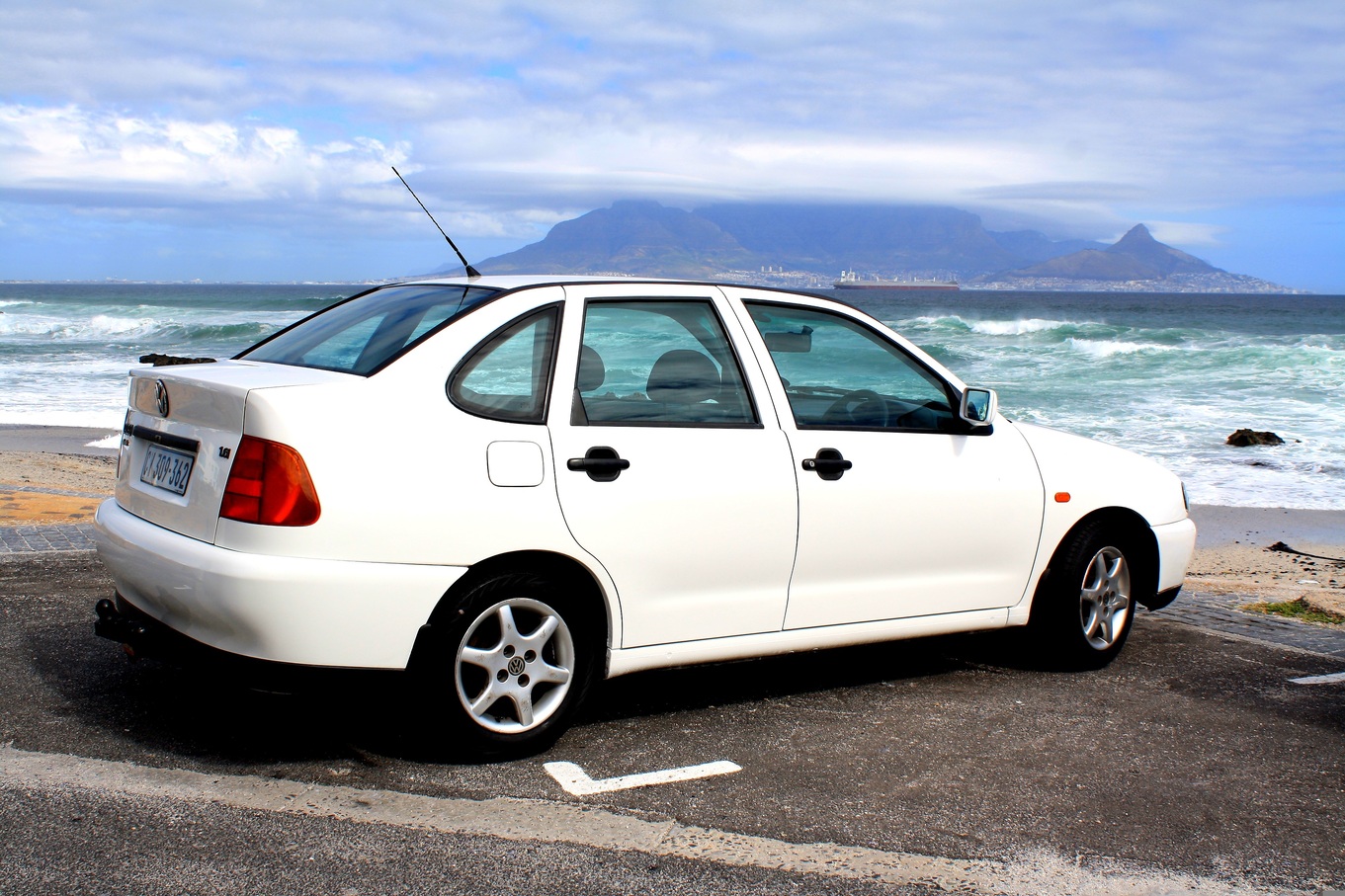
There are ample car hire companies operating at Cape Town airport, but not all are 24-hour. In the suburbs there are others branches of these car rental companies.
2. Uber
Very Popular and Reliable
Uber works well in Cape Town and is widely used by both locals and tourists. Cars are generally clean, pricing is affordable compared to Europe or the US, payment is cashless via the app, and pick-up times are usually short in tourist areas.
Where Uber works best
- Airport transfers
- City Bowl
- Camps Bay
- Sea Point
- V&A Waterfront
Things to know
- - Avoid Uber pickup inside busy nightlife zones late at night — walk slightly away from crowds first
- - Always confirm your driver and plate before entering the vehicle
- - At the airport, follow signage to the designated ride-share pickup area
- - Most Uber drivers in Cape Town are Zimbabweans who rely on satnavs — they will get you there, but may not know the city intuitively
- - Pre-booking an Uber costs significantly more, especially during rush hour; it is best to hail one when you need it
In my over 100 rides, only one problem has ever been encountered — a cancellation at 5am. You are unlikely to wait long; waits in Cape Town are consistently shorter than in most other cities worldwide.
3. Airport Transfers
From Cape Town International Airport (CPT)
Travel time from the airport to the city centre is typically 25–40 minutes depending on traffic. If arriving late at night, pre-booking a transfer can reduce stress.
Your choices are:
- - Uber: often the simplest and most affordable option
- - Private transfers: available via hotels or booking platforms
- - Rental car desks: located outside the airport terminal
4. MyCiTi Bus
Limited but Useful in certain areasThe MyCiTi bus system is modern and safe, but limited in coverage. It serves the City Bowl, Atlantic Seaboard, Table View, Hout Bay, and Khayelitsha/Mitchells Plain — the last two of which tourists should avoid for safety reasons. It does not connect major tourist attractions such as Cape Point or the Winelands.
- - You must buy and top up a MyCiTi card before boarding
- - Not ideal for short stays due to waiting times during rush hour
- - Does not run 24 hours and is not a night service
- - Should not be used alone — always travel with a companion
- - Safest when used within the City Bowl and Atlantic Seaboard areas
- - The route from City Bowl area to Milnerton and Table View is ok to use if accompanied
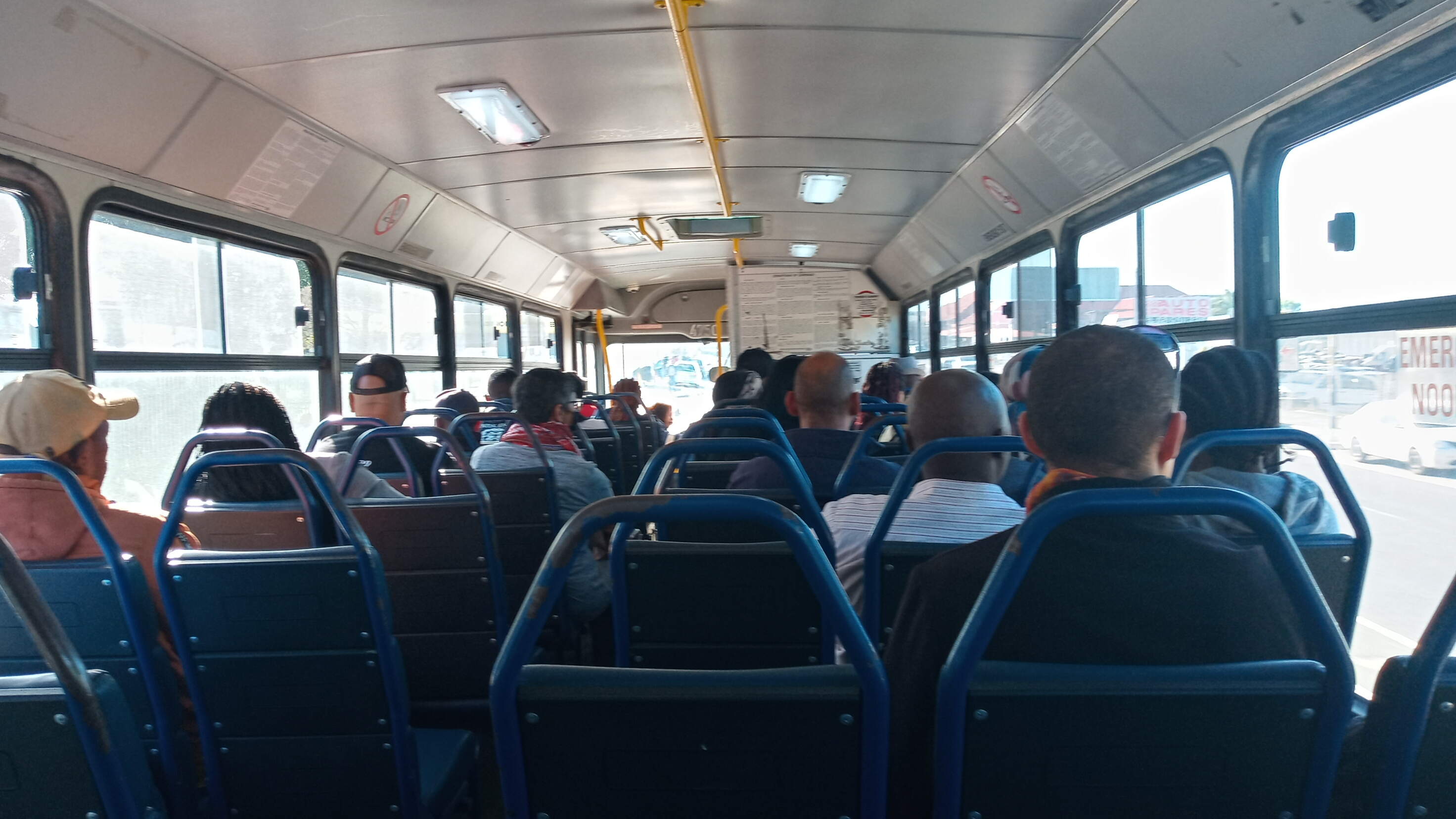
There are plenty of buses in Cape Town, but the MyCiti buses are the safest for tourists on certain routes. Here is a candid photo of the interior of a Cape Town bus.
5. Walking
Practical in Specific Areas Only
Cape Town is geographically spread out, so walking between attractions is unrealistic. It is not advisable to wander unfamiliar neighbourhoods on foot, especially after dark.
Where walking works well
- V&A Waterfront
- Sea Point Promenade
- Camps Bay beachfront
- Central City (daytime only)
6. Minibus Taxis
For Locals, Not Tourists
You will see white minibus taxis everywhere in Cape Town. They are cheap, fast and used primarily by locals — but they are not suitable for foreign tourists.
- - No fixed timetables or formal stops
- - Can drive aggressively and recklessly
- - Not designed for visitors unfamiliar with the routes
This option is not recommended for tourists. It is not worth the risk.
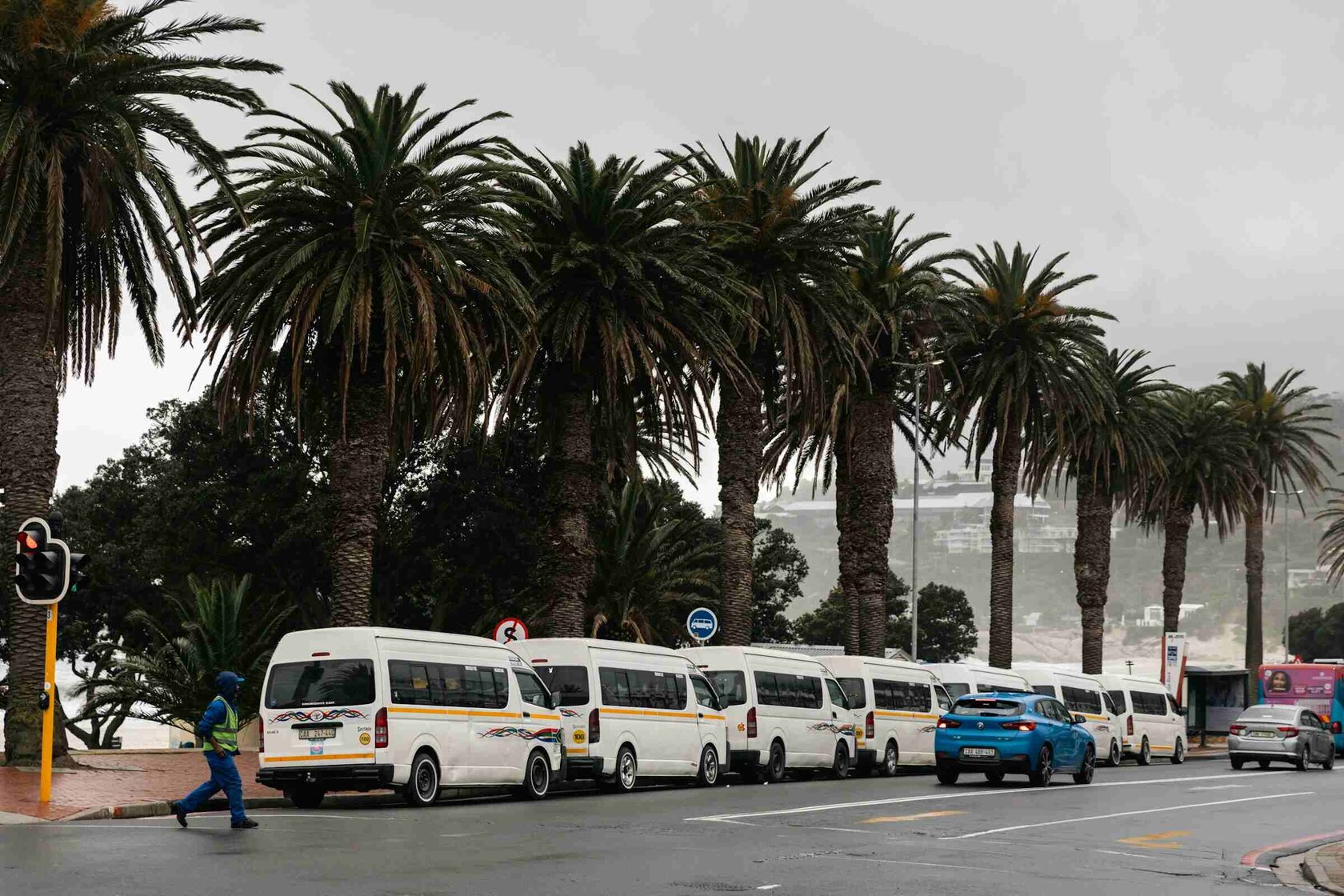
There are plenty of mini-buses in Cape Town, but they are NOT SAFE for tourists. Their reckless driving tactics used to get in front of their competitors make them a danger to all road users.
7. Tours
An Efficient Alternative
If you prefer not to drive, day tours are a practical solution — though they can be expensive depending on the distances involved. For short visits of three to four days, organised tours can be more time-efficient than arranging independent transport. The trade-off is flexibility: if you want to stay longer at a particular spot, you can not.
Popular options include
- - Cape Peninsula (Cape Point and Chapman's Peak)
- - Winelands tours
- - Shark cage diving transport
- - Garden Route multi-day trips
8. Trains
Not suitable or safe for tourists
Cape Town only has two train lines for commuters and neither are suitable for tourists. Most importantly, they are not safe to use. The train stations are magnets for criminality, whilst the trains themselves are dangerous to be on. Furthermore the one line goes northeast to residential suburbs of no interest to tourists. The other line runs from the city centre all the way down to Simon's Town and it is the more dangerous of the two lines.
DO NOT use the trains in Cape Town if you are a tourist.
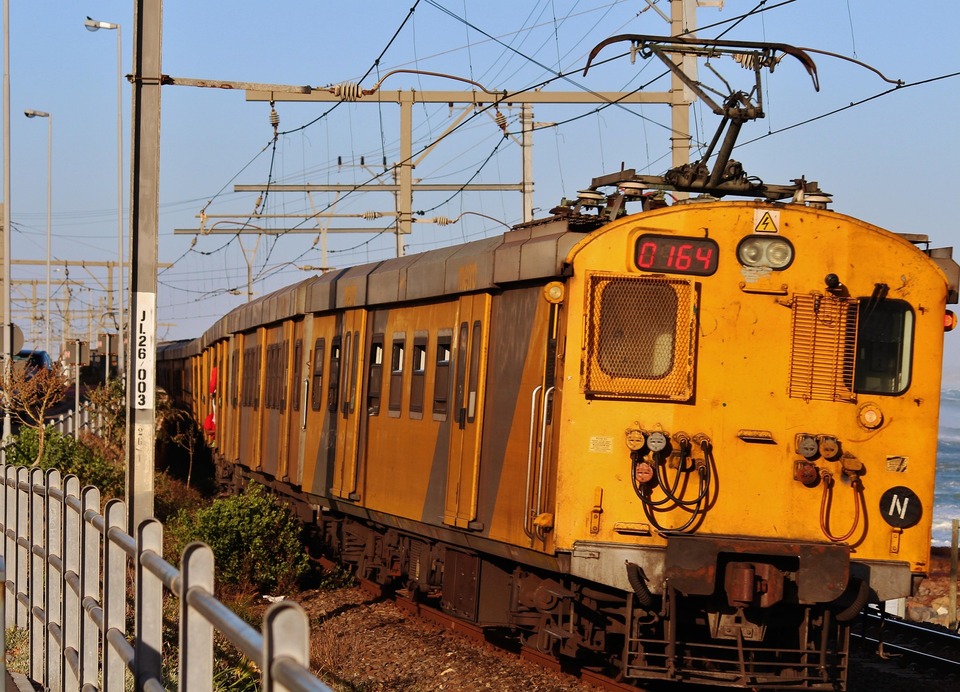
The trains in Cape Town are NOT SAFE for tourists, nor are the train stations. This is NOT a viable transport option for tourists visiting Cape Town.
Traffic & Driving Conditions
- - Drive on the left-hand side
- - Roads are well maintained throughout the tourist areas
- - Peak traffic: 7:00–9:00 AM and 4:30–6:30 PM
- - Load shedding (power cuts) can occasionally affect traffic lights
- - Driving standards are generally good compared to many global cities, but watch out for minibus taxis
What Most Savvy Visitors Do
- - Stay centrally in a well-connected area
- - Use Uber for short trips around the city
- - Rent a car for two or three days to explore properly when needed
Trying to rely entirely on public transport usually leads to frustration and disappointment.
Quick Summary
| Option | Best For | Recommendation |
|---|---|---|
| Rental Car | Exploring widely | ⭐⭐⭐⭐⭐ |
| Uber | City & suburbs | ⭐⭐⭐⭐ |
| Airport Transfer | Arriving late | ⭐⭐⭐⭐ |
| Tours | Short stays | ⭐⭐⭐⭐ |
| MyCiTi Bus | City centre | ⭐⭐⭐ |
| Walking | City centre | ⭐⭐⭐ |
| Minibus Taxi | DO NOT USE | ⭐ |
| Trains | DO NOT USE | ⭐ |
Final Advice
Cape Town rewards independence. The city's beauty lies in its geography — coastline, mountains, wine estates, dramatic drives. To experience it fully, you need mobility. It doesn't have to be an all-or-nothing choice; mix and match as your plan requires.
For example, if arriving late at night, get a taxi to your hotel, if staying in the Waterfront then walk around it and the city centre the next day, then get Uber taxis the next day. When familiar with how things work, hire a car and head out of the city to Cape Point, do the Chapmans Peak Drive or explore the Cape Winelands.
You have options. Plan your transport strategy before arrival and your trip becomes significantly smoother.